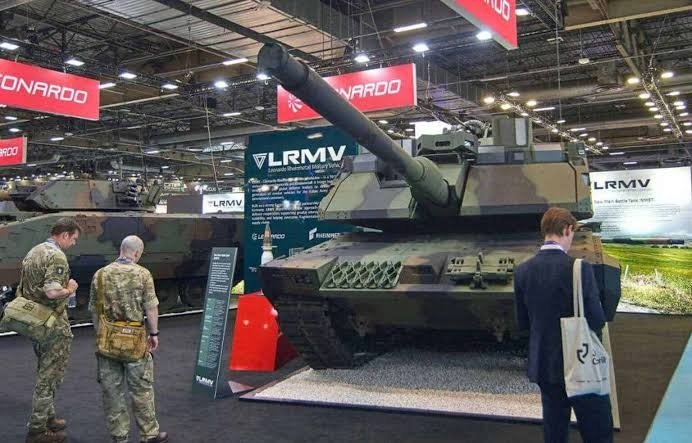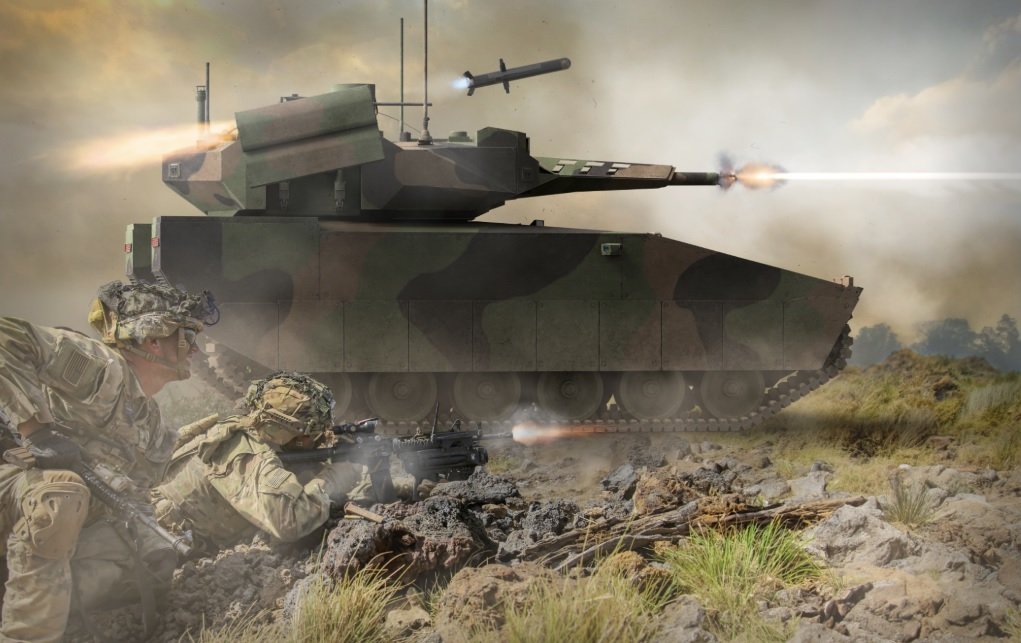
Plymouth, Michigan — American Rheinmetall has delivered the first of eight Lynx XM30 combat vehicle prototypes to the U.S. Army, moving its proposed replacement for the M2 Bradley Fighting Vehicle into government-led developmental and performance testing.
The delivery marks an important stage in the Army’s competitive XM30 Combat Vehicle program, under which American Rheinmetall and General Dynamics Land Systems are developing competing vehicles to replace the Bradley. The Army's own program documentation identifies the XM30 as the future replacement for the Bradley.
The first Lynx prototype is being delivered under the Phase 3/4 Engineering and Manufacturing Development (EMD) contract, valued at approximately $764 million. The contract covers digital design, physical prototype development and full-system validation.
First Lynx Prototype Begins Army Evaluation
American Rheinmetall CEO Matt Warnick said the delivery is an important step as the XM30 program enters a more visible phase and gives Team Lynx the opportunity to demonstrate its proposed Bradley replacement to the Army.
The company plans to deliver the remaining seven prototypes later in 2026. These vehicles will support operational unit training while technical evaluations continue under the Army's Transformation in Contact (TiC) 2.0 initiative.
After completing initial military safety checks, soldiers will conduct field maneuvers with the prototypes. The evaluation process is expected to progress toward large-scale combat simulations, allowing the Army to assess the vehicles under operational conditions.
Hybrid-Electric Powertrain
One of the key features of the Lynx XM30 is its hybrid-electric powertrain. American Rheinmetall describes the system as providing increased power-generation capability while supporting battlefield mobility. The company also describes the vehicle as the first platform of this type to introduce a hybrid-electric powertrain.
The additional electrical capacity is particularly relevant to the XM30's design because the vehicle is being developed as a digitally integrated combat system. The Lynx XM30 incorporates secure, real-time connectivity, while its architecture is designed to support the integration of new technologies during its service life.
The vehicle uses a modular design and adaptive open architecture, intended to make it easier to incorporate future technologies as requirements change. The Army's XM30 program also emphasizes modular open systems as part of the vehicle's future upgrade capability.
Designed for a Changing Battlefield
The Lynx XM30 is being developed for an operating environment increasingly affected by drones, precision weapons and electronic warfare, according to American Rheinmetall.
The company's U.S. XM30 offering includes a U.S.-designed uncrewed 50mm turret, a two-soldier crew concept, integrated vehicle protection systems and a modular open architecture.
The Army's broader XM30 requirements are focused on providing improved protection, firepower, mobility and survivability compared with the Bradley while allowing the vehicle to operate as part of a joint combined-arms force. The Army also intends the XM30 to work with maneuver robotics and semi-autonomous systems.
U.S. Production Network
The Lynx XM30 prototypes are being produced through a multi-state U.S. manufacturing process.
Turret fabrication takes place in Plymouth, Michigan, while hull and chassis integration is carried out in Slidell, Louisiana. Completed vehicles undergo automotive shakeout trials before returning to Louisiana for final painting and detailing.
Before formal government acceptance, each prototype undergoes a joint inspection involving the Defense Contract Management Agency (DCMA).
American Rheinmetall is the prime contractor for Team Lynx, whose partners include Textron Systems, Raytheon, L3Harris Technologies, Allison Transmission and Anduril Industries, along with a wider network of U.S. suppliers.
Competition to Replace the Bradley
The Lynx XM30 is competing against the General Dynamics Land Systems XM30 design. The U.S. Army selected the two companies in 2023 to proceed with detailed design and prototype development for the Bradley replacement program.
The Army plans to evaluate the competing prototypes before selecting one design to proceed toward the next stage of the program. Rheinmetall's earlier contract announcement stated that the Army planned to down-select to one vendor for Low-Rate Initial Production in Phase 5 near the end of 2027.
The delivery of the first Lynx XM30 therefore begins a key physical testing stage in the competition. The Army's evaluation of the two prototype designs will determine which vehicle advances toward becoming the next-generation infantry fighting vehicle intended to replace the M2 Bradley.
——— End of Article ———