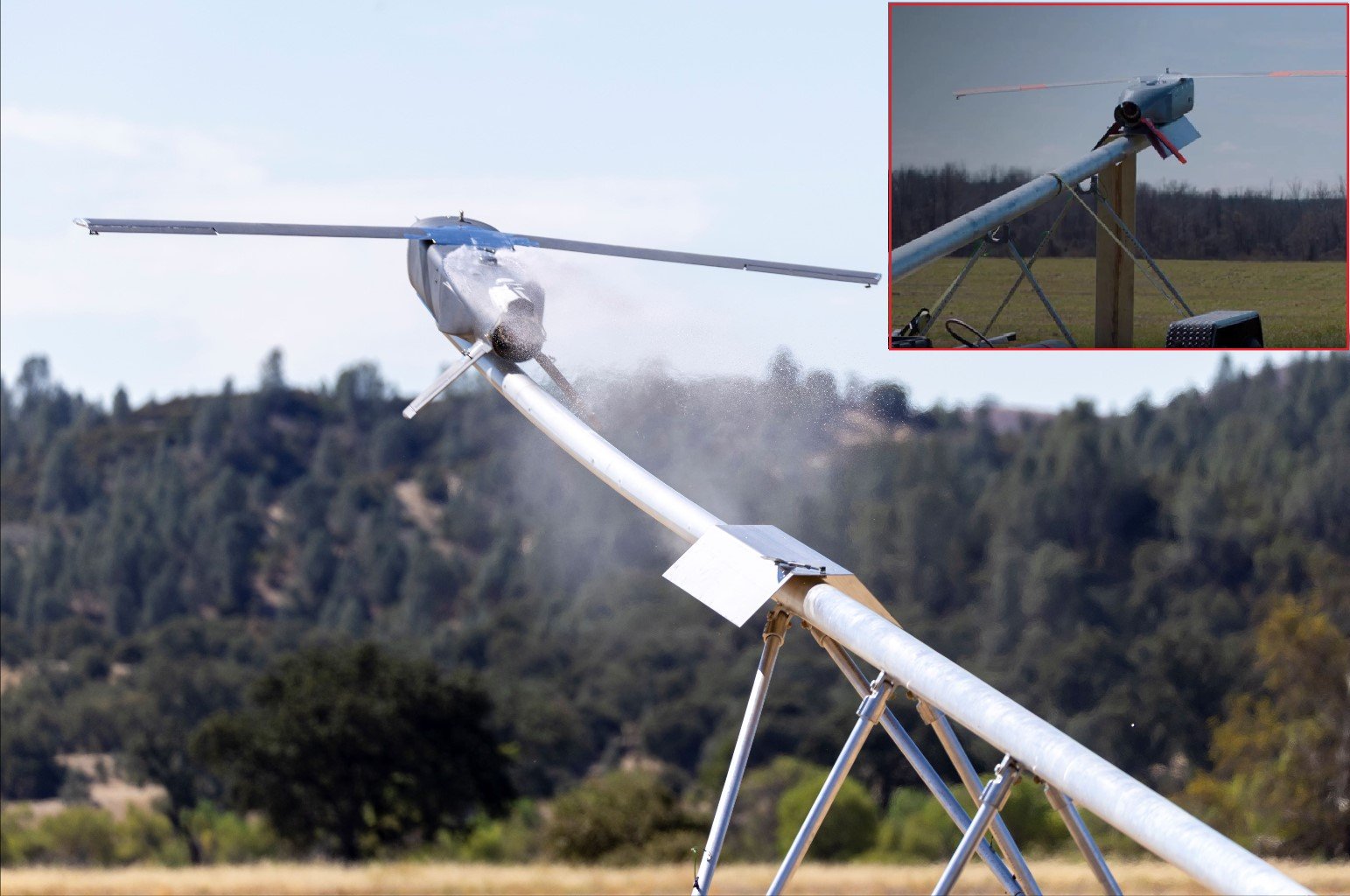
FORT HUNTER LIGGETT, Calif. — Northrop Grumman and quantum technology company SandboxAQ have completed flight trials of the Lumberjack Group 3 unmanned aircraft system (UAS) using SandboxAQ’s AQNav magnetic navigation system instead of GPS.
The companies announced the results on September 9, 2026, following demonstrations at Fort Hunter Liggett in California. The tests showed the jet-powered drone could maintain stable flight trajectories using magnetic navigation in GPS-denied and satellite-denied conditions.
Rapid AQNav Integration
SandboxAQ integrated AQNav into the Lumberjack approximately one month before the flight trials. The system used a commercially sourced, high-sensitivity quantum magnetometer and low-power, off-the-shelf onboard computing hardware.
Engineers installed the hardware and software in less than an hour and used a software-based integration approach that avoided a major structural redesign of the aircraft.
How AQNav Works
AQNav uses quantum sensors to detect small variations in Earth’s magnetic field caused by differences in geological materials beneath the aircraft.
The system:
- Measures local magnetic variations using quantum magnetometers.
- Filters magnetic interference produced by the aircraft’s engine, electronics and structure.
- Compares the resulting magnetic signatures with reference maps of Earth’s magnetic field.
- Calculates the aircraft’s position without relying on satellite navigation signals.
The passive system can operate in all weather and over open water or other environments where GPS may be unavailable or disrupted. The Lumberjack trials also included flight legs over open coastal water, providing an environment with limited visual navigation references.
Lumberjack Platform
Lumberjack is an attritable, one-way attack (OWA) drone in the Pentagon’s Group 3 UAS category. The airframe was developed with Empirical Systems Aerospace (ESAero), which was later acquired by AeroVironment. Northrop Grumman provides the mission computing, autonomy and payload integration.
| Specification | Details |
|---|---|
| Gross loaded weight | About 290 lb (131 kg) |
| Empty weight | About 79 lb (36 kg) |
| Payload capacity | 250 lb (113 kg) class |
| Range/endurance | Several hundred miles or about 2 hours of loiter |
| Mission cost target | $75,000–$100,000 |
| Primary weapon | 6-lb (2.7 kg) Hatchet miniature glide bomb |
| Other payloads | EW, visual navigation, tactical data links and ISR |
The aircraft supports air, ground or surface launch.
Although Lumberjack is designed for one-way missions, the test aircraft was launched, flown and recovered multiple times during the trials. This allows the platform to also be used for training and experimentation.
Previous Lumberjack and AQNav Testing
Lumberjack completed its maiden flight in 2024, less than 14 months after preliminary design work began. In March 2026, it participated in the U.S. Army 101st Airborne Division’s Operation Lethal Eagle, conducting simulated strikes with miniature precision weapons while connected to the military’s Maven Smart System and Palantir targeting workflows.
Before the Lumberjack demonstration, SandboxAQ said AQNav had accumulated more than 450 flight hours across four aircraft types, including testing conducted with the U.S. Air Force and Defense Innovation Unit.
SandboxAQ described the Lumberjack flight as the first reported test of a magnetic navigation system on an attritable platform and the first reported pairing of magnetic navigation with visual navigation on an attritable one-way attack drone.
No Production Contract Announced
Northrop Grumman and SandboxAQ have not announced a production customer, contract or wider procurement timeline for the integrated system.
The demonstration instead focused on showing how magnetic navigation can be integrated with an existing unmanned aircraft and provide an additional navigation capability when satellite-based positioning is unavailable or disrupted.
——— End of Article ———