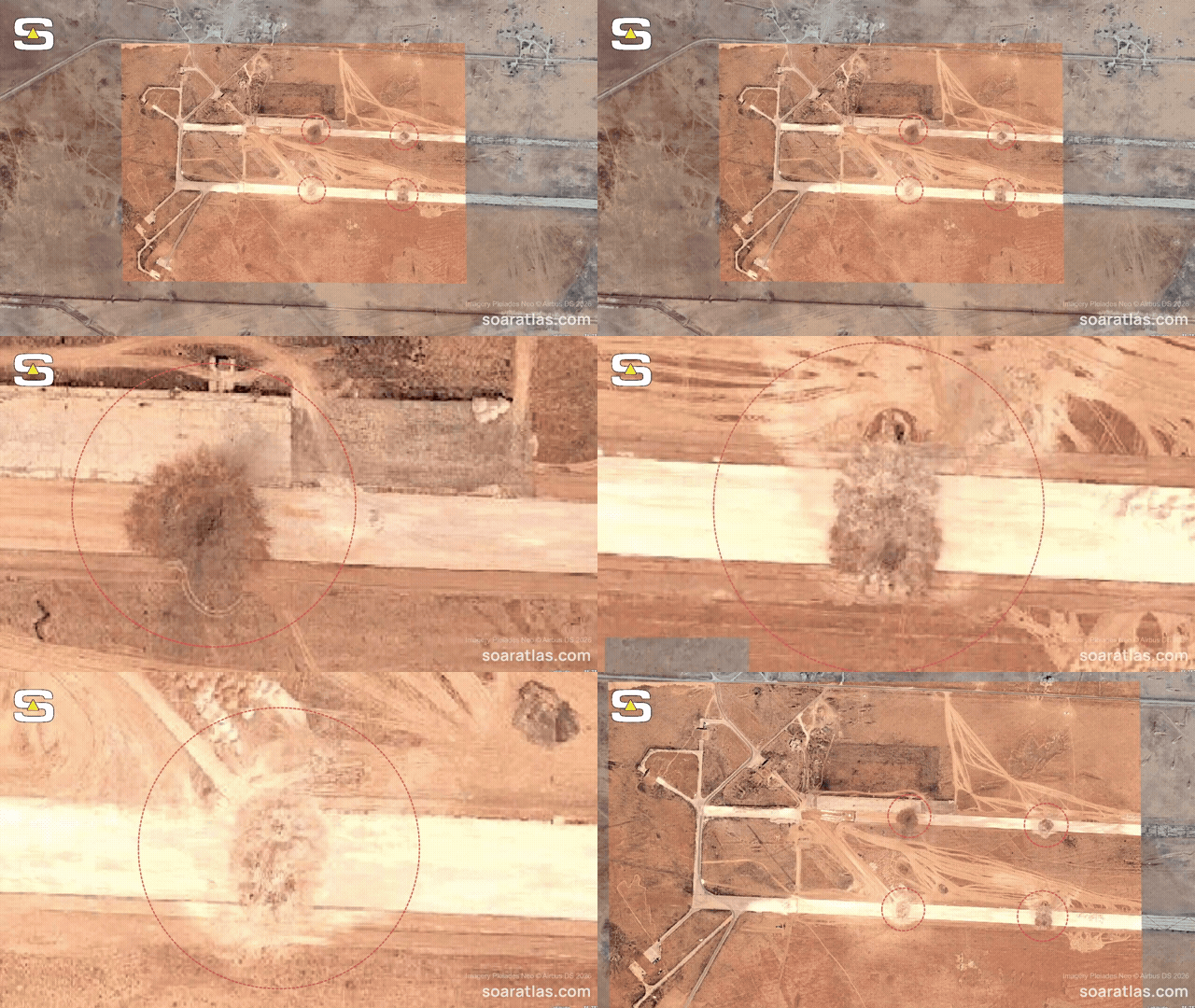
Idlib, Syria — High-resolution Airbus satellite imagery published by Soar Atlas shows damage caused by Israeli airstrikes on Syria’s Abu al-Duhur Military Airbase in northwestern Syria. The imagery shows several impact points along the recently renovated runway, confirming that the airfield infrastructure was among the main targets.
The strikes took place in the early hours of August 18, when Syrian state media, citing a military source, reported eight separate Israeli attacks targeting the runway and storage facilities. No casualties were reported by Syrian military sources or residents living nearby. The base is located at approximately 35.734°N, 37.102°E in Idlib province, about 70 kilometers from the Turkish border and roughly 45 kilometers east of Idlib city.
Satellite imagery shows at least five impact points on the runway, while some hangars, warehouses and other structures appeared intact. The facility had been out of service as a dedicated military airfield since around 2013, after changing hands several times during Syria’s civil war. Following the fall of Bashar al-Assad’s government in late 2024, Syrian authorities began rehabilitating the airfield and using it as a training centre.
Israel Links Strikes to Turkish Military Plans
Israel later confirmed that it carried out the strikes. Prime Minister Benjamin Netanyahu’s office said Syria was “on the verge of breaching” an agreed security status quo by allowing Turkish troops to deploy at an airbase near Aleppo. Israel said it had repeatedly warned Syria that such a deployment would threaten its security.
Israeli officials said the operation was intended to prevent a planned Turkish military presence at the facility. Reports had indicated possible Turkish plans involving troops, radar systems or air-defense equipment. Netanyahu later said Israel’s message to Syria was clear: it should not allow a Turkish military presence there.
Syria rejected Israel’s justification. Foreign Minister Asaad al-Shaibani told Axios that Damascus had assured Israel there were no plans for a Turkish military base or permanent Turkish forces at Abu al-Duhur. He said rehabilitation work was limited to restoring the airfield and facilities damaged during the war for use by the Syrian Air Force.
Al-Shaibani confirmed that Turkish military officers had visited the base for training and military cooperation, but said the facility remained largely empty and was not fully operational.
Turkey and U.S. Respond
Turkey condemned the strikes as a violation of Syrian sovereignty and territorial integrity. The Turkish Foreign Ministry called for international action against what it described as Israel’s escalating aggression. Turkey’s Defense Ministry also said no Turkish military delegation was present at the base before or during the attack.
Ankara has supported Syria’s efforts to rebuild its military capabilities since the fall of Assad’s government and has expanded military cooperation with the new Syrian authorities.
U.S. special envoy for Syria and Iraq Tom Barrack, who also serves as ambassador to Turkey, described the Israeli operation as an “unnecessary escalation that does not advance regional stability.” He said the Syrian government under President Ahmed al-Sharaa had indicated a preference for de-escalation with Israel. Washington has been supporting regional dialogue and deconfliction efforts involving Israel, Syria and Turkey.
The airstrikes were the first reported Israeli attack on Syrian government assets since March 2026. They have further increased tensions between Israel and Turkey, which both maintain significant security interests in Syria. Israel continues to maintain a security presence near its border with Syria, while Turkey maintains influence and military cooperation with the new Syrian authorities in the north.
——— End of Article ———