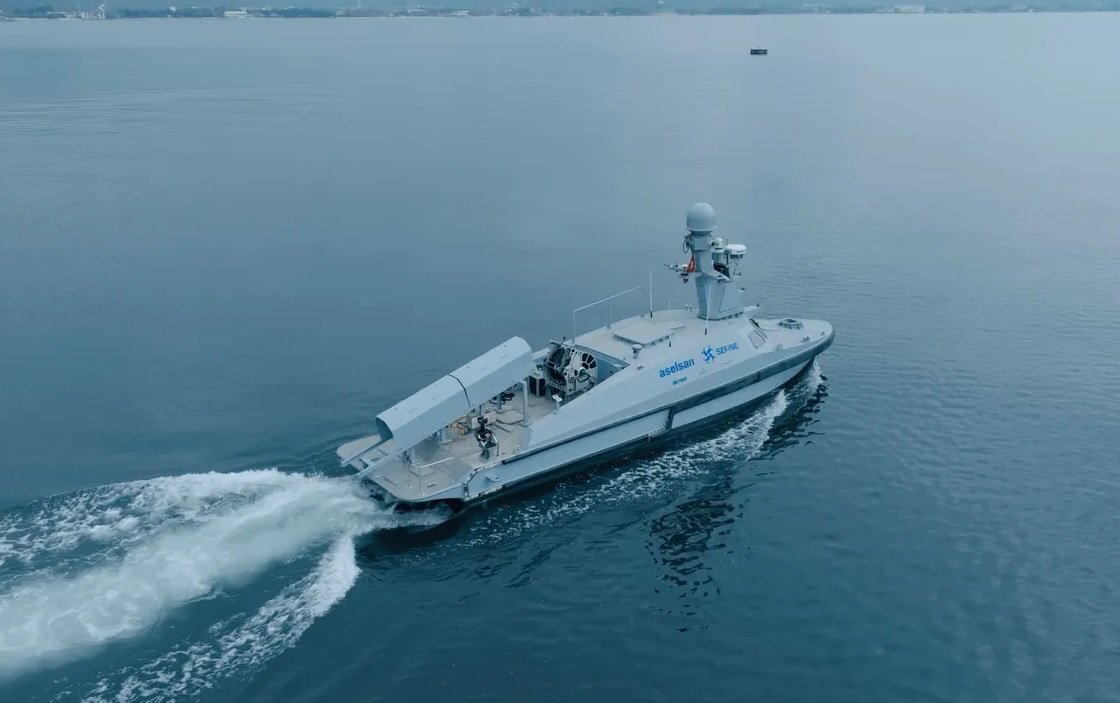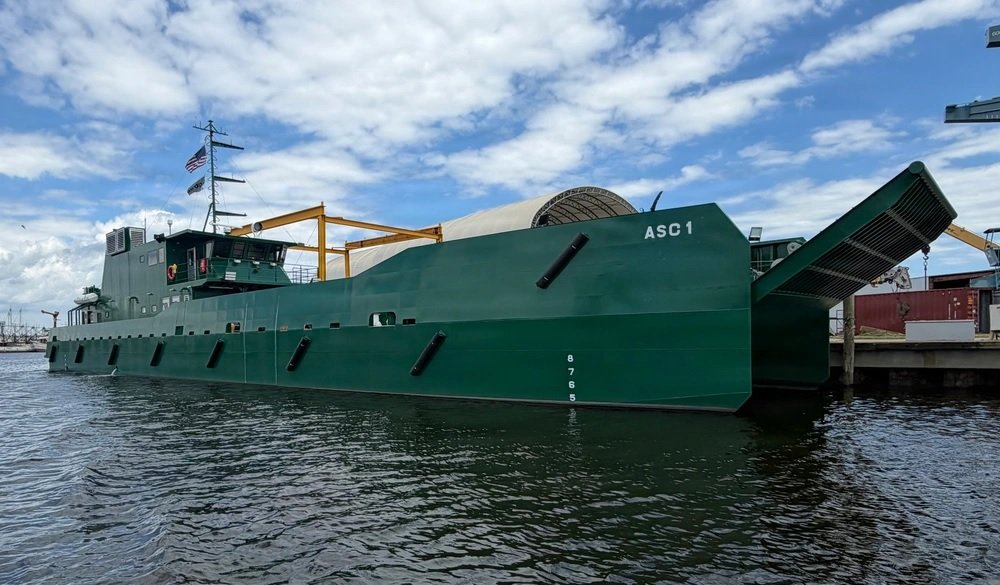
QUANTICO, Va. — The U.S. Marine Corps Warfighting Laboratory (MCWL) has completed technical acceptance of its first Ancillary Surface Craft (ASC) prototype, moving the approximately 150-foot vessel into limited technical assessments at Quantico, Virginia.
The ASC is a roll-on/roll-off landing craft designed to transport personnel, equipment and fuel directly to unimproved shorelines, providing what the Marine Corps calls the “last tactical mile” of logistics support. It can carry up to 46 tons of cargo and 40 combat-loaded Marines.
The shallow-draft craft is designed to operate in Sea State 5 and survive conditions up to Sea State 7. It has forward-looking sonar for navigating uncharted shallow waters, detecting submerged obstacles and assessing beach gradients before landing. It also has a fuel delivery and transfer system for vessel-to-vessel and vessel-to-shore operations.
Birdon describes the vessel, also known as the Ancillary Surface Craft-Medium, as approximately 150 feet long, 30 feet wide and with a draft of about 4.9 feet. Earlier company material listed cargo capacity of up to 54 tons, while Marine Corps technical acceptance validated 46 tons.
Supporting Distributed Marine Operations
The ASC is intended to support the Marine Corps' Expeditionary Advanced Base Operations (EABO) concept, which calls for small, mobile forces to operate from temporary positions in contested maritime areas without relying on fixed ports, piers or causeways.
The craft is intended to complement the larger Medium Landing Ship (LSM) being developed by the Navy and Marine Corps. With the LSM program facing delays, the Marine Corps has described the ASC and similar smaller surface craft as a bridging capability for sustaining distributed forces in the Pacific. The ASC is optimized for moving medium and light tactical vehicles and other supplies between shorelines that larger vessels may not be able to reach.
“This prototype allows MCWL to immediately execute hands-on experimentation, test tactical concepts, and put real hardware in the hands of Marines,” said Col. Kenny Jones, Science and Technology Division Director at MCWL. He said testing the ASC's traditional bow-first beaching approach alongside other experimental platforms will help reduce programmatic risk and refine requirements for future naval forces.
Prototype Construction and Testing
The Marine Corps awarded Birdon America, the U.S. subsidiary of Australian maritime company Birdon, a contract for two ASC prototypes in 2024. Birdon partnered with C&C Marine and Repair in Belle Chasse, Louisiana, where construction began in 2025. The companies used automation-driven production methods intended to shorten construction time.
The first ASC will initially operate with a hybrid crew of Marines and contracted mariners, with Birdon America craft masters and engineers and Australian Army crewing support working under MCWL oversight. The arrangement will also support Marine training for independent operation of small surface craft.
Upcoming testing will examine the vessel's force-protection and self-defense configurations, while its primary mission remains logistics and maneuver.
A Distinguished Visitor Day involving the ASC was held in Bayou La Batre, Alabama, on August 12, 2026, where Marine Corps personnel, industry partners and others observed the vessel.
With technical acceptance complete, MCWL will now conduct hands-on testing to assess the ASC's performance and support the development of future requirements for small surface craft.
——— End of Article ———