WASHINGTON — The U.S. State Department has approved a potential $2.68 billion Foreign Military Sale (FMS) to Ukraine for air defense upgrades, equipment and support services. The congressional notification was issued on September 18, 2026.
The package includes S-300 Clone missiles, GAM-67 missiles, Range-Extended Air Defense Laser Guided Rocket missile systems, Improvised Transporter Erector Launcher 1.5 (I-TEL 1.5) systems, mobile launching system modification kits, RPS-202 counter-Unmanned Aircraft System radars and erectable mast trailers.
It also covers major modifications and maintenance support, spare parts, consumables, accessories, repair and return support, software, publications, transportation, and U.S. government and contractor engineering, technical and logistics support.
The State Department classified the items as non-major defense equipment. Principal contractors will be selected through competitive U.S. government procurements, and the proposed sale remains subject to standard congressional review.
Funding for the Package
If concluded, Ukraine will finance the purchase through a combination of European contributions and U.S. Foreign Military Financing (FMF) funds appropriated during the previous administration.
The FMF funds used for the purchase will be counted as a U.S. capital contribution to the Ukraine Reconstruction Investment Fund on a 1:1 reimbursement basis. The fund was established under the U.S.-Ukraine minerals agreement.
The State Department said the sale supports U.S. foreign policy and national security objectives by strengthening Ukraine's ability to address current and future threats. It also assessed that Ukraine can absorb the equipment and services into its armed forces. The sale would not require additional U.S. personnel in Ukraine, affect U.S. defense readiness or alter the basic military balance in the region.
S-300 Clone Missile Development
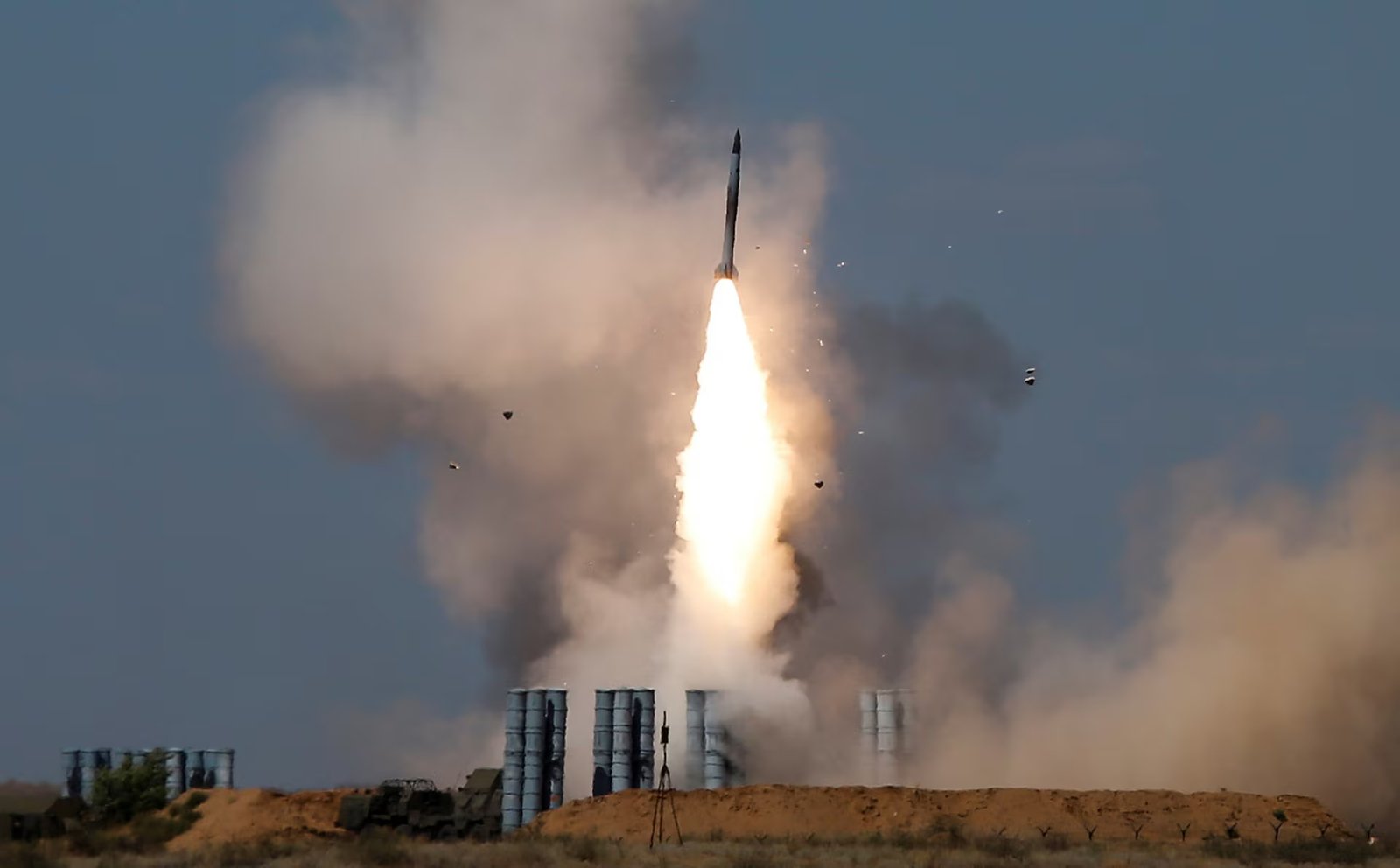
Public information about the S-300 Clone missile remains limited. Defense Express reported that it is a new missile intended for use with S-300 systems already operated by Ukraine. It is reportedly not a direct copy of the Soviet 5V55 missile, but a new design with improved performance and a more modern guidance system.
The GAM-67 has also been described as a new development intended for medium-range air defense systems, including some Soviet-designed platforms.
Work on replacements for Soviet-era weapons dates back to September 2024, when then-U.S. Defense Secretary Lloyd Austin said that the United States, together with several European defense companies, was working with Ukraine to develop and manufacture replacements for the S-300 surface-to-air missile system and R-27 air-to-air missile.
In August 2026, retired U.S. Army Colonel Robert Hamilton, president of the Delphi Global Research Center, said a joint U.S.-Ukrainian effort was underway to upgrade existing S-300 interceptor missiles or develop a newer variant with improved capabilities. He said the project was expected to become operational near the end of 2026, with potential production of 100 to a couple of hundred missiles per year.
Replacing Depleted Soviet-Era Missiles
Before Russia's full-scale invasion in 2022, Ukraine had approximately 25 to 30 S-300PT/PS battalions in varying states of operational readiness. Depending on the variant and missile, these systems were designed to engage aircraft and cruise missiles at altitudes from about 25 meters to 27 kilometers and ranges of up to roughly 100 kilometers.
Ukraine has since lost some launchers and radars in combat, while stocks of compatible Soviet-era missiles have been depleted.
On April 8, 2022, then-Slovak Prime Minister Eduard Heger announced that Slovakia had provided Ukraine with an S-300PMU system that had been in Slovak service. Other partners, including Norway, have also allocated funds to help Ukraine obtain compatible missiles from third countries, but shortages have continued.
The newly approved package is intended to address these gaps by providing new or upgraded missiles and equipment that can support Ukraine's existing S-300-based air defense infrastructure.
——— End of Article ———