ISLAMABAD, — Pakistan has ruled out any immediate military action under the newly signed Mecca Joint Defence Agreement with Saudi Arabia and Türkiye, despite missile and drone attacks by Yemen’s Iran-backed Houthi rebels against Saudi territory that injured 73 people and disrupted operations at energy facilities.
Foreign Ministry spokesperson Sajjad Haider Khan said on Thursday that “there is no such thing under discussion right now.” He said Pakistan would act under the agreement “when the time comes” and stressed that the pact is defensive. He also said more time is needed to implement its provisions, while Pakistani forces remain in Saudi Arabia for training and logistical support.
The statement followed Defence Minister Khawaja Asif's warning that the agreement could become operational if the Yemen conflict spread into Saudi Arabia. Asif said Pakistan was “bound by the terms and conditions of this pact” and would honour its commitments if required. He also said the agreement does not authorize independent offensive operations against another country.
Houthi attacks test the new pact
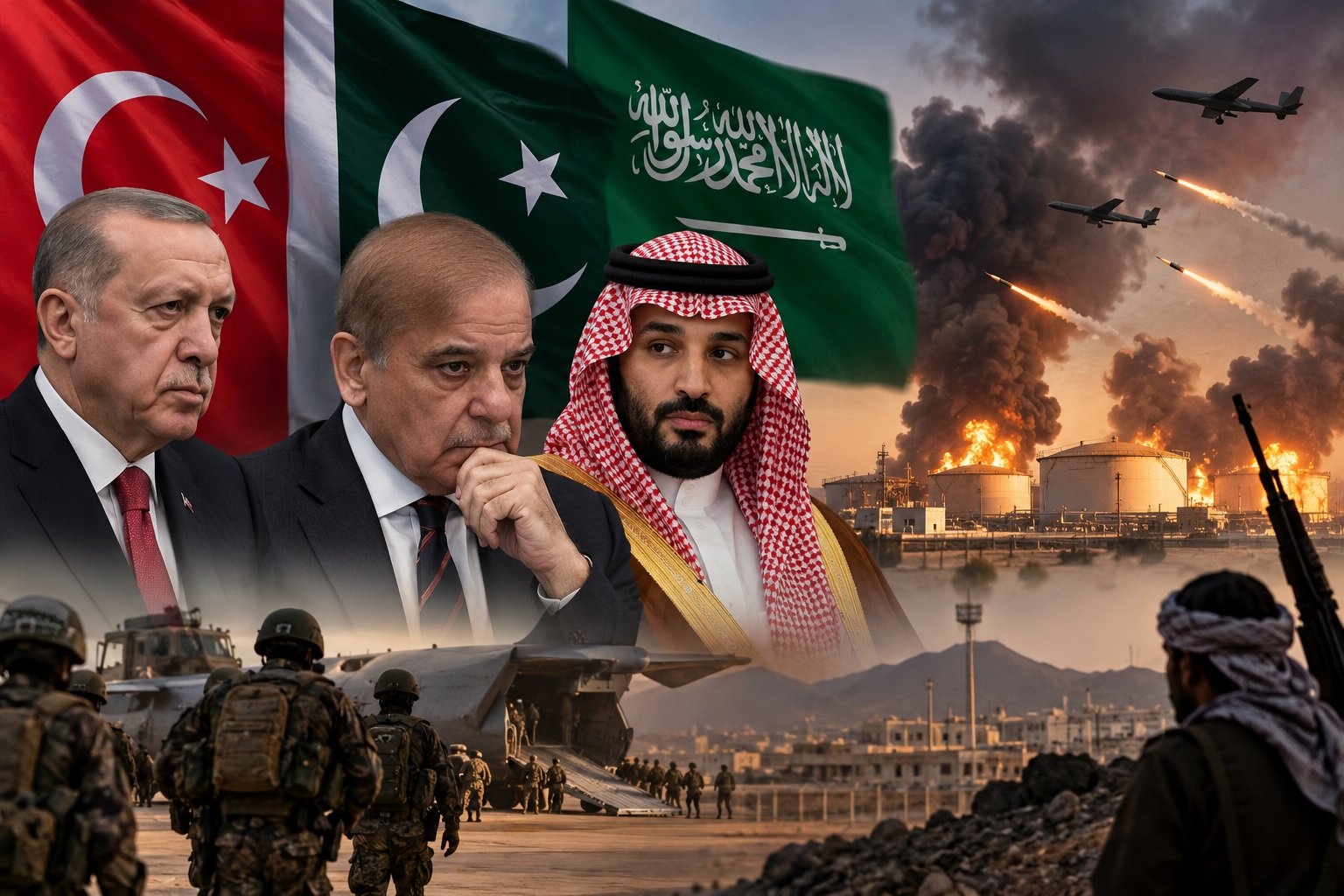
The Mecca Joint Defence Agreement was signed on August 7, 2026, in Mecca by Saudi Crown Prince Mohammed bin Salman, Turkish President Recep Tayyip Erdogan and Pakistani Prime Minister Shehbaz Sharif.
A key provision states that any armed attack against one of the three states will be regarded as an attack against all three. The agreement aims to strengthen collective deterrence and defence cooperation, including joint exercises, intelligence sharing and defence-industry cooperation. It builds on the bilateral strategic mutual defence agreement signed between Pakistan and Saudi Arabia in September 2025. A permanent secretariat is being established in Riyadh, with the first secretary-general expected to come from Pakistan.
The pact is now facing an early practical test. On Tuesday, Houthi forces attacked southern Saudi cities including Abha, Khamis Mushait, Jazan and Najran with missiles and drones. The attacks injured 73 people, including women and children, and caused fires at oil and energy facilities that temporarily disrupted operations. Houthi military spokesman Yahya Saree said dozens of ballistic missiles and drones were launched against Saudi targets, including Aramco facilities and King Khalid Air Base.
Pakistan and Türkiye face criticism
The decision by Pakistan and Türkiye to avoid immediate military involvement has raised questions about the practical value of the new defence pact.
Critics argue that the agreement's strongest promise is collective defence, yet Saudi Arabia has faced direct missile and drone attacks while neither Pakistan nor Türkiye has announced military action. Pakistan has instead chosen diplomatic pressure, including urging Iran to restrain the Houthis, while reaffirming support for Saudi sovereignty and territorial integrity.
Türkiye has also not announced any military steps.
The cautious response can be explained by the defensive nature of the agreement and the fact that its military and institutional mechanisms are still being established. However, it also exposes a gap between the pact's strong mutual-defence language and the response to an actual attack on one of its members.
Pakistan and Türkiye may be seeking to avoid being drawn directly into the wider regional conflict, but their decision not to provide an immediate military response gives critics grounds to question how the collective-defence clause would operate during a serious crisis.
For Saudi Arabia, the issue is particularly important because the agreement was created to strengthen security cooperation among the three countries. The latest attacks have therefore become an early credibility test for the alliance.
For now, Islamabad is maintaining its training and logistical presence in Saudi Arabia and pursuing diplomatic measures rather than military intervention. Pakistan says it will fulfil its obligations “when the time comes,” while Türkiye has yet to announce military involvement.
——— End of Article ———