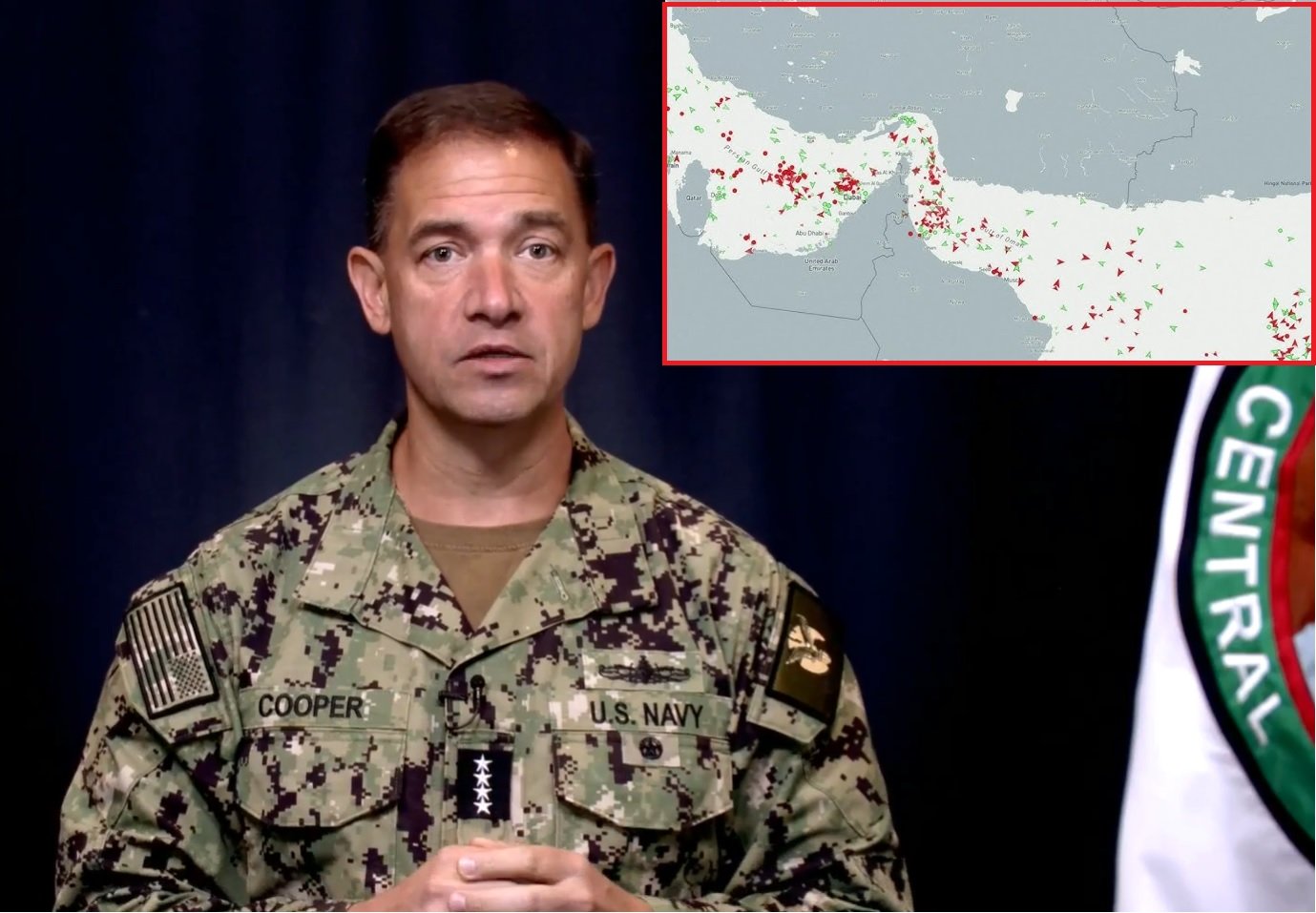
TAMPA, Florida, — U.S. Central Command (CENTCOM) has announced that U.S. forces have cleared Iranian sea mines from the internationally recognized shipping lanes in the Strait of Hormuz, saying the routes are now open to commercial shipping.
In a video released Thursday, CENTCOM Commander Adm. Brad Cooper said the mines had been laid months earlier by Iran’s Islamic Revolutionary Guard Corps (IRGC) in the strait’s Traffic Separation Scheme, the established routes used by international commercial vessels.
Update from CENTCOM Commander: pic.twitter.com/osPbltjJ1C
— U.S. Central Command (@CENTCOM) August 28, 2026
Cooper said the operation was conducted over several months by U.S. Navy divers, Navy SEALs and military aircraft from the Army, Navy, Air Force and Marine Corps. He described the conditions as challenging and dangerous but said the forces had completed the mission.
“Today, international shipping lanes are open and momentum is building,” Cooper said.
Nearly 1,500 Commercial Vessels Assisted
Cooper said U.S. forces have provided coordinated protection to nearly 1,500 commercial vessels transiting the strait in recent months. These vessels transported nearly 750 million barrels of crude oil to global markets.
At the same time, about 50,000 U.S. troops operating across the region continue enforcing a naval blockade against Iran while supporting commercial transit through the waterway.
According to Cooper, Iran has exported zero oil from its shores since the blockade was resumed in mid-July. He said no vessels have entered or left Iranian ports without U.S. authorization, except for humanitarian reasons.
U.S. forces have also turned back about 75 vessels attempting to breach the blockade and disabled three vessels that did not comply with U.S. orders.
Commercial Traffic Still Below Prewar Levels
Despite CENTCOM's announcement, commercial traffic through the Strait of Hormuz remains well below prewar levels.
Before the conflict began on February 28, more than 20 million barrels of oil per day passed through the waterway, with roughly 100 to 130 vessels using the route daily. Recent shipping data shows that commodity-vessel traffic remains in the single digits to low teens on some days.
The announcement follows earlier statements by President Donald Trump that U.S. forces had removed or detonated mines in international waters in the strait. Cooper's latest video provides CENTCOM's formal operational confirmation that the Traffic Separation Scheme has been cleared.
Security Concerns Remain
U.S. allies have privately assessed that some mines may not have been cleared. Earlier estimates from the International Maritime Organization and industry groups placed the number of mines in the historic shipping lanes at around 80, with some assessments higher.
Allied officials have also warned that sea currents can move mines and that residual risks could remain outside the main monitored lanes.
The International Maritime Organization and maritime information centers continue to advise vessels to exercise maximum caution in the area. Shipping companies and insurers are also conducting their own risk assessments.
CENTCOM said it will continue its two main missions in the area: enforcing the blockade against Iran while supporting lawful international commercial transit through the Strait of Hormuz.
——— End of Article ———