Washington, D.C., — The United States is advancing bipartisan legislation that would require the Netherlands and other key allies to further restrict ASML’s semiconductor manufacturing equipment sales and services to China.
The Multilateral Alignment of Technology Controls on Hardware (MATCH) Act, introduced in April 2026, would give allied countries 150 days to align their export controls with U.S. rules. If they fail to do so, Washington could expand use of the Foreign Direct Product Rule (FDPR) to restrict foreign-made equipment containing U.S. technology, software or components.
Targeting DUV Equipment and Services
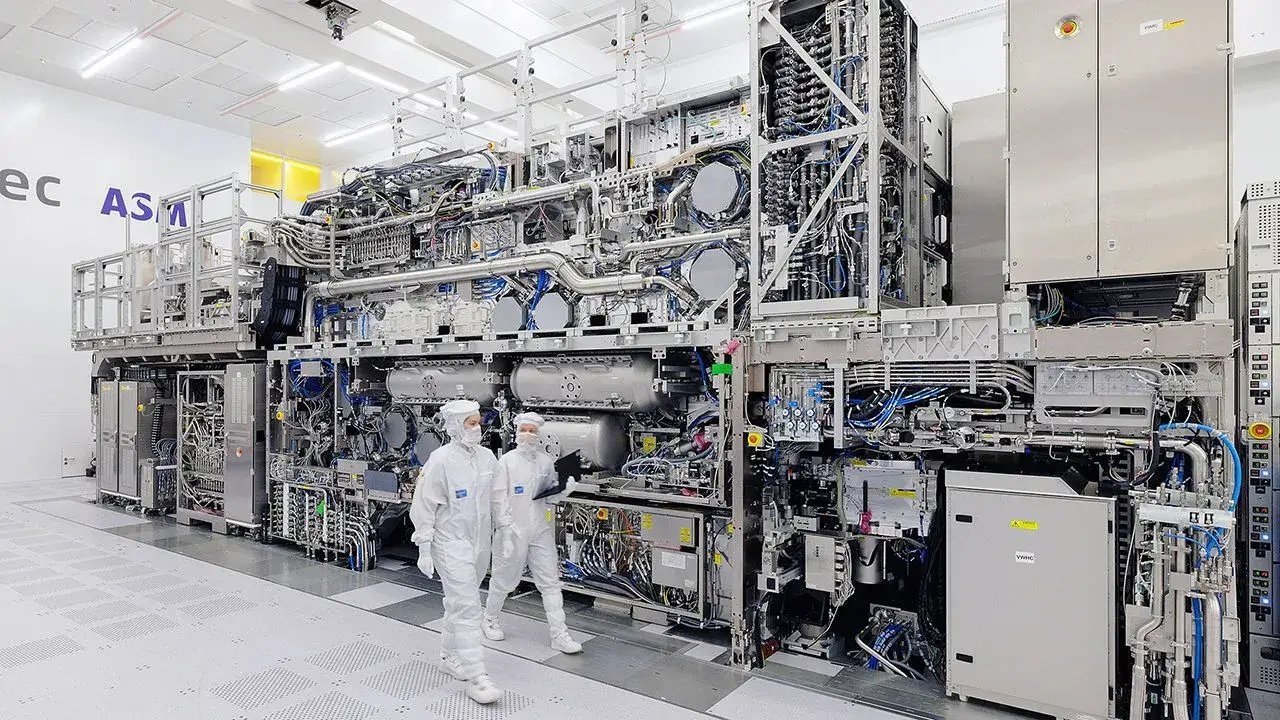
The legislation mainly targets deep ultraviolet (DUV) immersion lithography machines that ASML can still sell to China under current Dutch regulations. The Netherlands and the United States have already restricted China’s access to ASML’s most advanced extreme ultraviolet (EUV) systems and certain higher-end DUV equipment.
The MATCH Act would also restrict installation, maintenance, spare parts, remote software updates and technical support for covered machines already operating in China. Major Chinese companies named for tighter restrictions include SMIC, Huawei, Hua Hong, CXMT and YMTC.
U.S. lawmakers argue that existing gaps allow Chinese chipmakers to use older lithography equipment and multi-patterning techniques to produce advanced semiconductors, including chips used for artificial intelligence.
ASML and Dutch Concerns
China accounted for about 33% of ASML’s sales in 2025, making it the company's largest market that year. ASML has projected that China's share could fall to around 20% in 2026 as existing restrictions take greater effect.
ASML is Europe’s most valuable listed company and depends on U.S. suppliers for important technology and components, including light sources produced by its U.S. subsidiary Cymer. This gives Washington significant leverage over the Dutch company.
The proposed legislation has created friction between Washington and The Hague. Dutch Trade Minister Sjoerd Sjoerdsma has described forced cooperation as “undesirable” and has traveled to Washington to meet U.S. Commerce Secretary Howard Lutnick and members of Congress. The Dutch government has argued that export-control decisions affecting Dutch companies should remain under Dutch control and has opposed the bill’s extraterritorial provisions.
Legislative Status
The MATCH Act has bipartisan support and lawmakers have sought to attach it to the annual National Defense Authorization Act (NDAA). The broader NDAA temporarily stalled in the Senate on July 14, 2026, amid unrelated political disagreements over military funding connected to Iran.
As of mid-August 2026, the MATCH Act remained under consideration and had not become law. Its proposed restrictions would expand existing U.S.-led controls by targeting remaining DUV equipment sales to China as well as servicing and technical support for machines already installed there.
——— End of Article ———