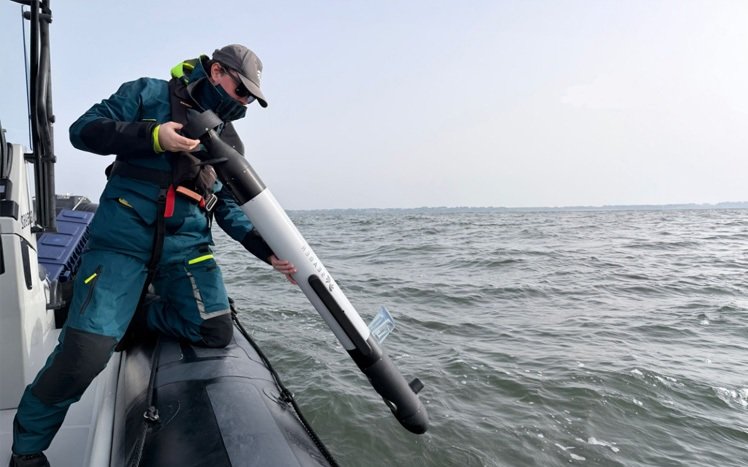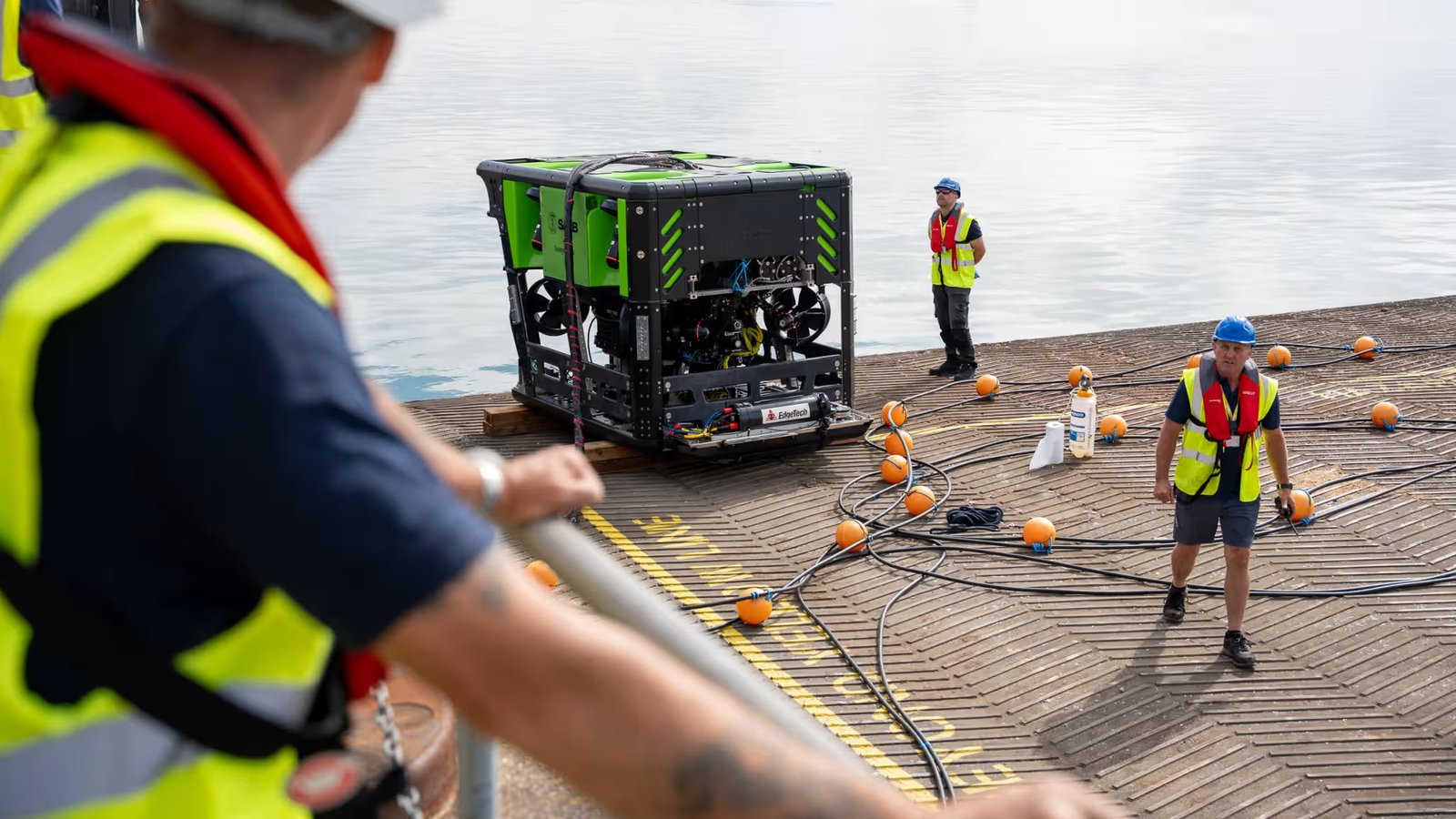
Fareham, UK — Saab UK’s Seaeye SR20 eWROV, a next-generation all-electric work-class remotely operated vehicle (ROV), has completed a comprehensive programme of inland water trials as part of its ongoing development.
The trials formed a key part of the SR20’s verification and validation programme. Saab said the testing assessed the vehicle against its specification requirements, measured its performance and subjected the ROV to conditions designed to evaluate it as a complete, integrated system.
During the trials, the SR20 demonstrated manoeuvrability, precise pilot control and stable operation. The results provided further validation of its fully electric architecture and integrated control systems.
The SR20 is a full-sized IMCA Class III B ROV system. Saab has developed the platform with electric thrusters and electric manipulators, while using limited oil compared with traditional hydraulic systems. The company states that its overall power and performance exceed those of a 200 HP hydraulic equivalent.
The vehicle is being developed for a range of subsea operations, including survey, inspection, maintenance and repair, construction, drill support and decommissioning. Its design also supports both resident and remote operational concepts.
The SR20 builds on Saab Seaeye’s four decades of experience in underwater robotics. Saab said its Seaeye ROVs have supported subsea operations across a range of applications for 40 years. The company’s current underwater systems portfolio includes remotely operated vehicles, autonomous underwater vehicles and hybrid systems for commercial, scientific and defence applications.
Jon Robertson, Seaeye Managing Director at Saab UK, said the successful water trials bring the company closer to delivering the platform to the subsea industry.
“These successful water trials bring us another step closer to delivering a new platform for the subsea industry,” Robertson said. “The SR20 combines the performance and reliability operators expect from Seaeye systems, with a fully electric architecture designed to support a range of operational requirements, including resident and remote operations.”
The SR20’s fully electric architecture is a central part of its design. Saab has previously highlighted the use of electric systems and limited oil as features intended to provide an alternative to conventional hydraulic work-class ROV systems. Saab’s earlier development information also described the platform as incorporating automation and remote-control capabilities.
The SR20 programme will now move into its next phase of testing following completion of the inland water trials. Saab will continue development and capability assessments as the vehicle progresses towards planned delivery and operational deployment.
——— End of Article ———