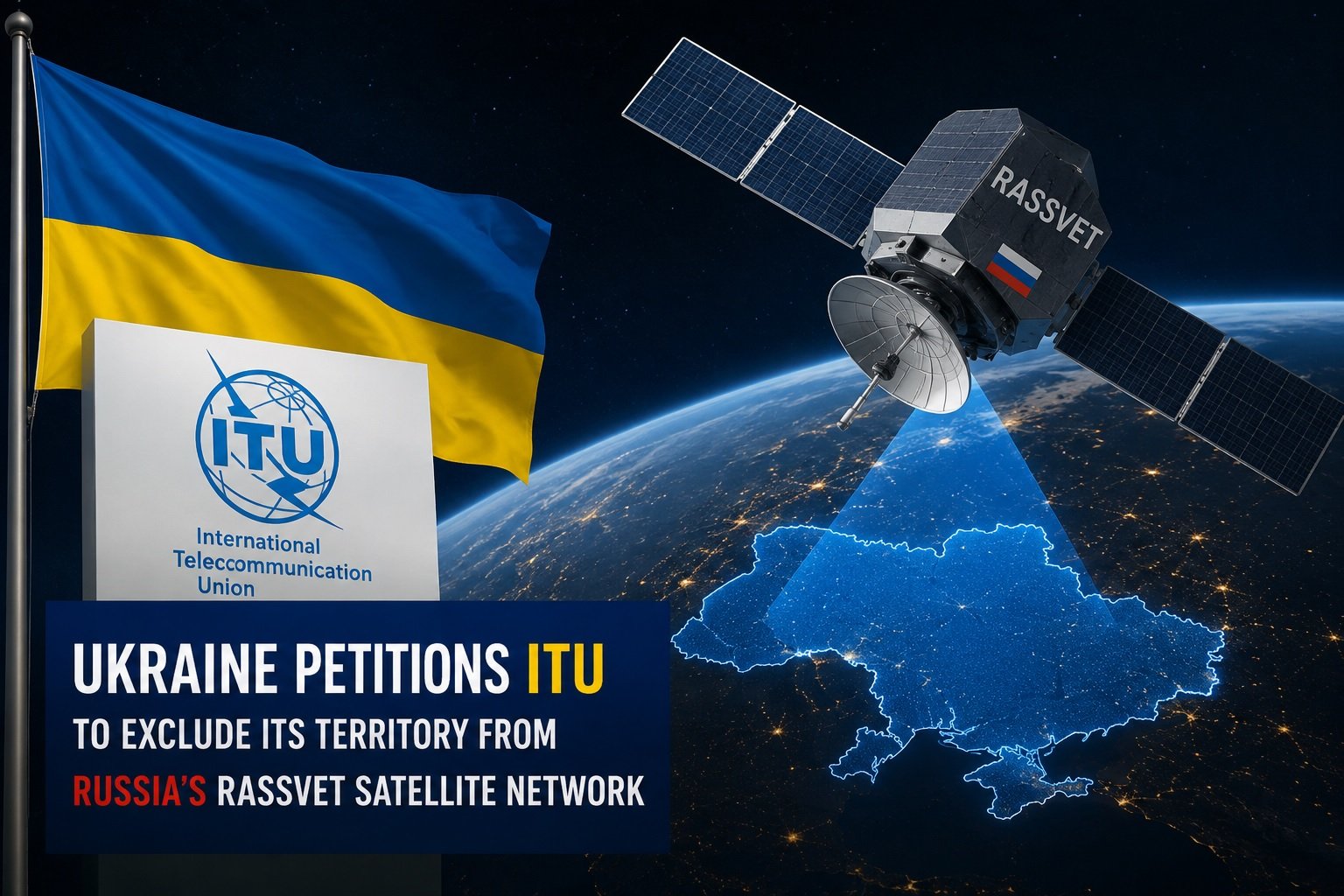
KYIV, Ukraine — Ukraine has formally asked the International Telecommunication Union (ITU) to remove its national territory from the declared service areas of Russia’s Rassvet satellite internet network across all frequency bands.
Foreign Minister Andrii Sybiha announced the move on August 28, saying Ukraine had submitted a formal note to the ITU Radiocommunication Bureau through its Permanent Mission to the United Nations and other international organizations in Geneva.
The request was jointly coordinated by Ukraine’s Ministry of Foreign Affairs, Ministry of Digital Transformation and State Centre of Radio Frequencies. Ukrainian officials said Russia intends to extend Rassvet-1 and Rassvet-3 coverage over Ukraine and that Kyiv wants to protect its frequency resources used for mobile communications, radio networks, satellite systems and other telecommunications.
Sybiha said Russia’s planned use of the satellites over Ukrainian territory is intended to support military operations rather than civilian connectivity. He also called on international partners to support Ukraine’s position and take similar measures to prevent Rassvet operations over their own sovereign territories.
The ITU coordinates international use of radio-frequency spectrum and satellite orbits, but it does not have the ability to physically prevent satellites from passing over a country or stop their signals from reaching the ground.
Russia's Rassvet Network
Rassvet is being developed by Russian aerospace company Bureau 1440 as a low-Earth-orbit broadband network intended as a domestic alternative to systems such as SpaceX’s Starlink. The project uses 5G non-terrestrial-network technology and active phased-array terminals, with subscriber terminals designed to provide data speeds of up to 1 Gbps. Bureau 1440 is also developing terminals for aircraft, trains and mobile platforms.
The network has gained importance for Russia as access to Starlink has become more restricted for Russian forces. Earlier this year, Ukrainian forces and SpaceX introduced measures to block unauthorized Russian access to Starlink terminals.
Military analysts have linked Rassvet to battlefield communications and the operation of reconnaissance and strike drones. Russian officials have also publicly connected Bureau 1440’s technology with control systems for heavy unmanned aerial vehicles.
32 Rassvet-3 Satellites Launched in 2026
Bureau 1440 launched 16 Rassvet-3 satellites on March 23, 2026, from the Plesetsk Cosmodrome. One satellite from that group later re-entered the atmosphere, while 12 of the remaining satellites had reached an operational altitude of about 550 kilometers by late July. Other satellites were still raising their orbits.
A second group of 16 Rassvet-3 satellites was launched on July 19. Tracking data showed that the satellites initially remained at much lower altitudes. Two failed to complete orbit-raising maneuvers and were moving toward atmospheric re-entry, while several others remained below their planned operating altitude.
Russia plans to expand the constellation to 156 satellites by the end of 2026 and 292 satellites by 2027, when commercial service is planned to begin. Longer-term plans call for about 900 satellites by 2035, providing near-global coverage, including the Arctic region.
Despite the expansion plans, the network remains limited in scale and has faced orbital problems with satellites from the two 2026 launches.
Rassvet Satellites Already Passing Over Ukraine
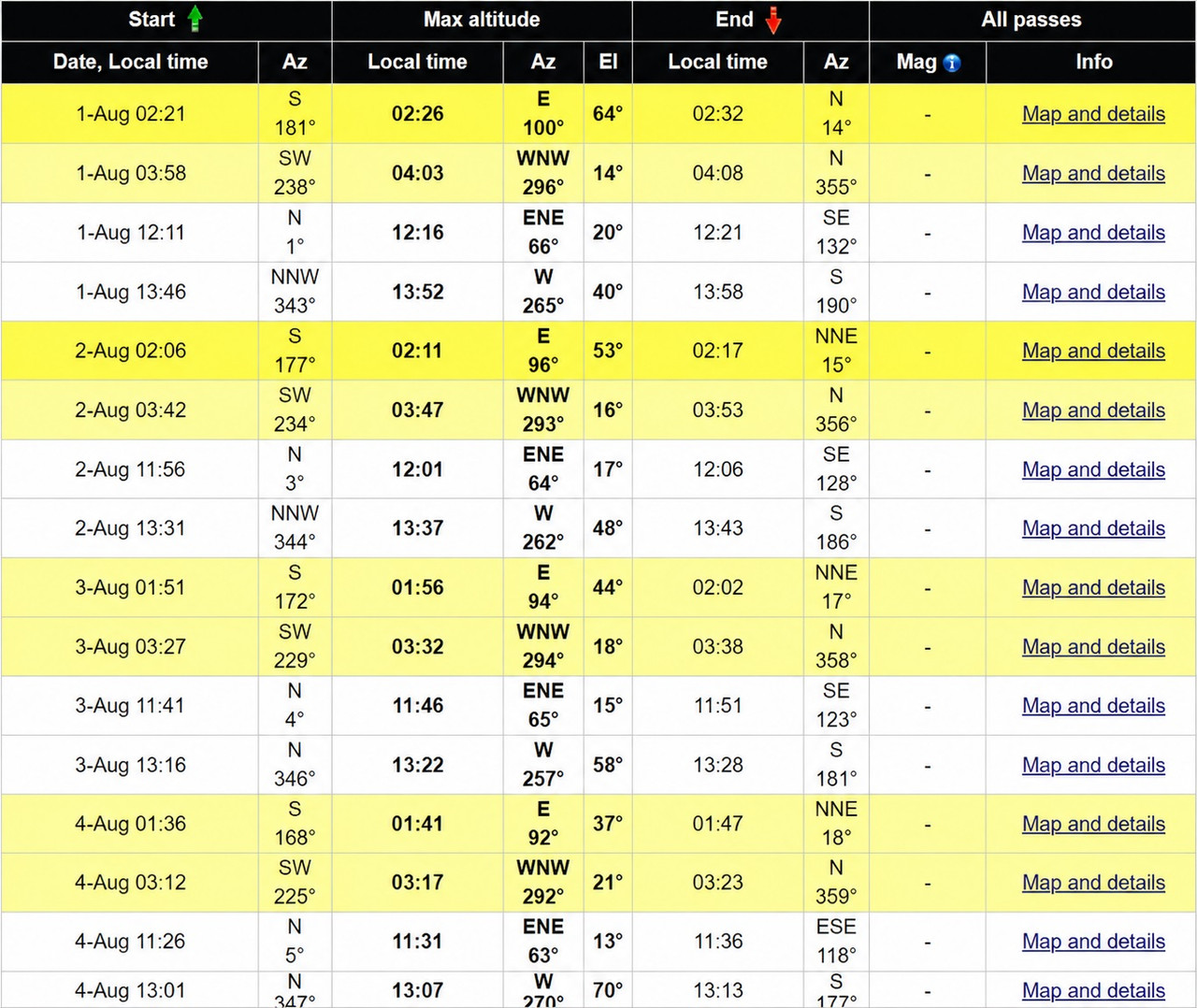
Tracking analysis from services including N2YO indicated that the first Rassvet-3 satellites pass over Ukraine about four times a day. Two of these passes typically provide stable communication windows lasting more than an hour.
Ukraine’s ITU petition focuses on removing its territory from Rassvet’s declared service areas. Kyiv says it will continue diplomatic measures against the Russian satellite network while seeking support from other countries.
——— End of Article ———