WASHINGTON — The U.S. Department of War plans to install an advanced nuclear Micro Modular Reactor (MMR) at Naval Weapons Station (NWS) Crane in Indiana no later than September 2028. The project will provide the installation with continuous electricity independent of the commercial power grid.
The reactor will be the U.S. Navy’s first shore-based advanced microreactor and the first power-producing nuclear reactor installed in Indiana.
The commercially owned and operated reactor is intended to improve the energy resilience of NWS Crane, allowing critical activities to continue during commercial grid disruptions and other demanding conditions, including physical and cyber threats.
Nuclear Power for Naval Weapons Station Crane
NWS Crane is a major U.S. military installation in southern Indiana. It supports defense technology and weapons-related activities, including weapons development, electronic warfare, strategic missions and expeditionary warfare systems.
The installation hosts the Naval Surface Warfare Center Crane Division and Crane Army Ammunition Activity and employs thousands of civilian personnel, including scientists and engineers.
The new reactor is intended to provide a reliable source of electricity for critical operations without depending on the civilian power grid.
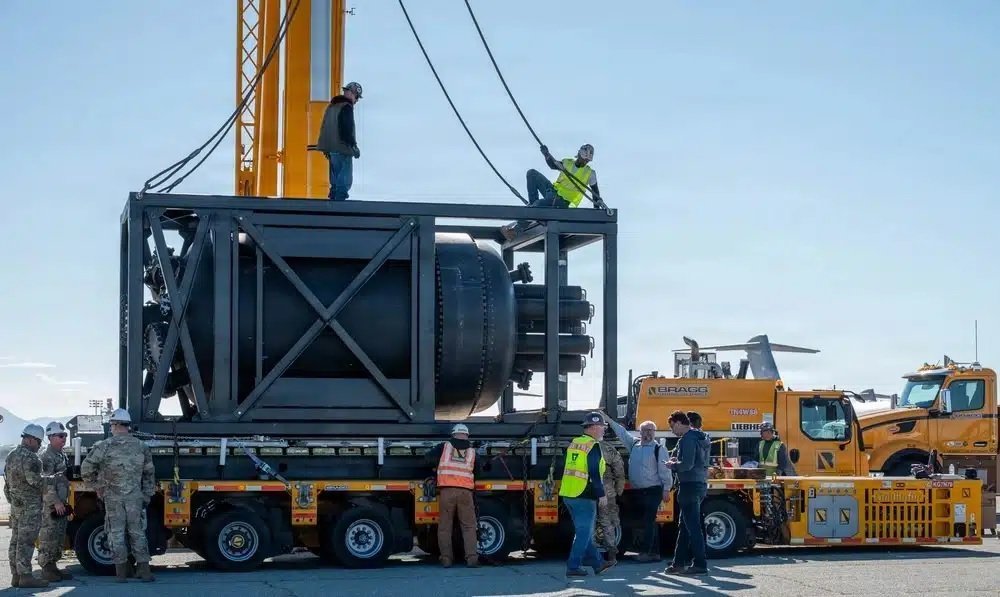
Microreactors are generally designed as relatively small nuclear power systems that can be factory-built and deployed to individual sites. Systems in this category typically produce 20 megawatts or less and are intended to supply power to a specific installation rather than a regional electricity network.
The Department of War has not publicly identified the reactor vendor for the Crane project. It also has not released a cost estimate, specific reactor design or power output.
Army’s Janus Program Leads Deployment
The Crane project is being carried out through the Army’s Janus Program, with the Army serving as the Department of War’s executive agent for nuclear energy at military installations and holding regulatory authority for the unit.
The Navy is responsible for establishing the operational requirements for the Crane site, while the Department of War Innovation Unit is connecting the military effort with commercial nuclear technology developers.
The program also involves the Office of the Under Secretary of War for Research and Engineering, the Office of the Assistant Secretary of War for Critical Technologies and the State of Indiana.
“Janus was designed from the beginning to deliver capability beyond the Army,” said W. Jordan Gillis, Assistant Secretary of the Army for Installations, Energy and Environment. He said the effort is intended to create a pathway for resilient nuclear power across the Joint Force.
Brendan Rogers, Assistant Secretary of the Navy for Energy, Installations and Environment, said energy security is directly connected to military capability. He said placing the Navy's first shore-based advanced microreactor at Crane would support efforts to protect shore infrastructure from physical, cyber and commercial-grid vulnerabilities.
Part of Wider Military Microreactor Program
The Crane deployment follows earlier selections under the Janus Program for other Department of War installations.
The Army previously selected five companies and initial locations:
- Antares Nuclear — Fort Bragg, North Carolina
- BWXT Advanced Technologies — Fort Campbell, Kentucky
- General Atomics Electromagnetic Systems — Fort Hood, Texas
- Radiant Industries — Fort Benning, Georgia
- Westinghouse Government Services — Fort Drum, New York
Those awards have a combined value of up to $2.2 billion. Private funding is expected to support more than 20 reactors across Department of War installations over time.
The Crane project is therefore being positioned as an early part of a broader effort to deploy advanced nuclear power at military facilities.
Executive Orders Set 2028 Target
The project follows President Donald Trump’s executive orders concerning advanced nuclear reactors for national security and rebuilding the U.S. nuclear industrial base.
Executive Order 14299, signed in May 2025, directed the Army to operate an Army-regulated nuclear reactor at a domestic military installation by September 30, 2028.
Emil Michael, Under Secretary of War for Research and Engineering, said the department is working to field next-generation energy technologies while strengthening the U.S. nuclear industrial base and ensuring military installations have resilient infrastructure for uninterrupted operations.
Mike Dodd, Assistant Secretary of War for Critical Technologies, said his office is focused on moving technologies from development into operational use. He said the office's standard is to field and deploy capability within 24 months or less, with the Crane effort being pursued under the Contested Logistics Critical Technology Area.
Indiana Support and Next Steps
The Crane initiative follows more than a year of coordination between the Department of War and Indiana officials.
The project has received support from Senator Jim Banks, Governor Mike Braun, Senator Todd Young, Representative Erin Houchin and Representative Mark Messmer.
Federal, state and local authorities will continue work on the safety, environmental, regulatory and installation requirements needed before the reactor can be deployed.
Officials have also said that nuclear safety, physical security, cybersecurity and responsible use of taxpayer funds will remain priorities throughout the project.
The initiative is also expected to create skilled employment opportunities and contribute to expansion of the domestic nuclear supply chain.
The Department of War has set September 2028 as the deadline for the Crane deployment, but has not publicly provided further details on the specific reactor design, power output or construction schedule.
——— End of Article ———