KYIV, Ukraine — Russian reconnaissance drones are being fitted with physical countermeasures designed to defend against Ukrainian interceptor drones, according to recently circulated battlefield footage.
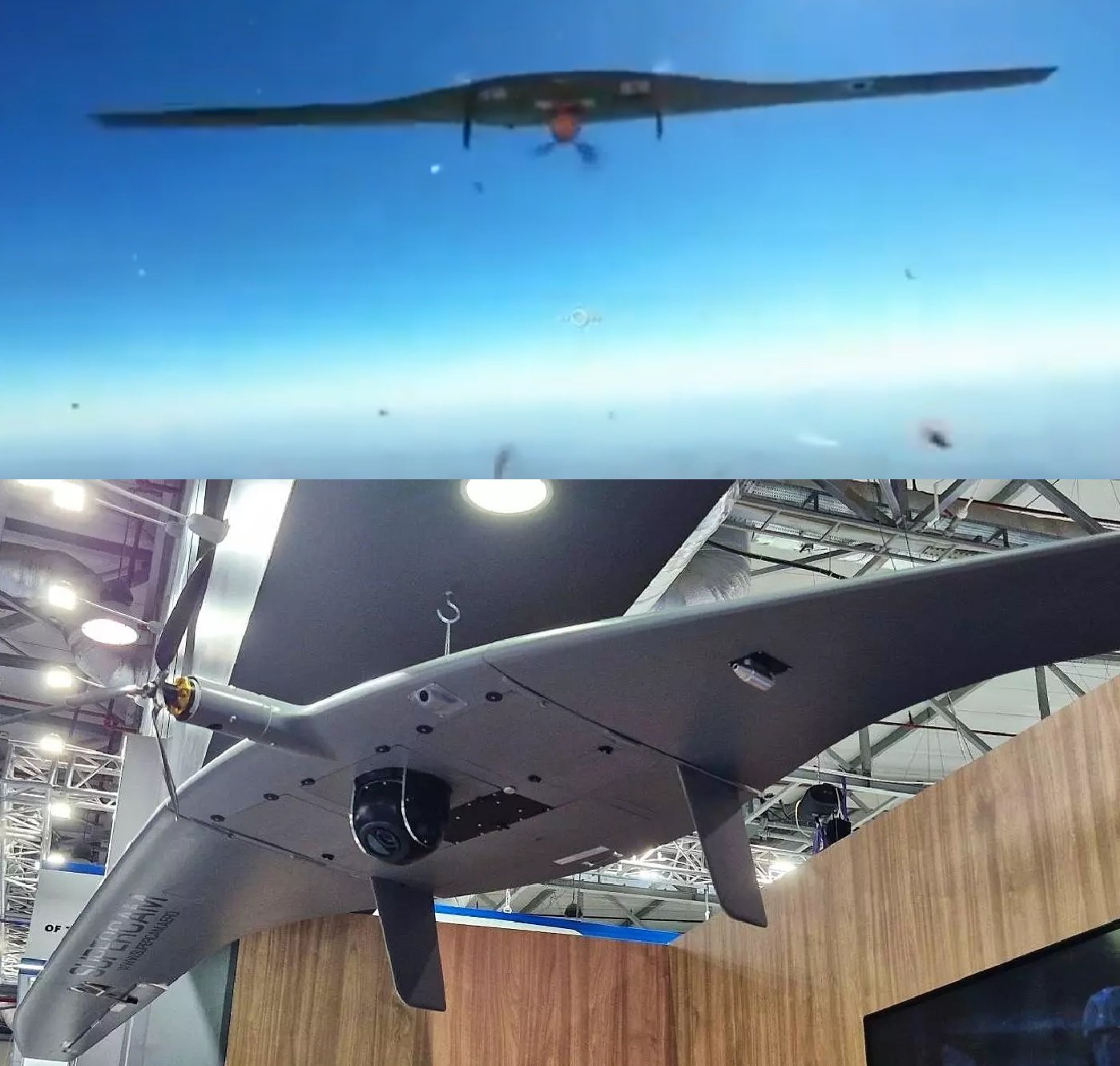
Videos appearing on September 1–2 show Russian SuperCam S350 and Knyaz Veshchiy Oleg (KVO) reconnaissance UAVs releasing nets as Ukrainian interceptor drones approach from behind. The footage was recorded by Ukrainian anti-aircraft drones and circulated by Ukrainian defense-technology adviser Serhiy Flash and the Telegram channel Voennyy Osviedomitel. Russian media also reported the deployment of net launchers on the two UAV types.
In one sequence, operators from the Signum unmanned systems battalion of Ukraine’s 59th Separate Assault Brigade recorded a KVO drone releasing a net during an attempted interception. Similar footage later showed a SuperCam deploying a net against an approaching Ukrainian interceptor.
The purpose of the system is to place a net or strands in the interceptor’s flight path. The material can become caught in the interceptor’s propellers, potentially disrupting its flight and preventing it from reaching the reconnaissance UAV.
Russian SuperCam S350 and KVO reconnaissance drones are now deploying defensive nets against Ukrainian interceptor drones, aiming to foul their propellers and avoid interception. pic.twitter.com/91fcfrDtc1
— The Defense News (@TheDefenseNews) September 2, 2026
Multiple Defensive Measures
The net launcher is part of a broader effort to improve the survivability of Russian reconnaissance UAVs against drone interceptors.
Earlier modifications reported on Russian reconnaissance drones included additional cameras for detecting approaching interceptors and systems capable of detecting radio-frequency emissions from nearby drones. These measures can provide an operator with an early warning and an opportunity to maneuver away from an approaching interceptor.
In February 2026, Russian reporting also described additional cameras on the upgraded SKAT 350M for detecting approaching interceptor drones and allowing the operator to perform evasive maneuvers.
The use of rear-facing optical sensors and radio-frequency detection had already been observed on Russian UAVs before the latest net-launching systems appeared. Earlier battlefield modifications were subsequently reported as being incorporated into newer production configurations.
SuperCam S350
The SuperCam S350 is a Russian reconnaissance UAV used for surveillance and other battlefield reconnaissance missions. Ukrainian military intelligence data lists the aircraft with a 3.2-meter wingspan, a maximum takeoff weight of 15.5 kg, a flight endurance of up to 4.5 hours, and a communications range of up to 100 km. The listed flight range is 240 km.
The addition of a net-launching system gives the aircraft another layer of protection against small interceptor drones. It combines a physical countermeasure with previously reported detection and evasive measures.
Knyaz Veshchiy Oleg Also Receives Protection
The Knyaz Veshchiy Oleg, or KVO, is another Russian reconnaissance UAV that has been observed using the defensive net system.
Ukrainian intelligence information published earlier this year describes the aircraft as having a 2.8-meter wingspan, a maximum takeoff weight of 11 kg, a stated range of up to 45 km, and an endurance of up to 3.5 hours. Its stated maximum speed is 130 km/h.
The recent footage indicates that KVO operators are also using physical countermeasures when the aircraft is targeted by an interceptor.
Ukrainian Interceptors Drive the Adaptation
Ukraine has increasingly used relatively inexpensive interceptor drones to attack Russian reconnaissance UAVs, including aircraft such as SuperCam, ZALA and Orlan. The approach allows Ukrainian forces to target reconnaissance platforms with drones rather than relying exclusively on conventional air-defense missiles.
The Institute for the Study of War previously reported Ukrainian use of tactical UAV interceptors against Russian reconnaissance and strike UAVs, including reported attacks on SuperCam and Merlin aircraft.
The development of Russian defensive nets is therefore another step in the continuing adaptation between reconnaissance UAVs and interceptor drones.
The development is not limited to Russia. Ukrainian companies have also been working on net-based drone interception. In August 2026, Ukrainian company WINFLY presented its Spider interceptor, based on the WINFLY 10 Hunter and equipped with a Karakurt net launcher designed to disable targeted drones while allowing the interceptor to return.
Drone-on-Drone Combat Continues to Evolve
The latest footage shows how reconnaissance UAVs are increasingly being equipped to respond directly to other drones. Instead of relying only on the remote operator to avoid an attack, newer systems combine detection, evasive maneuvering and physical countermeasures.
However, the available footage does not establish how effective the defensive nets are across different interception scenarios or whether they have significantly reduced Russian UAV losses. Their effectiveness will depend on factors including the relative position of the two drones, timing and the ability of the interceptor to change its flight path.
For now, the appearance of net launchers on both the SuperCam S350 and KVO indicates that drone-versus-drone interception is driving the development of new defensive systems for reconnaissance UAVs.
——— End of Article ———