The Hague, Netherlands, — The Netherlands Ministry of Defence and aerospace company Destinus signed a Concept Development & Evaluation (CD&E) contract on August 24, 2026, to develop a kinetic counter-unmanned aerial system (C-UAS) capability for the Royal Netherlands Navy. The programme, led by the Ministry’s Materiel and IT Command (COMMIT), will integrate the Hornet B2 interceptor onto several Dutch Navy warships and is scheduled for completion in the second quarter of 2027.
The contract covers the delivery of Hornet B2 interceptor systems, ship integration and Integrated Logistics Support activities. The programme is intended to move the capability towards a possible initial operating capability.
According to the Dutch Ministry of Defence, the threat from medium-range drones is increasing based on operational analyses and the current maritime threat picture. The Hornet B2 will provide an additional defensive layer alongside existing shipborne weapons, particularly against lower-cost aerial threats that can arrive in volume. It is not intended to replace high-end naval air-defence systems.
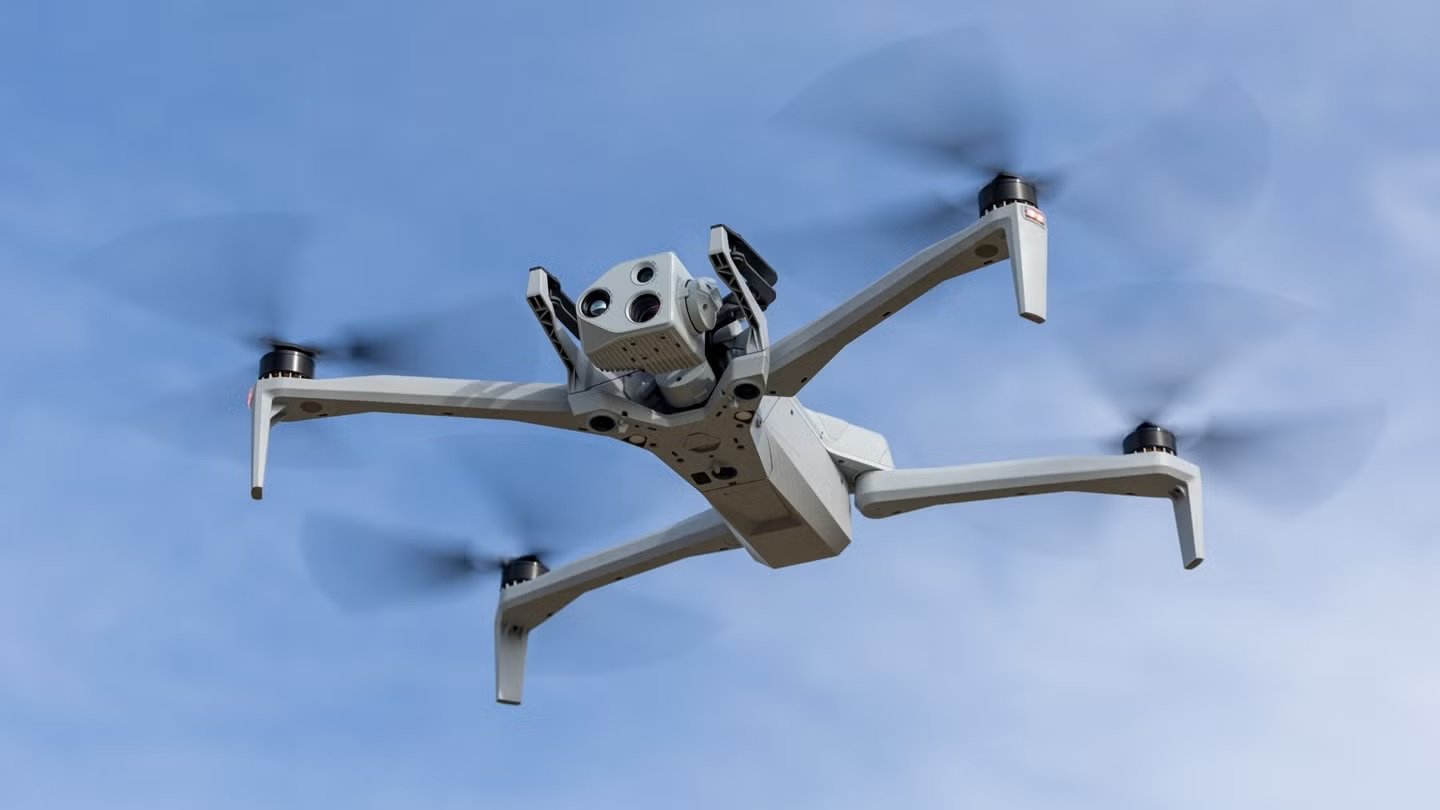
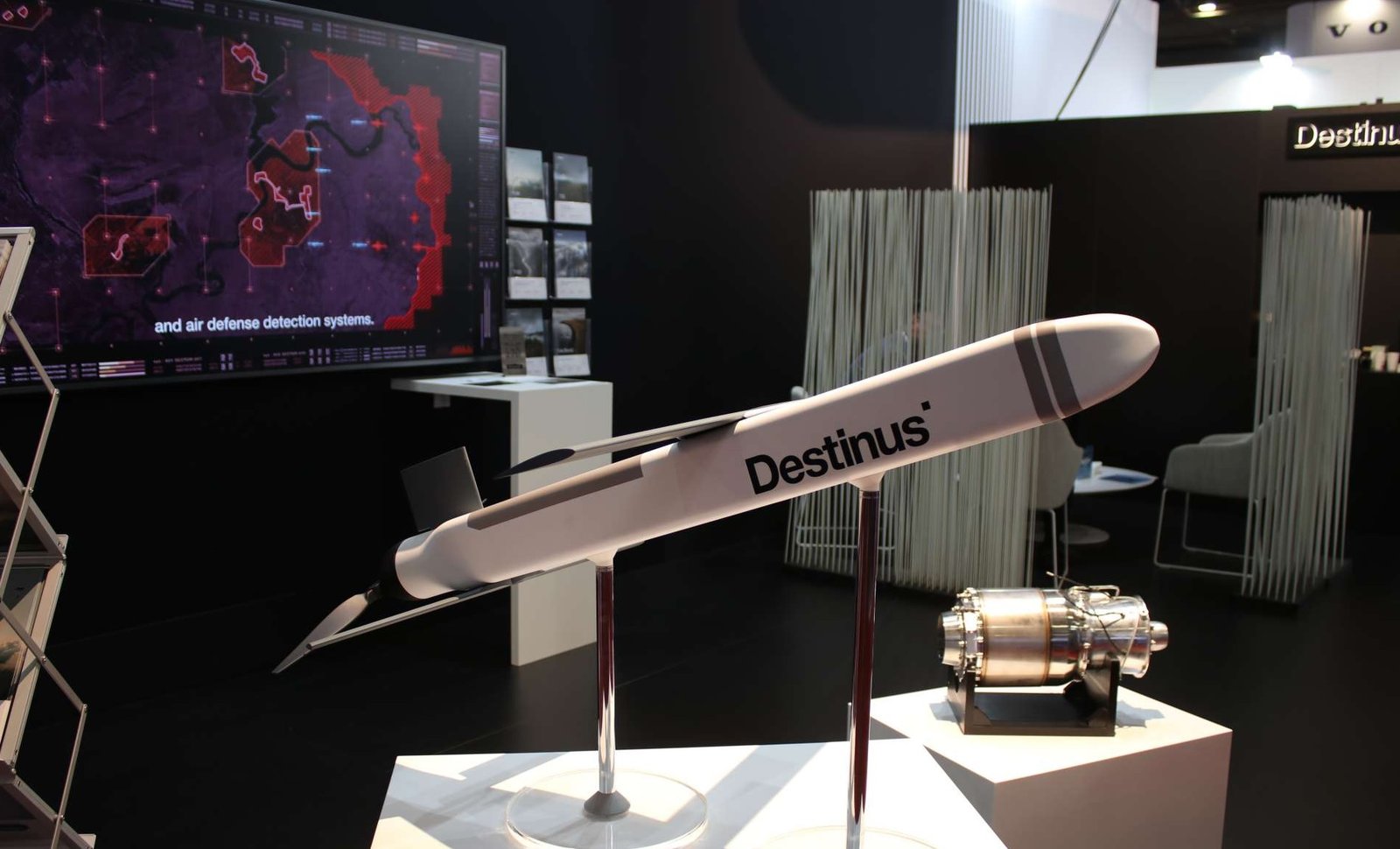
Hornet B2 Counter-Drone Interceptor
The Hornet B2 is stored in a sealed canister and launched using a rocket booster. After launch, it deploys folding wings and switches to electric-powered cruise flight. The design combines missile-like launch readiness with aircraft-like cruise flight and is intended to reduce the cost per engagement compared with traditional interceptor missiles.
Destinus states that the Hornet B2 has a range exceeding 150 kilometres, carries a 3-kilogram payload, and can engage drones, loitering munitions and helicopters. It is designed to counter subsonic targets and uses electro-optical and infrared sensors, with AI-based processing during the terminal phase. Engagement decisions remain under human command in accordance with applicable rules of engagement.
The system consists of a base station and launch platform and can be deployed from a platform compatible with a standard 20-foot ISO-container footprint. Destinus also states that the system can operate as part of a swarm. The earlier Hornet B1 is already in serial production.
Naval Integration
Royal Netherlands Navy operators will participate directly in the CD&E programme, providing operational input and helping define capability requirements and system specifications for maritime use. The work will cover ship integration, logistics, operator requirements, support arrangements and operating procedures, alongside development and testing of the land-based design for naval operations.
Destinus CEO Mikhail Kokorich said the Hornet B2 addresses the cost challenge of using expensive air-defence missiles against low-cost aerial threats arriving in large numbers.
Destinus has previously demonstrated a Hornet interceptor launched from a Spanish Navy frigate. In August 2026, the company also signed a memorandum of understanding with CUBEDIN and OMT to develop modular, containerised naval versions of the Hornet system using 10-foot or 20-foot mission modules.
The programme supports the Netherlands’ requirement for a maritime kinetic counter-UAS capability across its fleet and is scheduled to run through Q2 2027.
——— End of Article ———