London — Britain is considering the use of portable fibre-optic sonar systems on civilian and commercial ships to expand underwater surveillance and detect Russian submarines and warships.
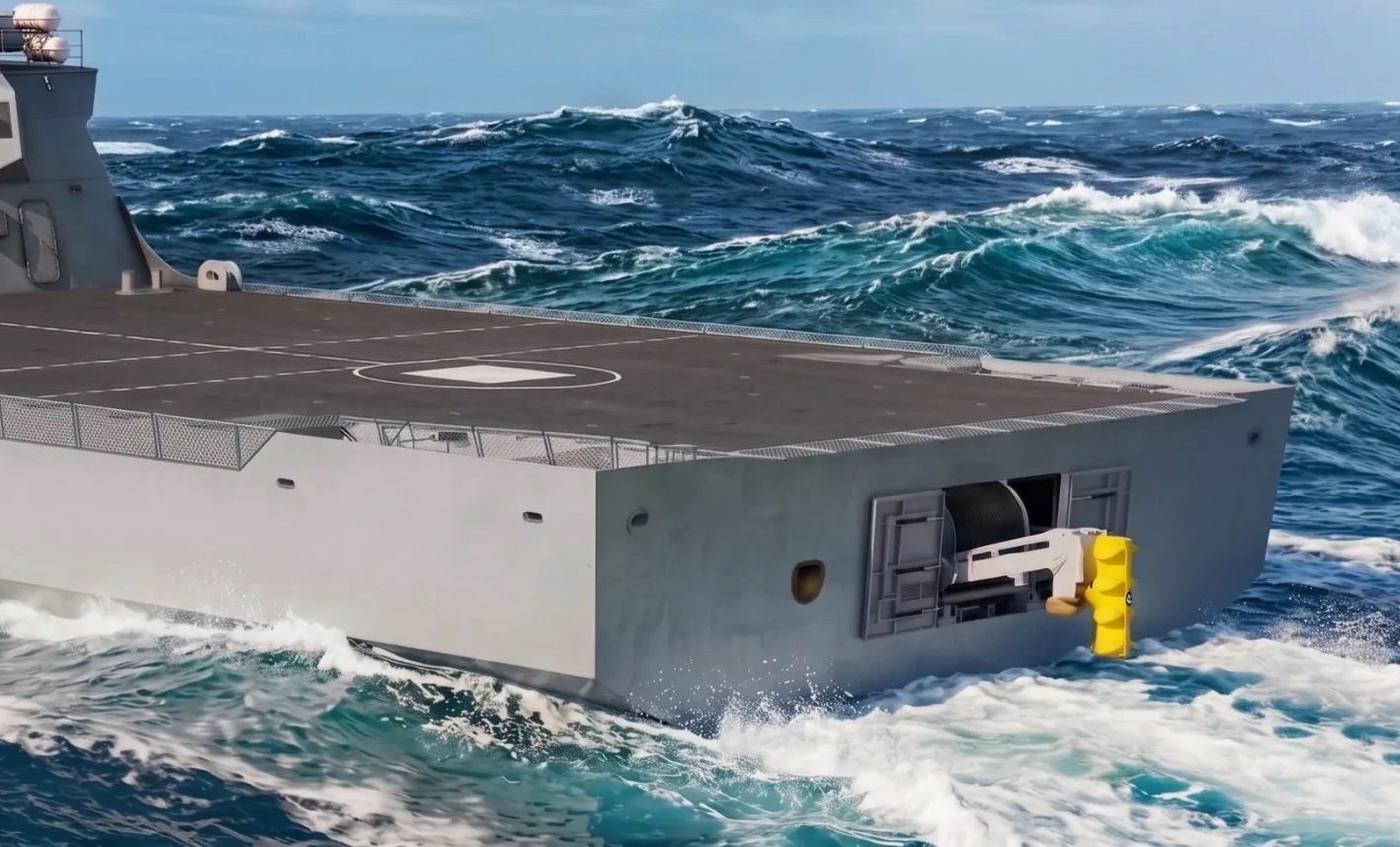
The technology, developed by Dutch company Optics11, is known as OptiArray. It uses a fibre-optic cable fitted with underwater acoustic receivers that can be towed behind a vessel. The system has been tested by the Royal Navy and is being developed for operational use by the Dutch military.
Optics11 says OptiArray can detect an oil tanker at around 100 km (62 miles) and a frigate at about 50 km. Some unmanned surface vessels can be detected at ranges of tens of kilometres. The Dutch Ministry of Defence says the system provides higher sensitivity than traditional arrays.
Unlike conventional electronic towed arrays, the fibre-optic system uses light to detect acoustic signals and does not emit a detectable electromagnetic signal. It is also immune to electromagnetic interference. The technology can provide a richer acoustic profile for identifying underwater targets.
The system can be packed into a portable container roughly 10 feet long, allowing it to be carried on the deck of ships capable of handling sea containers. Optics11 chief executive Paul Heiden said the system could be installed on civilian cargo ships as well as naval vessels, describing it as “anti-submarine warfare in a box.”
Traditional towed-array sonar has generally been installed on specialist anti-submarine warfare ships, including Royal Navy Type 23 frigates. The portable design could allow a wider range of crewed and uncrewed platforms to carry underwater surveillance equipment.
The Dutch Ministry of Defence awarded Optics11 a contract in July 2026 under its ASWINABO (Anti-Submarine Warfare in a Box) programme to deliver operational containerised systems. Earlier trials included testing a prototype aboard the Dutch submarine HNLMS Dolfijn. The system can also be deployed from land and placed on the seabed to monitor critical underwater infrastructure.
Britain's interest comes amid increased Russian naval activity around UK waters and growing concern over subsea infrastructure. In April 2026, British and allied forces tracked a Russian Akula-class attack submarine and two specialist vessels associated with Russia's Main Directorate of Deep-Sea Research (GUGI) for more than a month in and around UK waters. Sonobuoys were deployed during the operation, and no damage to cables or pipelines was confirmed.
The UK government has said the number of Russian vessels operating near UK waters has risen by about 30 per cent in recent years. More than 99 per cent of international data traffic travels through subsea fibre-optic cables, making their protection an important part of Britain's maritime security efforts.
The Royal Navy's surface fleet has also faced pressure as older Type 23 frigates retire while newer vessels enter service. Portable sonar systems could therefore provide additional surveillance coverage without requiring every sensor to be permanently installed on a specialist warship.
However, no formal UK procurement decision to equip civilian ships with OptiArray has been announced. The technology is currently being developed for operational use in the Netherlands while Britain examines its potential for expanding underwater surveillance.
Source : Telegraph
——— End of Article ———