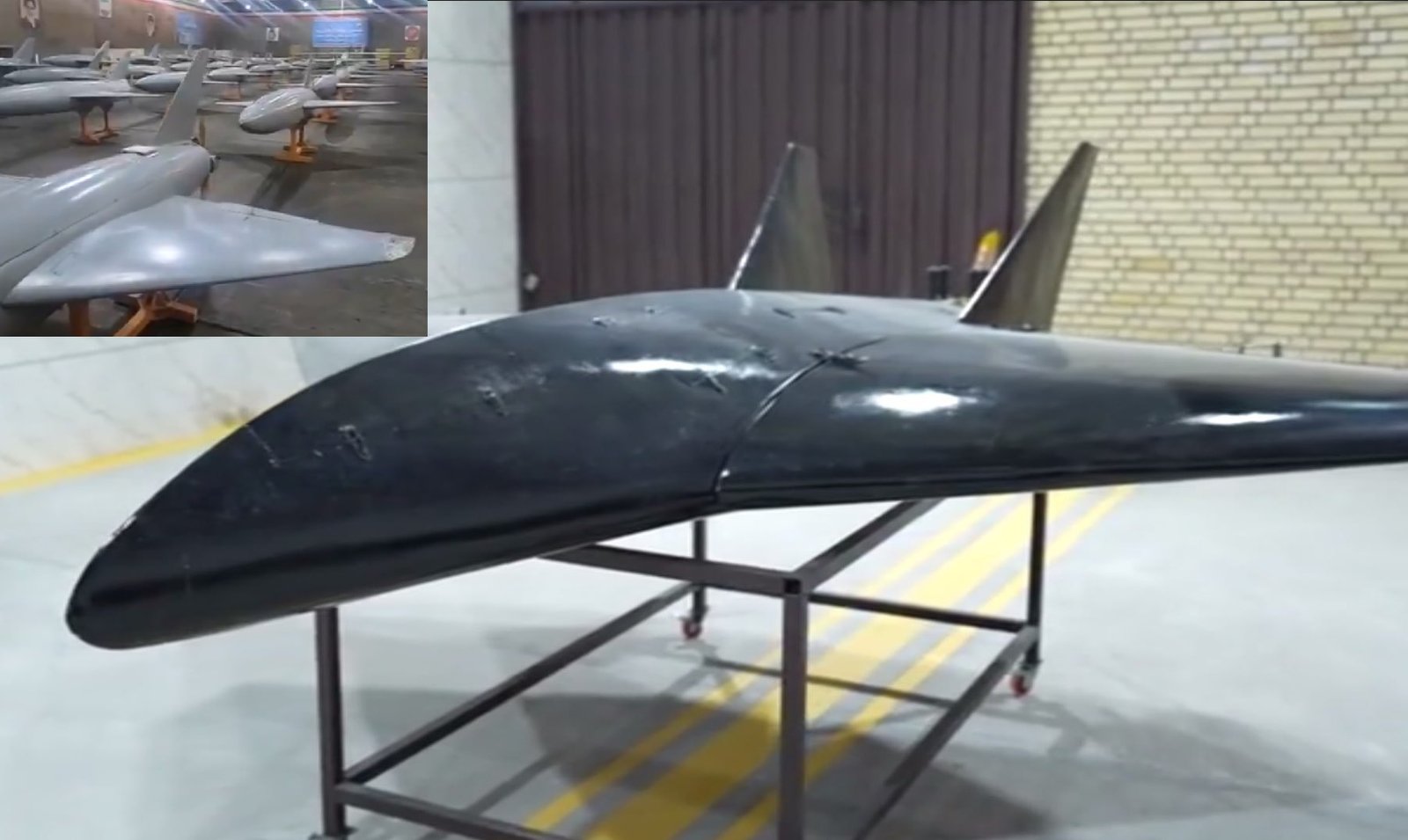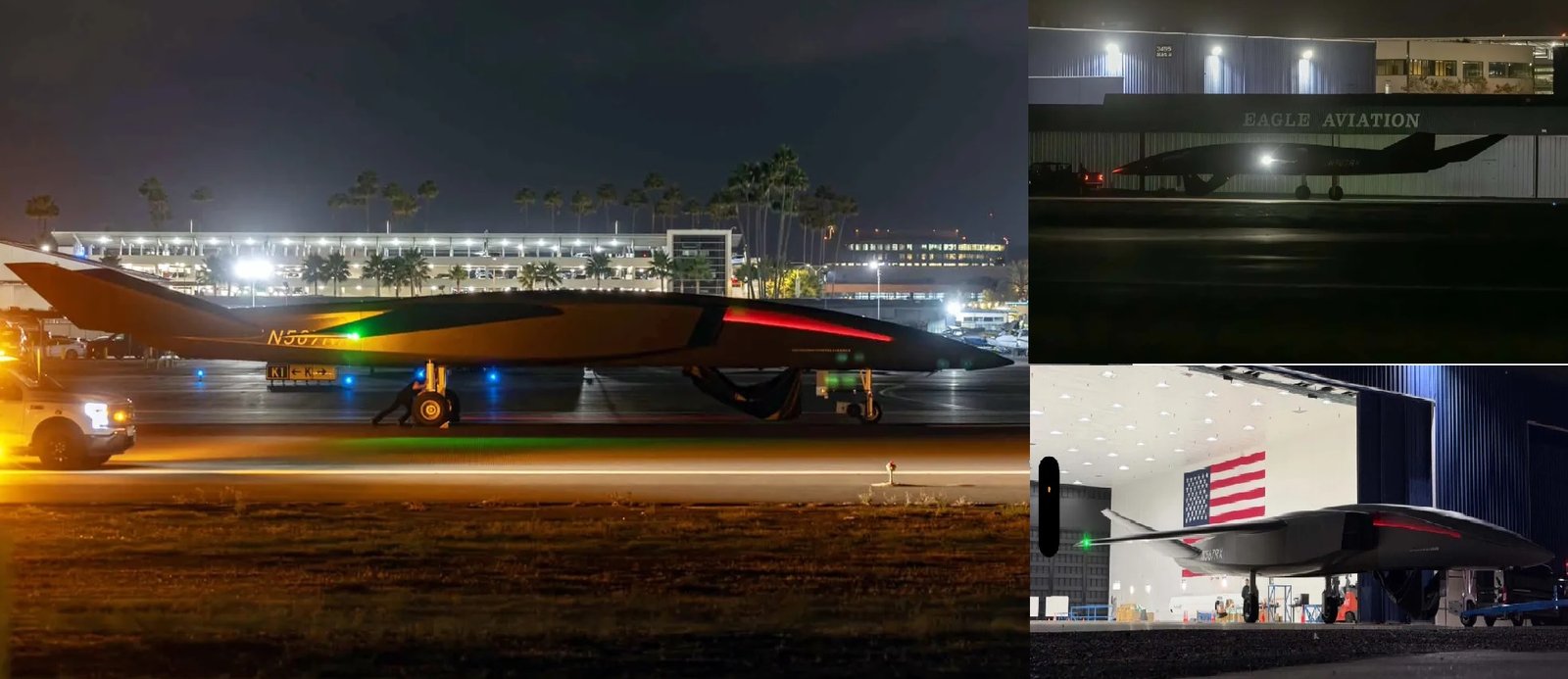
LONG BEACH, Calif. — Aevum Aerospace’s RAVN X autonomous space-launch aircraft has been identified after the unusual black, cockpitless airframe was photographed outside a hangar at Long Beach Airport on September 3, 2026.
The aircraft was spotted by Ricky Schol, a plumber and aviation photographer who has photographed aircraft at Long Beach Airport for 16 years. Schol said he noticed a bright light coming from a hangar that had not been open for a long time while driving past the airport.
At first, he thought the aircraft might be an F-117 Nighthawk. After turning around and stopping about 100 feet away, he saw an aircraft without a cockpit and began taking photographs.
“I was blown away when I pulled over and saw the future in front of my eyes. I had no clue what I was looking at,” Schol said.
Schol watched as ground crews moved the aircraft out of the hangar, positioned it on the runway and later returned it inside. He reported hearing no engine noise or seeing exhaust during the activity.
Aircraft identified as RAVN X
Photographs taken by Schol and other aviation photographers, including Matthew Dawson, showed the aircraft carrying the FAA registration N567RX. The registration has been reserved by Aevum to an address at Long Beach Airport, helping identify the aircraft as the RAVN X, developed by Aevum Aerospace.
Aevum has described the RAVN X as an autonomous first stage of a two-stage space-launch system. The aircraft is intended to carry a rocket-powered second stage to altitude before releasing it to continue the flight into orbit.
The RAVN X was designed to be about 80 feet long, with a 60-foot wingspan and a reported gross weight of approximately 55,000 pounds. Aevum's concept called for the aircraft to operate at high subsonic speeds and reach an altitude of about 60,000 feet.
Program has been largely out of public view
Aevum publicly presented the full-scale RAVN X in December 2020 at Cecil Spaceport in Jacksonville, Florida. Company CEO Jay Skylus described the aircraft as the “mothership” for a two-stage launch system intended to place small payloads into low Earth orbit.
At the time, Aevum planned to conduct vehicle-level testing, obtain the required airworthiness certification and begin orbital launch tests from Cecil Spaceport by late 2021.
Those publicly announced milestones did not take place. The company later provided little public information about the program, while Gunter’s Space Page reported that activity appeared to have stopped by August 2024 and questioned whether operational flight hardware had been produced.
The RAVN X was also associated with the ASLON-45 mission, a planned small-satellite launch involving the U.S. Space Force. The mission did not proceed to an orbital launch using the RAVN X.
Long Beach appearance raises questions about the airframe
The recent appearance provides evidence that the RAVN X airframe is still present and being handled at Long Beach Airport. However, it does not establish that the aircraft is ready for flight.
Images examined by The War Zone and The Aviationist show landing gear that appears fixed and suited to ground handling. The lack of engine noise or exhaust during the observed movement has also raised questions about whether the aircraft is a flight-capable prototype or a modified version of the earlier RAVN X mockup.
The Aviationist reported that the RAVN X's recent appearance involved what it described as autonomous taxi testing, while also noting that it was not immediately clear whether the airframe was the same one displayed by Aevum in 2020.
Aevum has not publicly explained the purpose of the September 3 activity in the available reports.
As of September 2026, the RAVN X has not conducted an orbital launch. Its appearance at Long Beach Airport therefore represents a rare public sighting of a program that had largely disappeared from view, but it remains unclear what stage of development the aircraft has reached.
——— End of Article ———