SEOUL — South Korean President Lee Jae Myung has ordered the Defense Ministry to accelerate development of the Jangbogo-N nuclear-powered attack submarine (SSN) program while reaffirming plans to complete the transfer of wartime operational control (OPCON) of South Korean forces from the United States before his term ends.
Lee issued the instructions on August 18, shortly after U.S. President Donald Trump ordered a significant reduction in the annual Ulchi Freedom Shield exercise. Trump cited his relationship with North Korean leader Kim Jong Un and South Korea’s refusal to participate in potential U.S. military actions related to Iran. Seoul and Washington subsequently shortened the exercise and reduced some field-training activities.
Lee said stronger South Korean defense capabilities would strengthen, rather than weaken, the U.S.-South Korea alliance. He also called for improved training for officers in integrated conventional, cyber and other military operations.
Jangbogo-N Program
South Korea formally launched the Jangbogo-N project on May 26, 2026, following a bilateral understanding reached after the October 29, 2025, summit in Gyeongju. The United States agreed to support the project, including efforts related to nuclear fuel.
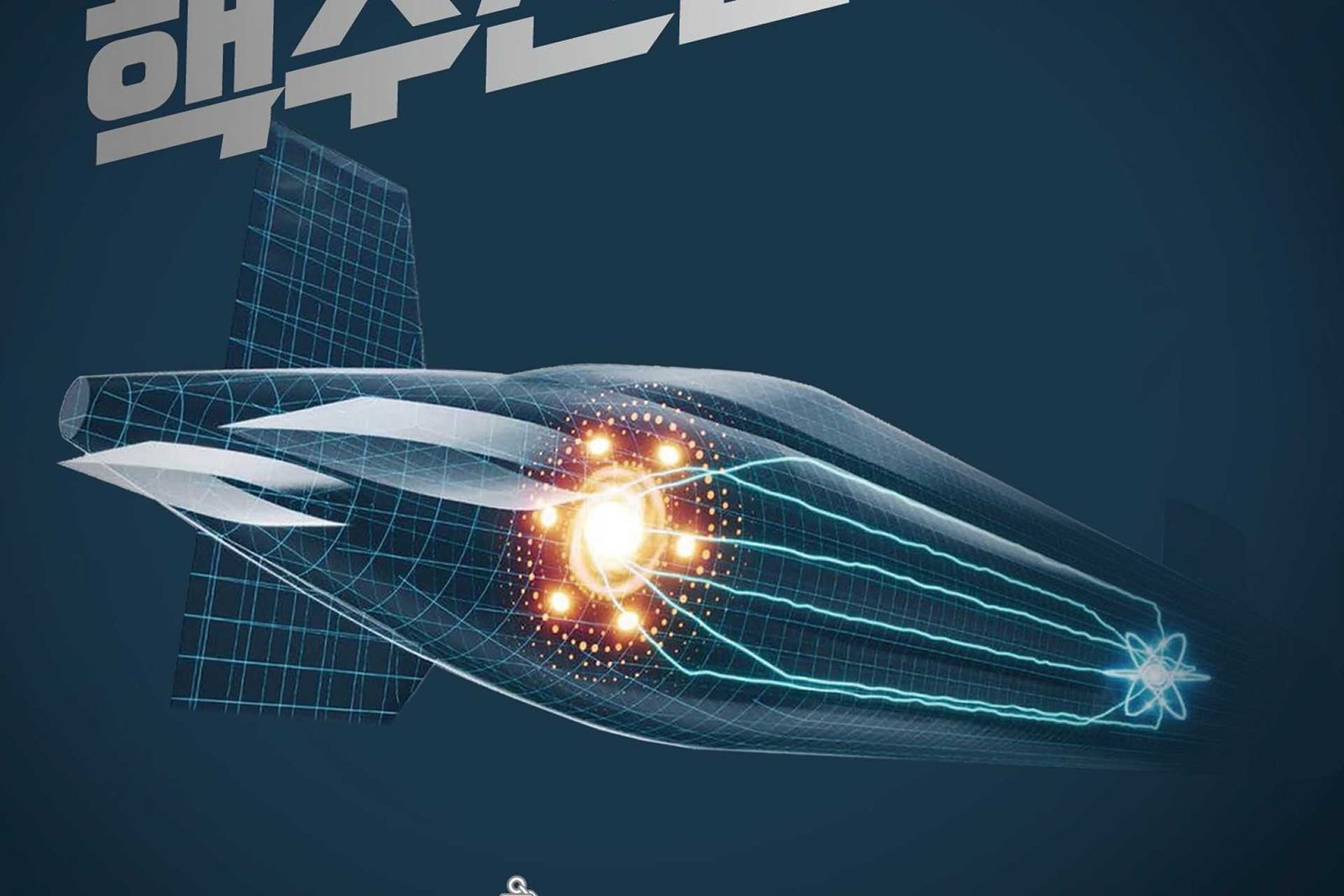
The program calls for three to four conventionally armed nuclear-powered submarines of about 8,000 tons. The first submarine is planned for launch in the mid-2030s and entry into service in the late 2030s.
The submarines will use low-enriched uranium enriched below 20 percent. Nuclear propulsion is intended to provide long submerged endurance and sustained speeds above 25 knots. The submarines will carry conventional weapons, with detailed final weapons specifications yet to be publicly confirmed.
The program is planned around a roughly 40-year lifecycle, covering development, construction, operations, maintenance, fuel management and eventual decommissioning. South Korean officials expect it to create more than 40,000 jobs.
Domestic Construction
South Korea plans to build the submarines domestically, with Hanwha Ocean and HD Hyundai Heavy Industries expected to play major roles alongside the country's nuclear sector and defense research organizations.
Trump had previously suggested that the submarines could be built at Hanwha’s Philadelphia shipyard. However, South Korea has chosen a domestic construction approach because the U.S. facility does not have the specialized nuclear-submarine infrastructure required for SSN construction.
The Defense Ministry issued a draft special law on August 11 covering the acquisition, operation and nuclear-safety management of nuclear-powered submarines. Seoul aims to establish the necessary legal framework during 2026, while dedicated project teams have also been created within the Defense Ministry and Defense Acquisition Program Administration.
Nuclear Fuel Issues
The existing 2015 U.S.-South Korea civil nuclear cooperation agreement does not fully cover military naval propulsion. A separate arrangement is therefore required for issues including fuel supply, enrichment, fabrication, transportation, loading, safeguards and spent-fuel management.
South Korea has stated that it will remain within the Nuclear Non-Proliferation Treaty and cooperate with the International Atomic Energy Agency (IAEA) on safeguards.
The country previously examined a nuclear-submarine project in 2003 under Project 362, including reactors using higher-enrichment uranium. The effort was abandoned after undeclared enrichment experiments attracted IAEA scrutiny and U.S. concerns.
Washington subsequently opposed South Korean nuclear-submarine ambitions for more than two decades because of proliferation concerns. That position changed after the 2025 Trump-Lee summit.
Current Submarine Fleet
Until Jangbogo-N enters service, South Korea will continue operating about 21 conventional submarines: nine 1,290-ton KSS-I Jang Bogo-class, nine 1,860-ton KSS-II Son Won-il-class submarines equipped with air-independent propulsion, and three 3,750-ton KSS-III Dosan Ahn Chang-ho-class submarines equipped with vertical-launch missile cells and lithium-ion batteries.
To maintain capability during the transition, Seoul launched a 468.9 billion won modernization program in November 2025 for selected KSS-II submarines. The program includes upgrades to combat systems and sonar and is scheduled to continue through 2033.
The Jangbogo-N program is being pursued alongside the planned OPCON transfer and broader efforts to strengthen South Korea’s ability to conduct independent military operations while maintaining its defense alliance with the United States.
——— End of Article ———