REDONDO BEACH, Calif. — The U.S. Space Force has awarded Impulse Space a $28 million contract for a future space domain awareness mission scheduled to launch no earlier than 2029.
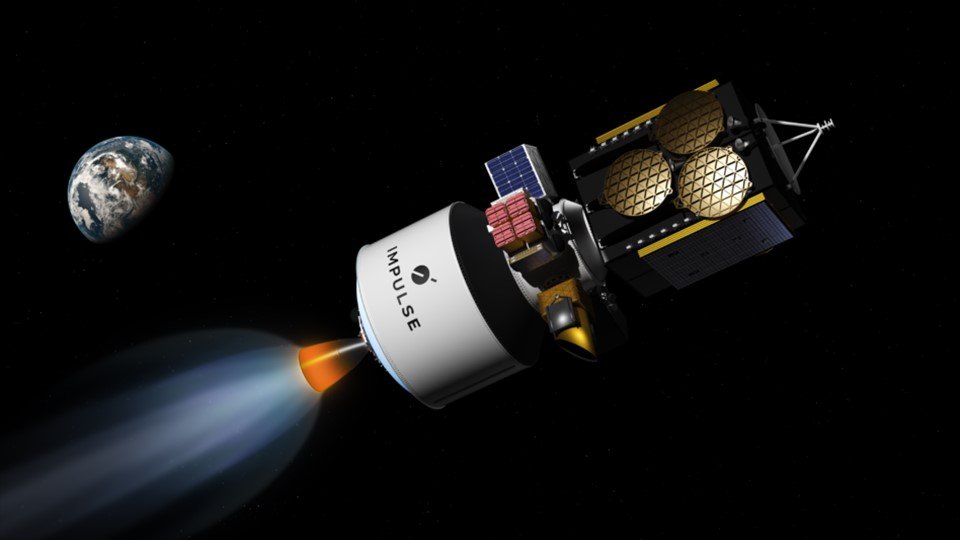
Under the agreement, a government-provided launch will place an Impulse Space Mira spacecraft into low Earth orbit (LEO). The spacecraft will host a government-furnished optical payload developed by MIT Lincoln Laboratory to support monitoring of objects in geostationary orbit (GEO), approximately 36,000 kilometers above Earth.
Mira to provide a maneuverable observation platform
Mira is designed for precise orbital maneuvering and uses a chemical propulsion system. Impulse Space says the spacecraft can provide up to 850 meters per second of delta-v when carrying a 100-kilogram payload.
This maneuverability will allow the spacecraft to reposition the hosted optical sensor and change its viewing geometry while conducting space domain awareness activities. The mission is intended to support the detection, tracking and characterization of objects in orbit.
The optical payload for the mission will be supplied by the U.S. government and built by MIT Lincoln Laboratory.
Funding includes $19.75 million APFIT award
The contract is being funded in part through a $19.75 million award from the Accelerate the Procurement and Fielding of Innovative Technologies (APFIT) program for fiscal year 2026. The award is sponsored by U.S. Space Command.
The APFIT program is intended to accelerate the procurement and transition of innovative technologies into operational use. For this mission, the funding supports procurement of the Mira spacecraft.
Mira has already flown three missions
Impulse Space's Mira spacecraft has completed three missions in low Earth orbit. The company has also demonstrated the vehicle's maneuvering capabilities through proximity operations.
Earlier in September, two Mira spacecraft from the LEO Express 2 and LEO Express 3 missions conducted a targeted flyby and approached to within approximately 200 meters of each other. Impulse Space used its own guidance, navigation and control software for the operation.
The company says Mira has demonstrated both long-duration and rapid engine burns, giving operators different maneuvering options for missions in orbit.
Part of Impulse Space's expanding government work
The new Space Force award adds to Impulse Space's growing portfolio of U.S. government contracts.
The company was selected in July for a position in the National Security Space Launch Phase 3 Lane 1 program for its Helios upper stage. It has also received additional work from the Space Force's Space Safari program for the VICTUS SALO 2 and VICTUS SALO 3 missions.
Impulse Space, founded by Tom Mueller, is based in Redondo Beach, California.
On September 16, the company announced a $308 million extension to its Series D funding round, bringing the total Series D round to $808 million. The company said the additional funding would support product development, workforce growth and expansion of its facilities and capabilities.
The planned 2029 mission will use Mira's maneuverability to host an optical sensor in LEO and support Space Force space domain awareness activities focused on objects operating in GEO.
——— End of Article ———