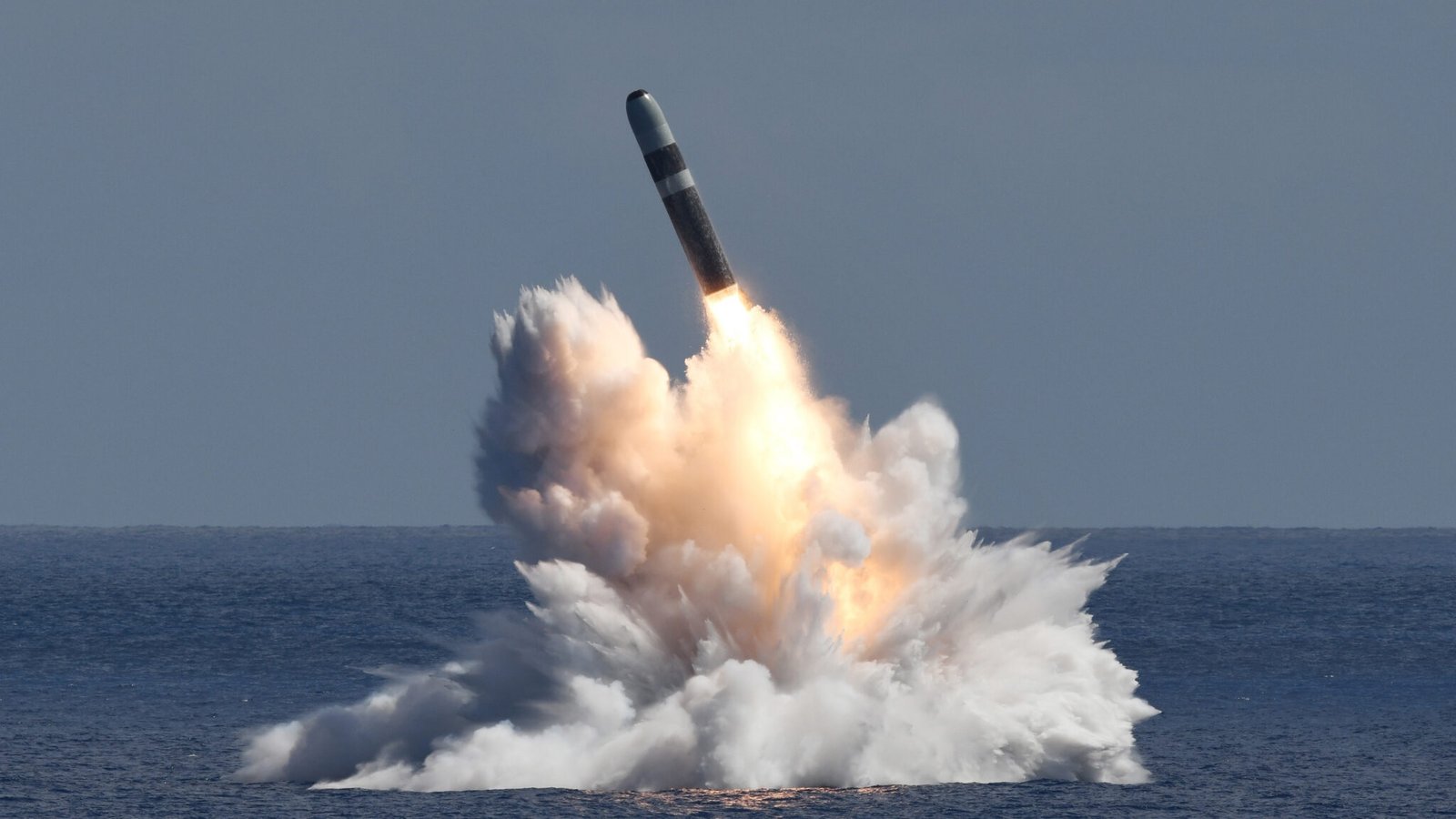
BERLIN — Germany is exploring options to provide financial and conventional military support to the United Kingdom’s Trident nuclear deterrent, according to a Telegraph report published on August 26. The discussions are part of wider efforts in Europe to strengthen its own defence capabilities and reduce reliance on the United States.
Berlin is considering financial support for Britain’s nuclear programme and closer cooperation with the existing nuclear forces of Britain and France, rather than developing its own nuclear arsenal. German officials have cited the country’s wartime history as one reason for avoiding an independent nuclear capability.
Possible German Support
Several forms of support are reportedly being examined, including:
- Financial assistance: Germany could contribute to the cost of maintaining and modernising Britain’s nuclear deterrent.
- Faslane protection: Germany could deploy German-operated Patriot air-defence systems to protect HM Naval Base Clyde at Faslane in Scotland, which hosts Britain’s nuclear-armed submarine fleet.
- Industrial cooperation: German companies could potentially assist with future submarine construction, missiles or uranium-enrichment infrastructure for warheads.
A British defence source questioned whether German industry currently has the specialised expertise needed for Britain’s nuclear submarine programme. However, the source described conventional air defence for Faslane as a more credible, likely and appropriate contribution.
The UK is undertaking a major nuclear modernisation programme estimated at about £63 billion over coming years. It includes four new Dreadnought-class ballistic-missile submarines and development of a new warhead with the United States. Britain maintains an arsenal of around 200 nuclear warheads, which it assigns to NATO.
Britain also relies on the United States for important parts of the Trident system. Trident missiles are manufactured and serviced at the US submarine base at Kings Bay, Georgia.
Wider European Nuclear Cooperation
Talks involving Berlin, London and Paris have reportedly intensified in recent months amid concerns about the future reliability of US security commitments under the Trump administration and the wider security situation in Europe, including Russia.
Germany is also strengthening nuclear-related cooperation with France. Germany and France have established closer dialogue on nuclear deterrence, and German conventional forces are scheduled to participate for the first time in France’s Poker nuclear exercises later this year.
France and the UK remain the only European countries with independent nuclear arsenals. Britain has committed its nuclear deterrent fully to NATO’s defence, while France maintains its own independent nuclear force.
A UK Ministry of Defence spokesman said the nuclear deterrent remains a cornerstone of national security and protects the UK and NATO allies. A German government spokesman, however, denied that the reported talks were taking place.
The discussions come alongside broader UK-Germany defence cooperation, including the Trinity House Agreement. Chancellor Friedrich Merz’s government has said Germany does not seek its own nuclear weapons but is interested in arrangements involving British and French capabilities while remaining within NATO and non-proliferation commitments.
No formal agreement has been announced. Any German support for Britain’s deterrent would leave command and control of the UK’s nuclear weapons solely with London.
——— End of Article ———