WASHINGTON — The United States has formally removed Syria from its list of State Sponsors of Terrorism, ending a designation that had been in place since 1979 and removing a major U.S. policy barrier to investment and economic activity in the country.
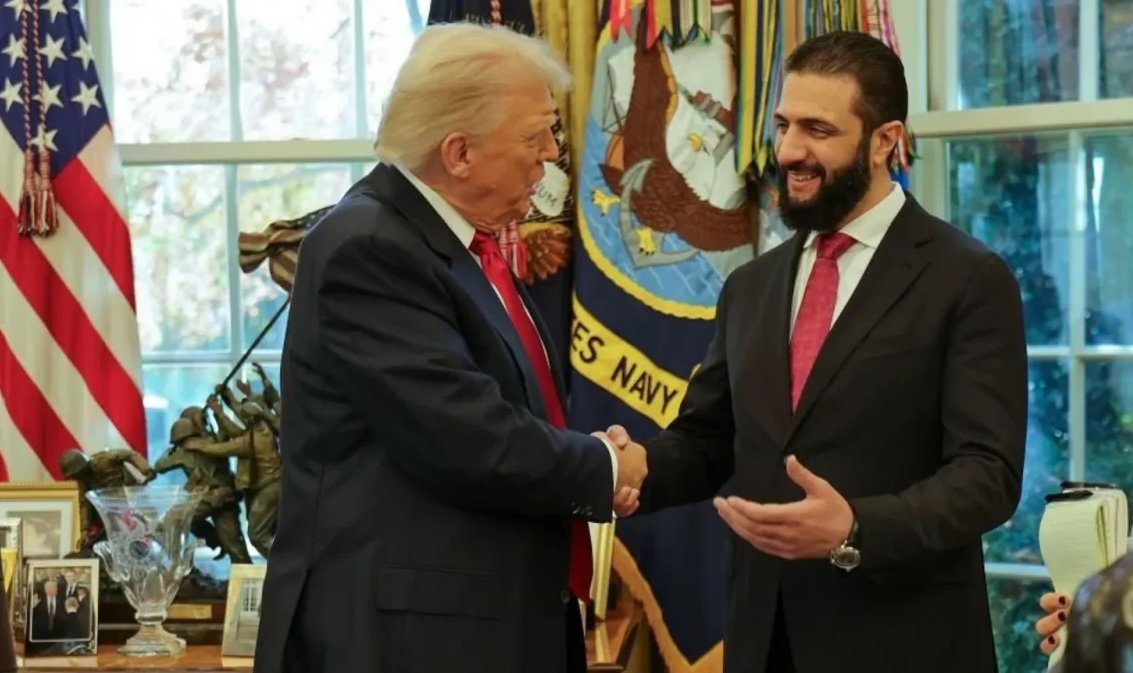
U.S. Secretary of State Marco Rubio authorized the formal rescission on August 24 after the mandatory 45-day congressional review period ended without lawmakers blocking the decision. President Donald Trump had notified Congress on July 8 of his administration’s intention to remove Syria from the list following his meeting with Syrian President Ahmed al-Sharaa in Ankara.
Rubio said the decision was taken in recognition of actions and further commitments by the Syrian government under al-Sharaa to distance Syria from international terrorism. He also cited Syria’s counterterrorism activities, including its cooperation against ISIS and other militant networks.
HTS designation also revoked
The State Department also revoked the designation of al-Nusrah Front, also known as Hay’at Tahrir al-Sham (HTS), as a Specially Designated Global Terrorist organization. The Treasury Department’s Office of Foreign Assets Control (OFAC) separately removed HTS from the Specially Designated Nationals and Blocked Persons List.
The move follows the State Department’s July 2025 decision to revoke HTS’s designation as a Foreign Terrorist Organization.
Treasury Secretary Scott Bessent said the latest action fulfills President Trump’s commitment to provide sanctions relief to Syria and said it would help encourage additional investment and support political and economic stability.
Impact on financial and economic activity
Syria’s State Sponsor of Terrorism designation had imposed restrictions involving U.S. foreign assistance, defense sales and exports, as well as certain dual-use goods. The designation also created additional compliance requirements for companies considering business activity in the country.
The latest action removes Syria from the prohibitions under the U.S. Terrorism List Governments Sanctions Regulations. U.S. financial institutions can provide services involving Syrian banks and process related payments when no sanctioned parties are involved.
The U.S. administration has already taken several steps to reduce restrictions on Syria. These include the June 2025 executive order that terminated the broader Syria sanctions program and related national emergency, as well as earlier measures concerning HTS and al-Sharaa. Congress has also taken action to lift sanctions under the Caesar Syria Civilian Protection Act.
The Commerce Department is expected to review export-control rules connected to Syria. However, the timing of any new guidance remains unclear.
Syria seeks investment for reconstruction
The decision comes as Syria seeks international investment and financial support for reconstruction after more than 13 years of conflict.
The World Bank estimates Syria’s reconstruction costs at about $216 billion, based on its assessment of damage to infrastructure and buildings between 2011 and 2024. The assessment found direct physical damage of about $108 billion, with infrastructure accounting for the largest share.
Syrian officials have welcomed the U.S. decision, describing it as an important step toward reconnecting the country with international financial and economic systems and attracting foreign investment.
The move also follows growing engagement between Washington and Damascus since the fall of Bashar al-Assad’s government in December 2024. The Trump administration has cited Syria’s counterterrorism cooperation and commitments regarding future support for international terrorism as factors in its decision to remove the designation.
Three countries remain on U.S. list
With Syria’s removal, the U.S. State Sponsors of Terrorism list now contains Cuba, Iran and North Korea.
The removal of Syria from the list does not mean that all U.S. sanctions or restrictions concerning Syrian individuals and entities have ended. Treasury has stated that sanctions can continue to apply to individuals, organizations and activities that remain subject to separate U.S. authorities.
The decision represents a further change in U.S. policy toward Syria and removes one of the major restrictions that had complicated international investment and financial activity involving the country.
——— End of Article ———