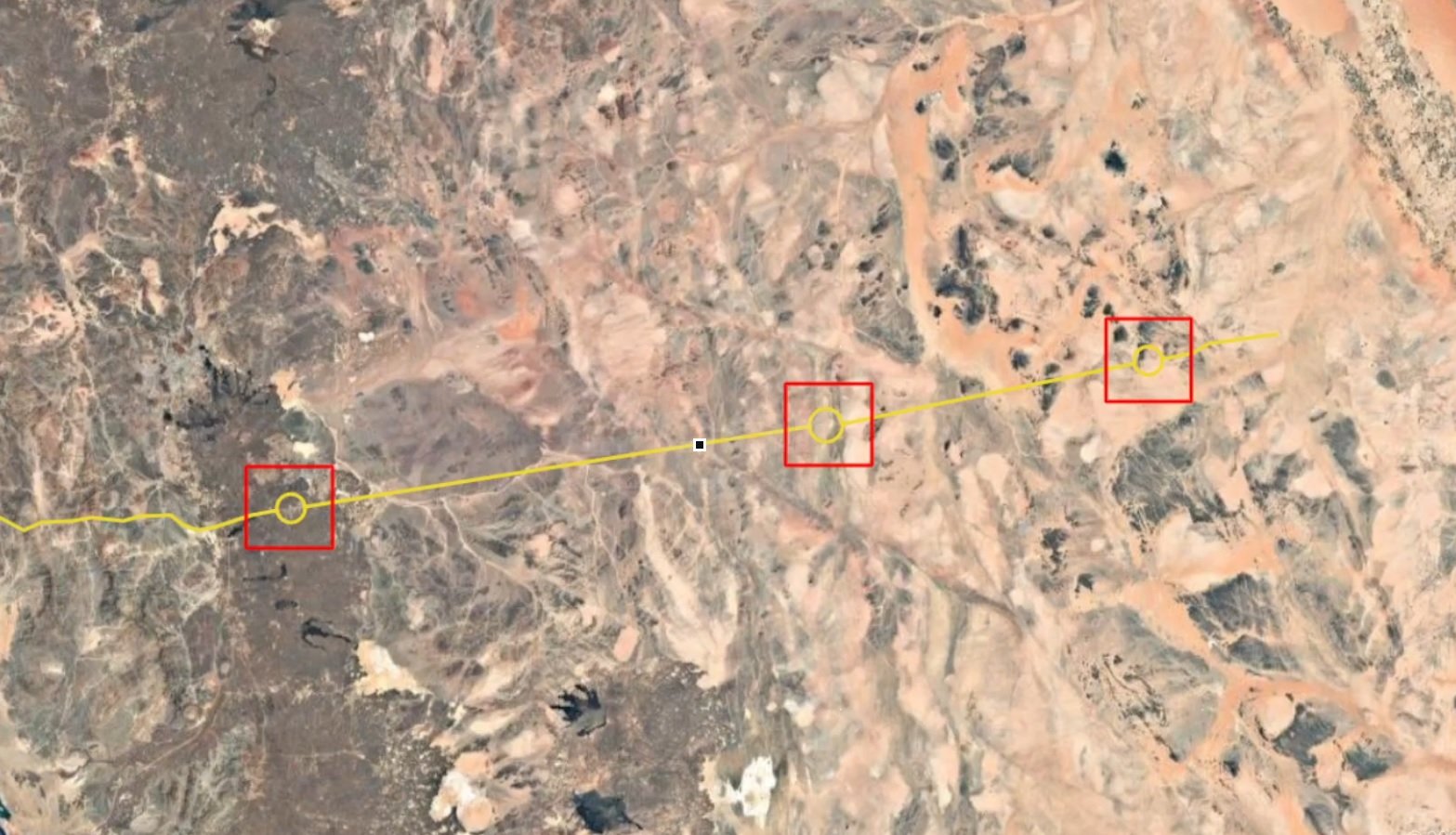
RIYADH — Newly released commercial satellite imagery shows significant fire damage at a major pumping station on Saudi Arabia’s East-West crude oil pipeline, with separate assessments indicating possible damage at another station. The findings follow drone attacks on September 10 that prompted Saudi authorities to shut down the pipeline as a precaution.
The East-West Pipeline, or Petroline, stretches about 1,200 kilometers (745 miles) from oil facilities near Abqaiq in Saudi Arabia’s Eastern Province to the Red Sea port of Yanbu. Built in the early 1980s, the pipeline has a design capacity of up to 7 million barrels per day following expansions and provides an alternative route to the Strait of Hormuz.
🚨 This is starting to look MUCH bigger than a single strike on Saudi Arabia’s East-West oil pipeline.
— Soar (@SoarAtlas) September 15, 2026
Satellite imagery has now showed significant damage at Pump Station 9, while possible damage is also visible at Pump Station 8, both along the same critical pipeline system.… pic.twitter.com/GjvNXYJ6i1
Satellite Imagery Shows Fire Damage
High-resolution imagery from Vantor, released around September 13, shows extensive charring and blackened areas across a pumping station complex southeast of Medina near Al Mesaba’ah. Before-and-after images show a large burn scar across much of the facility, with crude oil visible outside the perimeter.
Open-source imagery analyzed by Soar Atlas and other platforms identifies the heavily damaged facility as Pump Station 9, where the process area and structures show significant fire impact. Other assessments, including Global Recon-related analysis, have identified possible or confirmed fire damage at a second station along the same corridor.
NASA and Copernicus Sentinel satellite data detected multiple heat sources and smoke plumes along roughly 110 kilometers of the pipeline corridor on September 10. VIIRS analysis indicated that one major pumping station complex burned for at least 13 hours. Some heat signatures were associated with emergency flare pits used for controlled burn-off rather than direct pipeline ruptures.
Saudi Arabia Confirms Drone Attacks
Saudi Arabia’s Ministry of Energy and Foreign Ministry said drones launched from Iraq struck targets in the Riyadh and Medina regions on September 10. The attacks caused injuries requiring medical treatment and material damage.
The pipeline was shut down while emergency and technical teams assessed the infrastructure. Iraqi officials later said the drones originated from Maysan province in southeastern Iraq and launched investigations. No group has publicly claimed responsibility, although the incident has been linked in reporting to Iranian-backed militias operating in Iraq.
Saudi authorities have not confirmed the exact number of damaged stations or released a complete public damage assessment.
Repair Could Take Several Weeks
The East-West Pipeline has 11 to 13 main pumping stations that maintain pressure and flow across the route. Damage to stations serving the same section could reduce throughput even if partial operations resume.
Officials briefed on the assessment told the Associated Press that repairs could take three to five weeks. One official said partial pipeline operations could be possible during repairs, although the amount of crude that could move remains unclear. Reuters cited other estimates of up to six weeks, while also reporting that partial operations could begin earlier.
Saudi Aramco, which operates the pipeline, has not announced a firm restart schedule or detailed public assessment.
Pipeline Shutdown Adds Pressure to Oil Exports
Before the shutdown, Petroline was carrying an average of about 2.6 million to 4 million barrels per day since late August, according to Rystad Energy analysis. Yanbu stocks were reportedly sufficient for only several days of exports at recent rates if the pipeline remained fully offline.
The disruption is particularly important because Saudi Arabia had been using Petroline to move crude toward the Red Sea amid severe disruption and elevated risks around the Strait of Hormuz. At the same time, security concerns continue around the Red Sea and Bab el-Mandeb, where Houthi forces have expanded their presence around additional islands, according to reports from Yemeni government and Houthi sources.
Saudi crude production had already fallen to 6.24 million barrels per day in August 2026, according to the figures provided.
Brent crude subsequently moved above $100 per barrel, reaching around $104–$105 per barrel as markets assessed the supply risks.
As of September 15, Saudi authorities had not provided a firm date for the full restoration of the East-West Pipeline. Satellite and open-source monitoring continue to provide the main publicly available evidence of the damage while technical teams assess the affected facilities.
——— End of Article ———