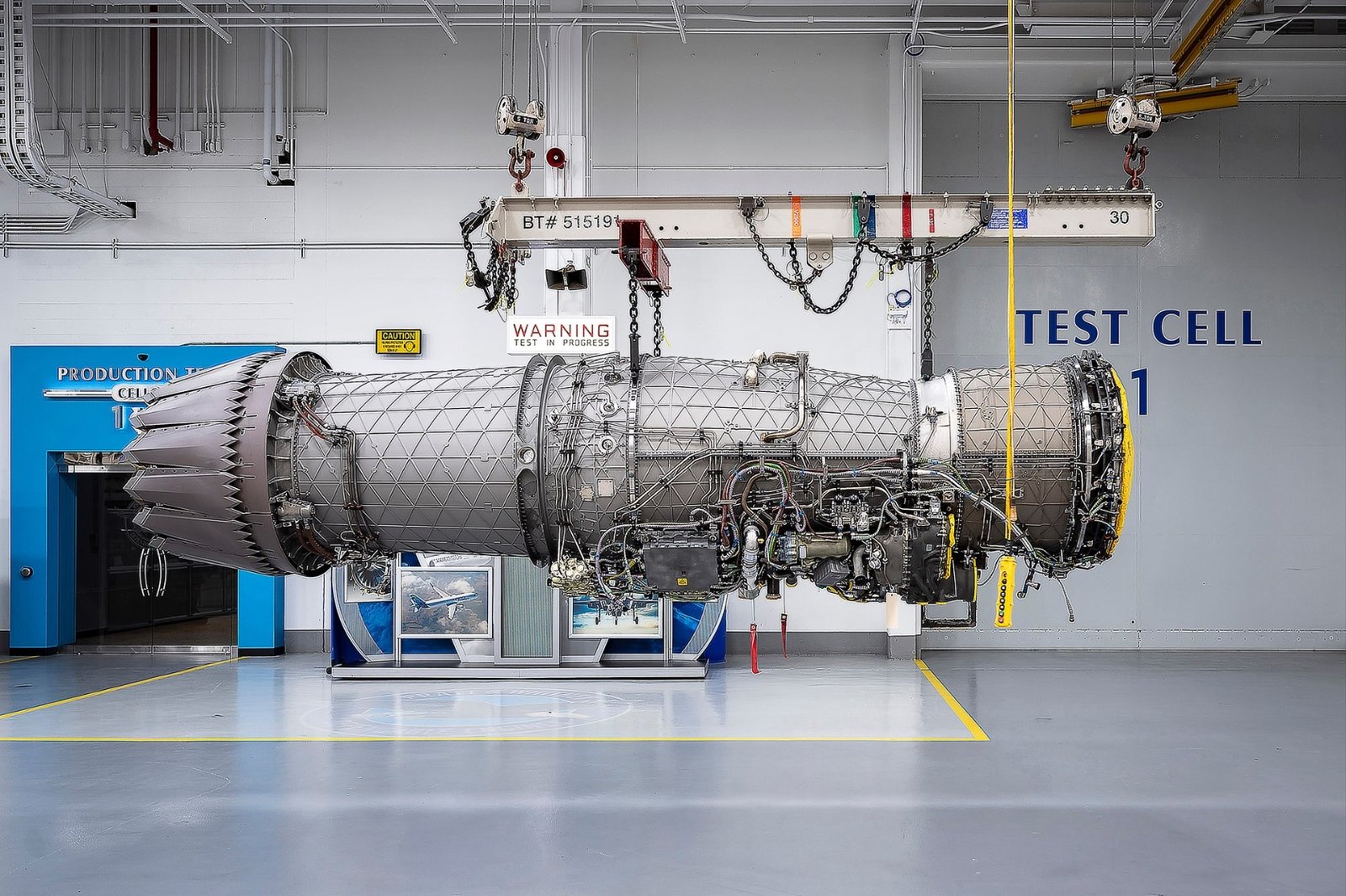
CINCINNATI, — GE Aerospace is preparing to assemble the first physical test asset of its XA102 adaptive cycle engine under the U.S. Air Force’s Next Generation Adaptive Propulsion (NGAP) program. The engine is intended for future combat aircraft.
XA102 Moves Toward Physical Testing
GE Aerospace is working with suppliers to procure hardware and is testing subcomponents ahead of assembly. The work marks a transition from digital design and development toward physical engine hardware and testing.
“Our team is working with suppliers to procure hardware and test subcomponents as we prepare for assembly of the first XA102 test asset,” said Jorge Perez, general manager of Edison Works Advanced Combat Engines at GE Aerospace.
Perez said the company is using lessons from the XA100 program as a foundation for advancing adaptive cycle engine technology and supporting the U.S. Air Force’s next-generation propulsion goals.
Building on the XA100
The XA102 uses a three-stream adaptive cycle architecture designed to address the propulsion, fuel-efficiency and thermal-management requirements of future combat aircraft.
GE Aerospace is applying experience from the earlier XA100, which was developed under the Air Force’s Adaptive Engine Transition Program (AETP). The XA100 completed multiple test campaigns that advanced three-stream adaptive technology.
The company is also applying lessons from the XA100 in adaptive propulsion, thermal management, fuel efficiency and advanced engine design.
Model-Based Manufacturing
The XA102 was designed from the beginning using model-based engineering practices. GE Aerospace is now extending these methods into manufacturing, inspection and assembly.
The company says the XA102 will be its first engine built using Model-Based Definition (MBD) throughout the process, replacing traditional two-dimensional drawings with a machine-readable digital product definition.
The digital framework links design, manufacturing and inspection through integrated models. GE Aerospace expects the approach to improve accuracy and shorten the transition from engineering to manufacturing. Suppliers are also being prepared to use the model-based data in their manufacturing and inspection operations.
GE Aerospace completed demonstrations of its model-based engineering practices during the first phase of the program.
Key Program Milestones
The XA102 completed its Detailed Design Review in February 2025, followed by an Assembly Readiness Review in May 2026. The reviews confirmed progress in the engine design, manufacturing processes and supply chain.
As of early September 2026, around a quarter of the hardware components were reported to be on order as assembly preparations continued.
NGAP Competition
The XA102 is being developed under the NGAP program alongside Pratt & Whitney’s XA103. NGAP supports propulsion options for next-generation aircraft, including the F-47 as part of the Next Generation Air Dominance family of systems.
The XA102’s three-stream adaptive design allows airflow to be managed for different requirements, including fuel efficiency, cooling and thrust.
GE Aerospace has not officially disclosed the engine’s thrust class. Some reports have placed it in the 35,000-pound-thrust range with afterburner, but that figure remains unconfirmed by the company.
With hardware procurement and subcomponent testing underway, GE Aerospace is now preparing to assemble and test the first XA102 physical test asset as the NGAP propulsion program progresses.
——— End of Article ———