Washington, — The U.S. State Department has approved a potential $125 million Foreign Military Sale to South Korea for AIM-9X Sidewinder Block II tactical missiles and related equipment. The Defense Security Cooperation Agency (DSCA) has delivered the required certification to Congress, and the proposed sale still requires congressional notification and review before a final agreement can be concluded.
South Korea has requested 103 AIM-9X Sidewinder Block II missiles and 10 AIM-9X Block II Tactical Guidance Units. The package also includes active optical target detectors, spare parts, training equipment, training aids and devices, weapon system support, and U.S. government and contractor engineering, technical and logistics support services.
The principal contractor is RTX Corporation, formerly Raytheon Technologies, based in Arlington, Virginia. The U.S. government said it is not aware of any proposed offset agreement. Any offset arrangement would be determined through negotiations between South Korea and RTX. The implementation is not expected to require additional U.S. government or contractor personnel to be permanently assigned to South Korea.
U.S. Cites Regional Security and Interoperability
The State Department said the proposed sale supports U.S. foreign policy and national security objectives by strengthening the security of a major Indo-Pacific ally. It would expand South Korea's air defense capability, help deter aggression and maintain interoperability with U.S. forces.
The U.S. assessment says South Korea should have no difficulty integrating the equipment into its armed forces. The sale is not expected to alter the basic military balance in the Indo-Pacific or negatively affect U.S. defense readiness.
AIM-9X Sidewinder Block II
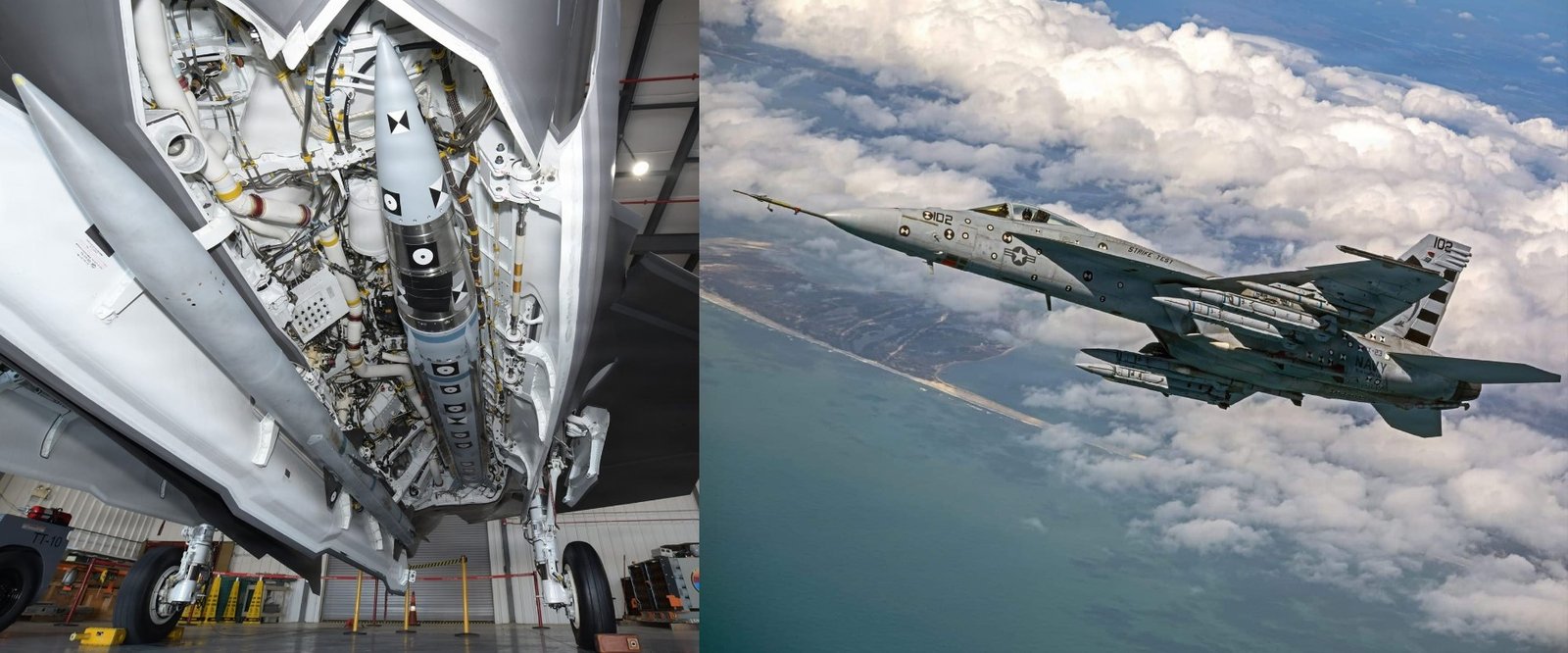
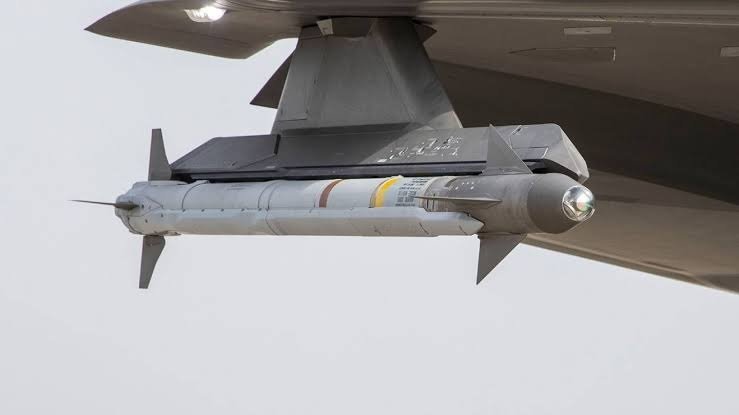
The AIM-9X Block II is a short-range, infrared-guided air-to-air missile developed by Raytheon, now part of RTX. It is approximately 3 meters long, has a 0.13-meter diameter, a wingspan of about 0.35–0.45 meters, and a launch weight of roughly 84–85 kg, including a 9.4-kg high-explosive fragmentation warhead.
The missile uses a solid-fuel rocket motor and can reach around Mach 2.5. Open-source reports cite an engagement range of up to approximately 35 km, although exact operational performance figures remain classified.
The Block II variant uses a 128×128-pixel infrared imaging seeker, along with improved resistance to thermal countermeasures and electronic warfare. It also features a two-way data link and lock-on-after-launch capability, allowing the missile to receive information from the launching aircraft before its onboard seeker acquires the target.
South Korea Already Operates AIM-9X
South Korea has operated the AIM-9X since 2011, initially acquiring it for its F-15K Slam Eagle fighters. The F-15K was equipped with the Joint Helmet Mounted Cueing System (JHMCS), allowing pilots to cue missiles by turning their heads toward targets.
The missile was later integrated with other Republic of Korea Air Force aircraft and, as of 2023, was in service with the F-15K, KF-16 Fighting Falcon and F-35A Lightning II.
For the KF-21 Boramae, South Korea selected the German-made IRIS-T as its short-range air-to-air missile. Some reports have also indicated that AIM-9X Block II is being considered for integration on the KF-21 alongside IRIS-T.
The proposed AIM-9X sale is therefore intended to add further missiles and support equipment to South Korea's existing inventory while maintaining compatibility with its U.S.-origin fighter fleet.
——— End of Article ———