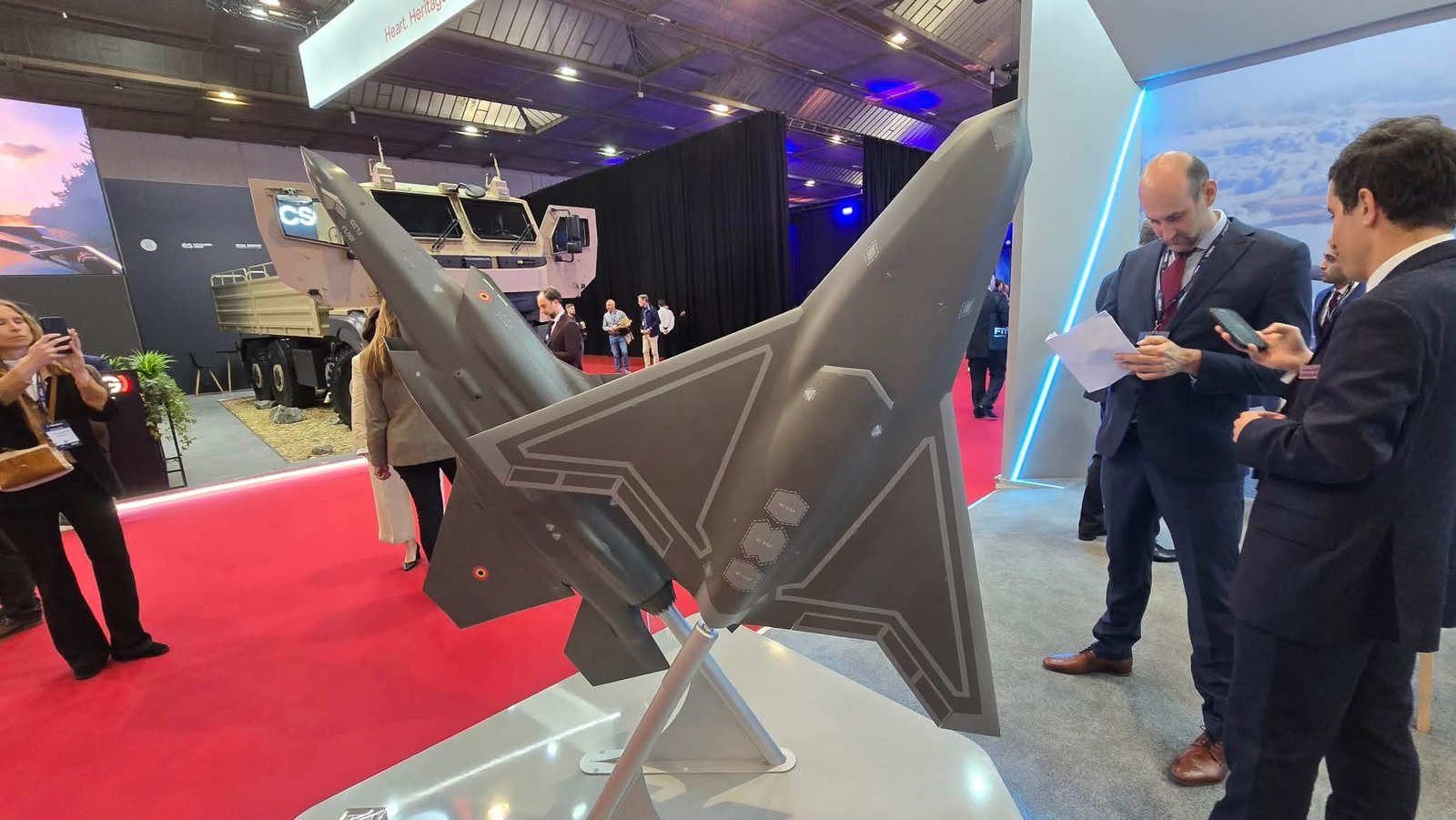
KIELCE, POLAND — Lockheed Martin has displayed its Vectis unmanned combat aircraft at the 34th International Defence Industry Exhibition (MSPO 2026) in Kielce, presenting the Skunk Works-developed Collaborative Combat Aircraft as a potential complement to fifth-generation fighters such as Poland’s F-35A.
Poland is building a fleet of 32 F-35A fighters, and Vectis is designed to extend the capabilities of crewed aircraft by distributing sensors, weapons and electronic warfare functions across networked platforms.
Vectis development and propulsion
Lockheed Martin publicly unveiled Vectis on September 21, 2025, describing it as a Group 5 Collaborative Combat Aircraft developed by its Skunk Works division for U.S. and allied forces. The clean-sheet, internally funded programme was already under development when it was revealed, with parts ordered and company funding committed to a rapid design-build-fly schedule.
Lockheed Martin is targeting a first flight in 2027. In December 2025, the company selected the Williams International FJ44-4 turbofan, which provides more than 3,600 pounds of thrust, to reduce propulsion risk as the aircraft moves toward flight testing.
Missions and low-observable design
Vectis is designed for precision strike, intelligence, surveillance and reconnaissance targeting, electronic warfare, and offensive and defensive counter-air missions. It also incorporates multi-domain connectivity and an open-system architecture.
The aircraft uses a tailless configuration and blended shaping intended to support low observability. Lockheed Martin has not disclosed exact figures for its radar cross-section, maximum speed, combat radius or internal weapons capacity. The company says Vectis is smaller than an F-16 but larger than its compact CMMT missile-like drones.
The aircraft could allow F-35s to operate with additional sensors, weapons and electronic warfare capabilities distributed across the formation. A Vectis operating farther forward could potentially collect targeting information, support electronic warfare or carry additional weapons while crewed aircraft remain at greater distance from heavily defended areas.
Relevance to Poland
The concept is particularly relevant to Poland as it develops its F-35 fleet and broader networked combat capabilities. In contested airspace, autonomous aircraft could provide additional capabilities without requiring every new combat platform to be a crewed fighter.
Vectis is being positioned toward the higher-survivability end of the CCA market. This differs from the first U.S. Air Force CCA Increment 1 platforms, General Atomics’ YFQ-42A and Anduril’s YFQ-44, for which engineering, manufacturing, development and production contracts were awarded in June 2026.
Lockheed Martin has not disclosed a procurement decision involving Poland. The 2027 first flight will provide an opportunity to demonstrate Vectis’ aerodynamic performance, propulsion, autonomy and mission-system integration as development continues.
——— End of Article ———