HERning, Denmark — European defense companies Destinus, CUBEDIN A/S and OMT Group A/S have signed a Memorandum of Understanding (MoU) to develop a modular, containerized counter-drone system for naval vessels. The agreement was announced at DALO Industry Days 2026 in Herning, Denmark.
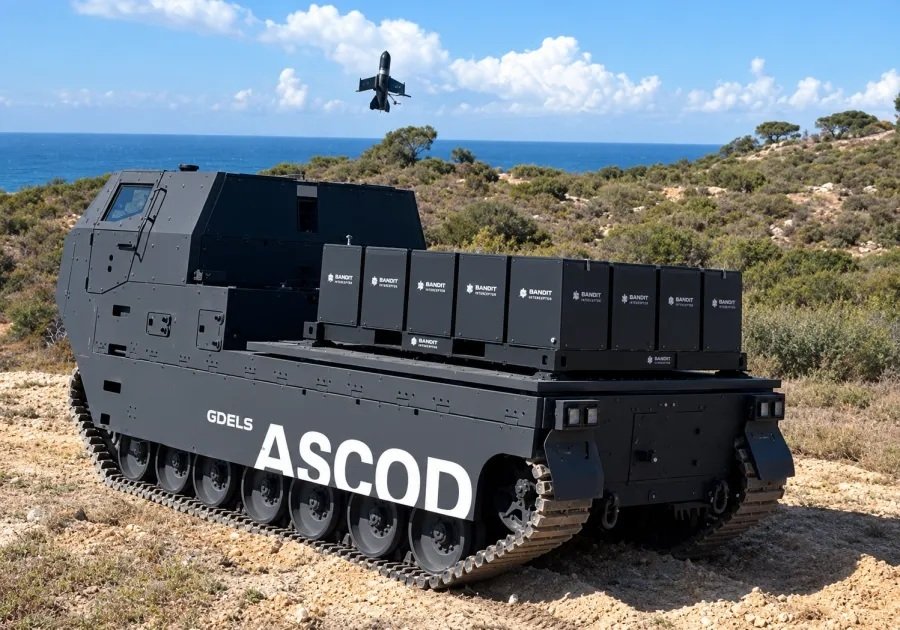
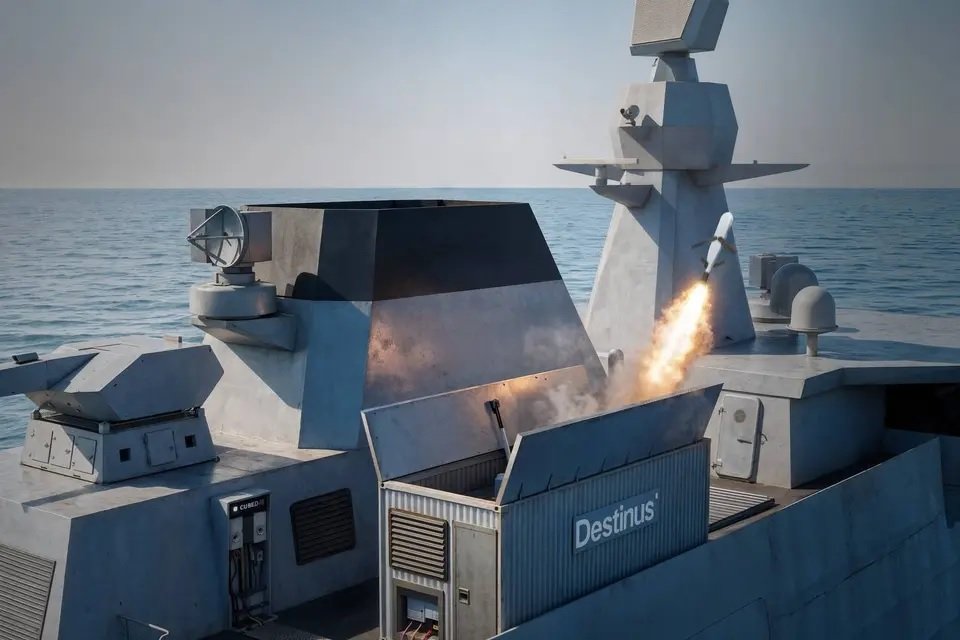
The companies plan to integrate Destinus' Hornet interceptor family into standardized 10-foot and 20-foot mission modules. The system is intended to provide navies with a scalable, lower-cost defense layer against high-volume aerial threats, particularly Class 2 unmanned aerial systems (UAS) and similar threats, including loitering munitions.
The containerized design is intended for rapid installation on existing surface combatants and future ship designs. Using standard ISO container footprints would allow navies to add or remove the capability according to mission requirements without major structural modifications or extensive changes to the ship's combat management system.
Roles of the Three Companies
Under the agreement, Destinus will provide the Hornet interceptor system, internal launcher and mission-payload architecture.
OMT Group A/S will handle naval platform engineering, structural integration and ship-design adaptations.
CUBEDIN A/S will provide standardized mission-modularity interfaces and the software framework for physical, electrical and data connections with the host ship.
The development is planned to progress through a Preliminary Design Review (PDR) and Critical Design Review (CDR) before full naval qualification testing. The companies intend to offer the system to European navies seeking adaptable point-defense capabilities.
Hornet Interceptor
The Hornet system is designed as a kinetic interceptor for counter-UAS missions. Destinus' Hornet family includes the Hornet Block 1 and Hornet B2 variants.
In June 2026, Destinus and the Spanish Navy conducted a live launch of a Hornet Block 1 interceptor from a containerized launcher installed on the F-81 Santa María frigate. The demonstration examined the use of a container-based interceptor system on an existing warship.
Destinus has separately described the Hornet B2 as a further development of the system. The information provided for the programme states that it has a reported range exceeding 150 kilometers and a 3-kilogram payload.
Dutch Navy Programme
The new partnership follows a separate agreement between Destinus and the Netherlands Ministry of Defence's Materiel and IT Command (COMMIT) announced in August 2026.
That Concept Development and Evaluation (CD&E) programme will examine the integration of the Hornet B2 kinetic interceptor onto Royal Netherlands Navy warships. It is scheduled to continue through the second quarter of 2027, with naval operators involved in the testing and development process.
The new MoU with CUBEDIN and OMT is separate from the Dutch programme but supports the broader development of a modular naval architecture for deploying Hornet interceptors on different warships.
The three companies will contribute their respective expertise in interceptor technology, naval platform engineering and standardized modular integration as the project moves toward design reviews and naval qualification.
——— End of Article ———