MOSCOW, — Russia’s United Aircraft Corporation (UAC), part of the Rostec state corporation, is developing a combat artificial intelligence system for military applications. The system is being tested on the new two-seat Su-57D stealth fighter, which is also being developed for specialised pilot training and control of unmanned aerial vehicles (UAVs).
Su-57D Completes First Flight
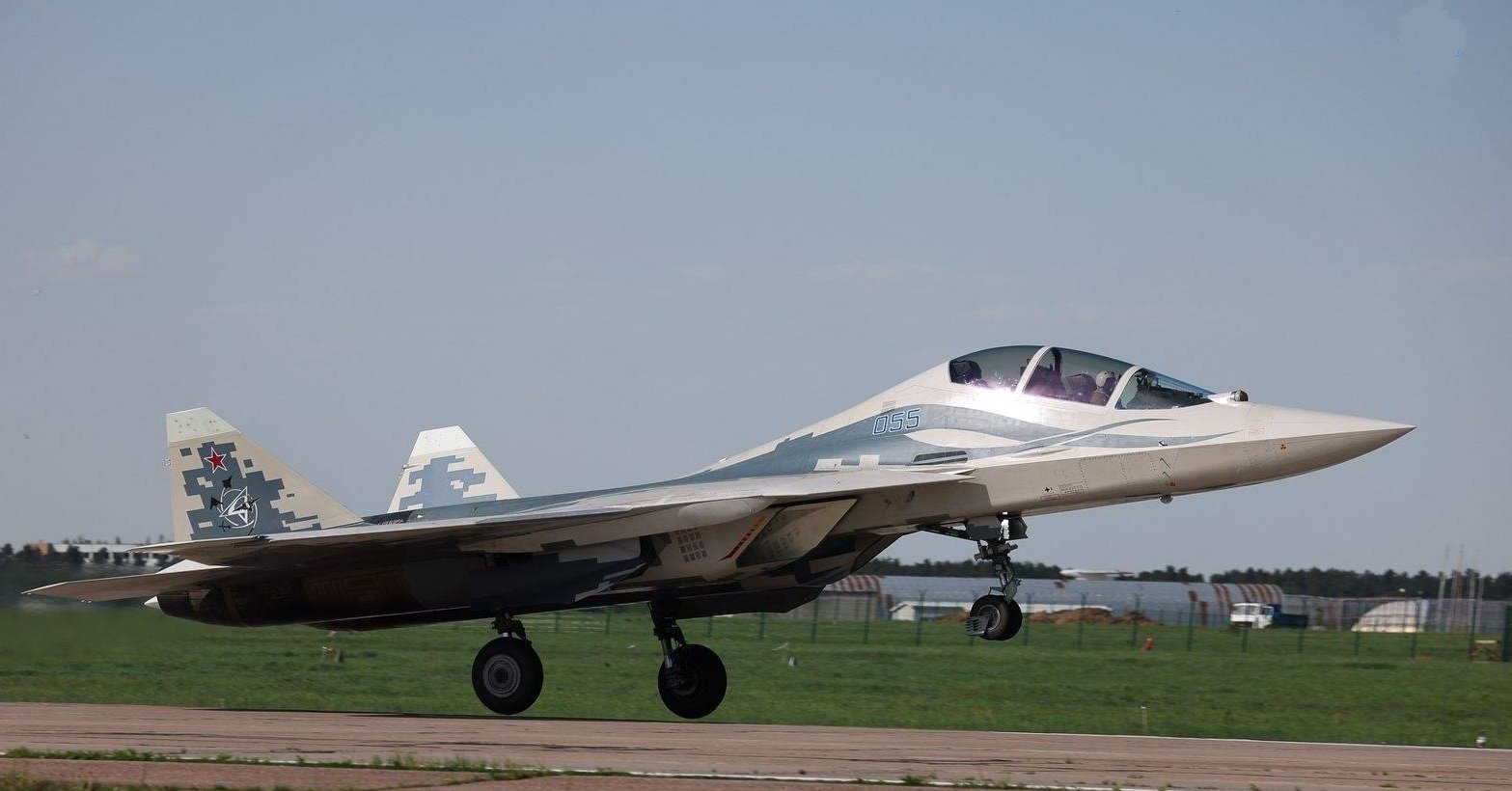
The Su-57D completed its maiden flight on May 19, 2026, at the Komsomolsk-on-Amur aviation plant. The aircraft was flown by Sukhoi chief test pilot Sergey Bogdan and remained airborne for about 40 minutes. Taxi trials had started on May 16.
The prototype, carrying side number 055, was converted from an earlier single-seat T-50 flight-test airframe rather than being built as a completely new aircraft. The two-seat concept had previously appeared in a UAC patent filed in November 2023.
Training and Unmanned-Aircraft Control
Rostec has identified two main roles for the Su-57D. The first is specialised pilot training, with the two-seat configuration allowing crews to practise flight regimes that cannot be fully reproduced in ground-based simulators.
The second is testing technologies that Russian officials associate with sixth-generation combat aviation, including the use of the fighter as an airborne command-and-control platform for unmanned systems.
Mikhail Strelets, director of the Sukhoi Design Bureau, said the additional cockpit allows the aircraft to control highly autonomous systems, including the S-70 Okhotnik heavy unmanned combat aircraft, as well as UAV groups and swarms. The arrangement allows the main pilot to concentrate on flying and the primary combat mission while the second crew member manages the unmanned systems.
Combat AI Development
UAC specialists are developing a combat AI system that will be tested on the Su-57D. The programme is intended to examine the integration of artificial intelligence and autonomous decision-making with the fighter and unmanned aircraft.
Russian officials have not disclosed the AI system’s detailed capabilities, level of autonomy, testing parameters or any confirmed timeline for operational deployment.
The Su-57D concept builds on earlier Russian testing involving the Su-57 and S-70 Okhotnik, which began in 2019. The two-seat aircraft is intended to provide a manned platform capable of coordinating mixed formations of crewed and unmanned aircraft.
Export Potential
UAC chief executive Vadim Badekha has said the two-seat version could increase the Su-57 family’s appeal on foreign markets. First Deputy Prime Minister Denis Manturov has also described the aircraft as having combat, training and tactical-control functions.
India has been mentioned as a potential market for a two-seat configuration, partly because of its experience operating the two-seat Su-30MKI, although there is no confirmed Indian procurement agreement for the Su-57D.
As of late August 2026, the Su-57D remains in the flight-test phase. Russia has not announced a production schedule, final operational designation or confirmed integration timeline for the combat AI system.
——— End of Article ———