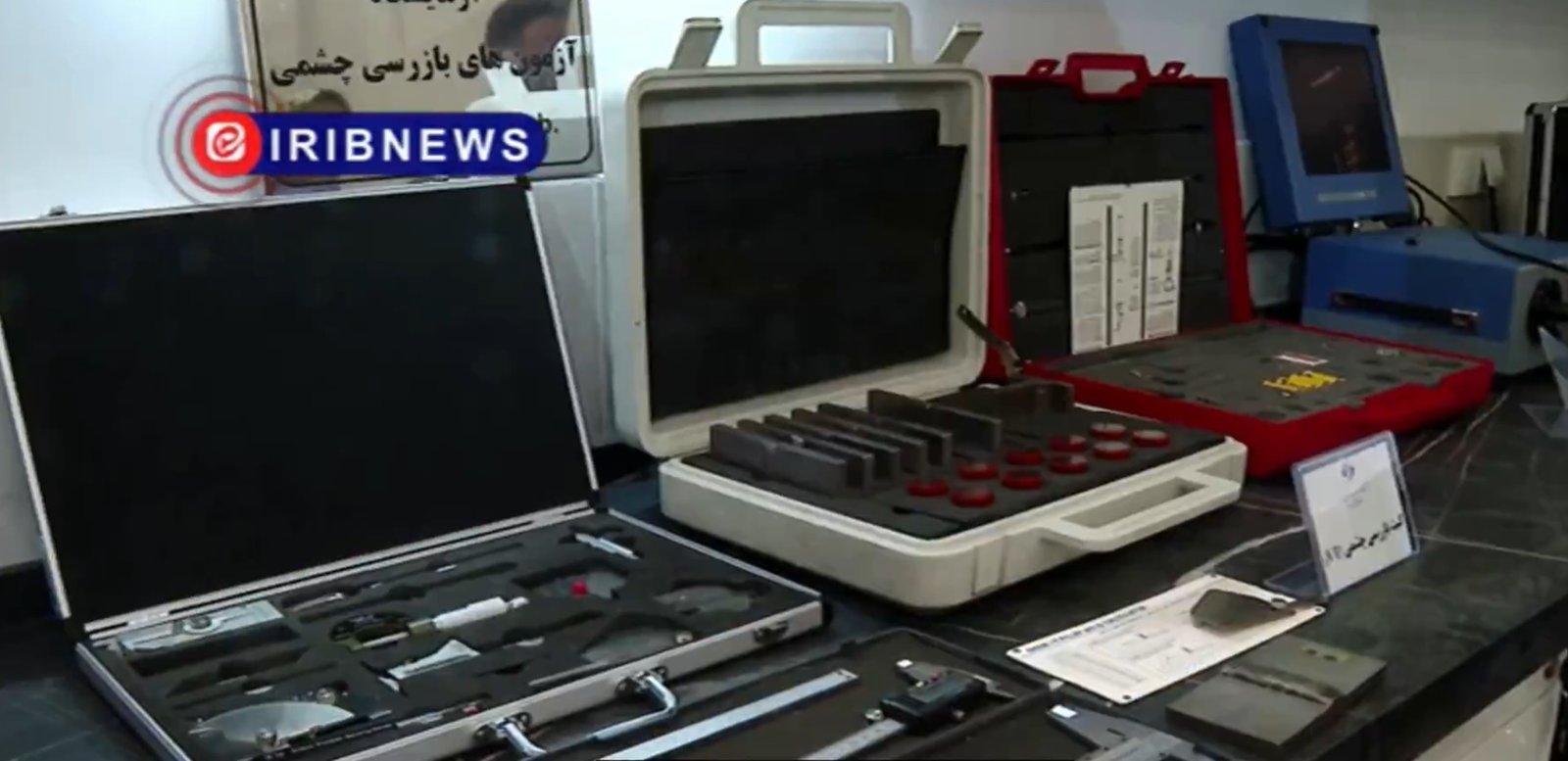
TEHRAN, IRAN — Iran’s Atomic Energy Organization (AEOI) has unveiled and put into operation four knowledge-based technological systems during Government Week ceremonies. State broadcaster IRIB showed the new equipment during a laboratory tour attended by AEOI chief and Vice President Mohammad Eslami and senior nuclear industry officials.
The four achievements include three plasma diagnostic systems for tokamak devices and a non-destructive testing (NDT) laboratory.
❗️ IRAN UNVEILS FOUR NUCLEAR ACHIEVEMENTS — IRIB gives lab tour
— RT (@RT_com) August 26, 2026
New tech for science, industry & nuclear work, including equipment detecting cracks in metal
Atomic chief says moved beyond ‘technology demonstration’ in nuclear fusion & entered ‘system & capability development’ pic.twitter.com/1HY7oakwXf
Three Tokamak Diagnostic Systems
The photoelectron system measures the electron temperature of tokamak plasma without direct contact by analyzing the energy and characteristics of X-rays emitted from the plasma. Iranian officials said it is intended to support future energy-producing tokamaks.
The bolometry system, developed domestically for the first time, measures power lost from tokamak plasma through radiation. Such diagnostics are used at major facilities including KSTAR, EAST and JT-60U to help evaluate and optimize plasma performance.
The charge-exchange system, also produced domestically for the first time, measures the temperature of ions in tokamak plasma using neutral atoms. Officials described it as an important diagnostic for modern tokamak facilities and said it is intended for future energy-producing tokamaks.
Eslami said Iran's fusion research has moved beyond technology demonstration toward system development and capability building. He said fusion is a priority for future energy needs and that Iran cannot afford to fall behind countries developing the technology.
NDT Laboratory
The fourth project is a specialized non-destructive testing laboratory for inspection, testing, training and personnel qualification.
The facility uses visual inspection, penetrant testing, magnetic-particle testing, ultrasonic testing, radiographic testing and eddy-current testing to identify cracks, defects and other problems in materials without damaging the components.
The laboratory will provide NDT services to the nuclear, aviation, power, oil and gas sectors. It will also conduct training courses, personnel qualification examinations under ISO/IEC 9712, specialist consulting and digital industrial radiography for components where conventional film radiography is not practical.
Eslami said the AEOI has developed these capabilities through domestic resources, knowledge-based companies and universities, reducing dependence on foreign countries. He also said sanctions and external pressure have not stopped Iran's technological development.
Fusion Research Separate From Enrichment
The newly unveiled systems are focused on nuclear fusion research and industrial testing, while uranium enrichment remains the main international concern regarding Iran's nuclear program.
The International Atomic Energy Agency (IAEA) has reported that Iran previously accumulated uranium enriched to 60 percent U-235 and that, following attacks on Iranian nuclear facilities in 2025, the Agency lost continuity of knowledge regarding the country's current stockpile, centrifuges and some nuclear activities.
The IAEA has also reported damage to nuclear facilities at Natanz, Fordow and Isfahan. Iranian officials have said inspections of attacked facilities require new arrangements.
The latest AEOI announcement therefore concerns new domestic capabilities for tokamak plasma diagnostics, fusion research and industrial inspection, rather than new uranium-enrichment equipment.
——— End of Article ———