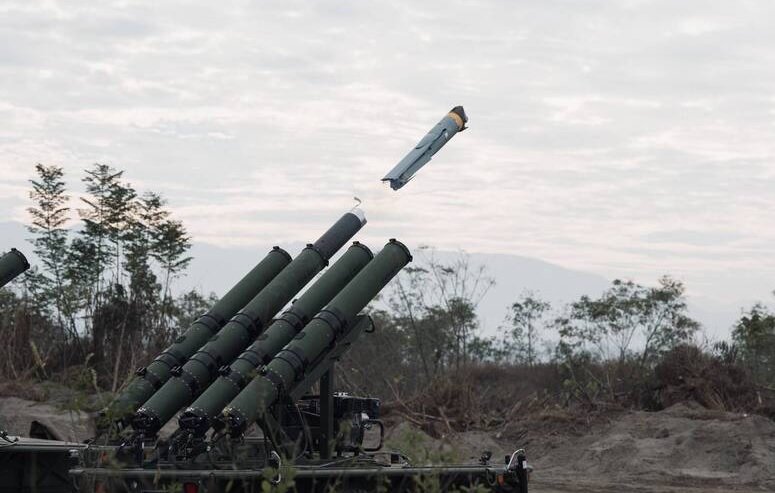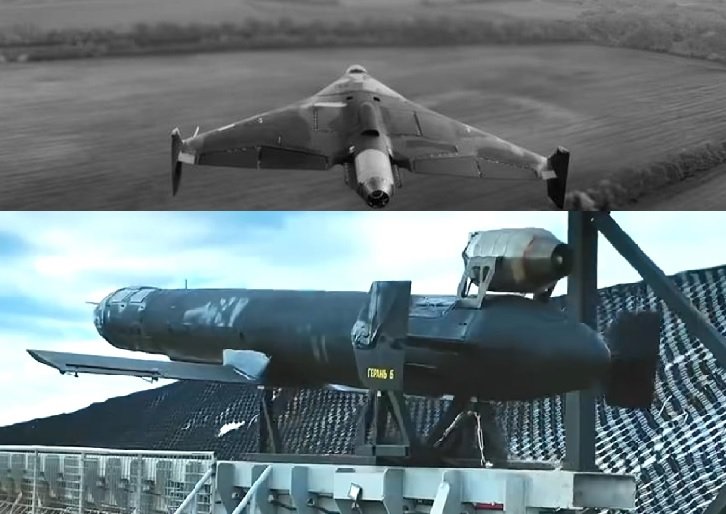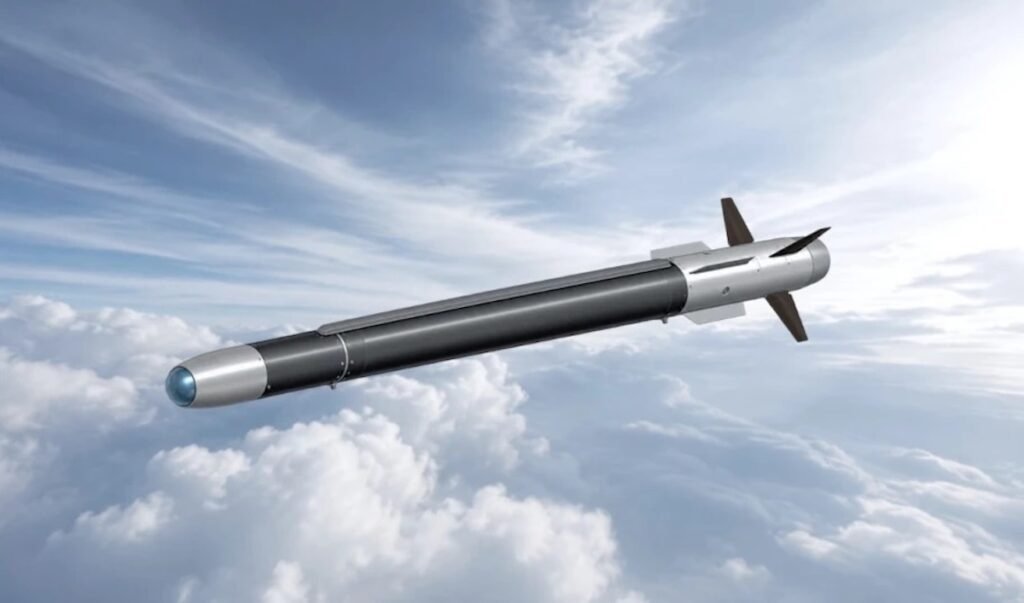
KIELCE, Poland — MBDA and Poland’s Military Institute of Armament Technology (WITU) are advancing the Counter Mass Interceptor (CMI), a low-cost, supersonic surface-to-air missile designed to counter mass attacks involving one-way attack drones, ISR drones, helicopters and cruise missiles.
The programme follows successful seeker field trials in Poland in September 2026, which evaluated the infrared seeker against representative drone targets across several engagement scenarios. The results have cleared the way for the seeker to be integrated into a prototype missile designed by WITU. The first firing campaign is planned for 2027.
The CMI is designed for high-volume production and to reduce the cost imbalance between relatively inexpensive drones and the more costly interceptors normally used against them. The missile is intended to engage targets at ranges and altitudes exceeding 6 kilometres.
The interceptor weighs approximately 53 kg, is about 2.3 metres long and has a 122 mm diameter. It uses an infrared seeker and carries a blast-fragmentation warhead. MBDA first presented the CMI at the Farnborough International Airshow in July 2026, alongside its surface-launched ASRAAM offering.
Polish Design with MBDA Seeker
MBDA and WITU announced their cooperation at the MSPO 2026 defence exhibition in Kielce, where they signed a broader memorandum of understanding covering missile research.
Under the CMI programme, WITU is responsible for the missile design, while MBDA provides the seeker technology. The arrangement gives Poland a major role in developing the weapon rather than limiting its participation to local assembly. MBDA has also indicated interest in producing the seeker in Poland, subject to approval by Polish authorities.
WITU Director Colonel Paweł Sweklej said the cooperation combines a fully Polish missile design with MBDA's seeker technology and supports the development of Polish technologies for European missile solutions.
Chris Allam, UK Managing Director of MBDA, said the project demonstrates MBDA's commitment to Poland and builds on its support for Poland's layered air-defence capability through the PILICA+ and NAREW programmes, including technology transfer.
The partnership also comes under the Northolt Treaty, signed by British Prime Minister Keir Starmer and Polish Prime Minister Donald Tusk in May 2026 to strengthen defence cooperation and support joint development of next-generation munitions and European supply-chain resilience.
Part of Poland's Layered Air Defence
The CMI is being developed as an additional high-volume layer within Poland's expanding air-defence and counter-UAS capability. Poland is developing a combination of missiles, guns, electronic warfare systems, radars and other effectors to address different types of aerial threats.
The CMI is intended for the lower-cost, high-volume end of this architecture, while systems including Piorun, CAMM and CAMM-ER provide other air-defence capabilities. MBDA already has a significant role in Poland through NAREW and PILICA+.
WITU is also participating in the European Hypersonic Defence Interceptor System (HYDIS) programme, which focuses on future interceptor technologies for hypersonic and ballistic threats.
The immediate focus of the CMI programme is prototype integration followed by the planned 2027 firing campaign. MBDA and WITU have not disclosed a unit price, production target or entry-into-service date.
——— End of Article ———