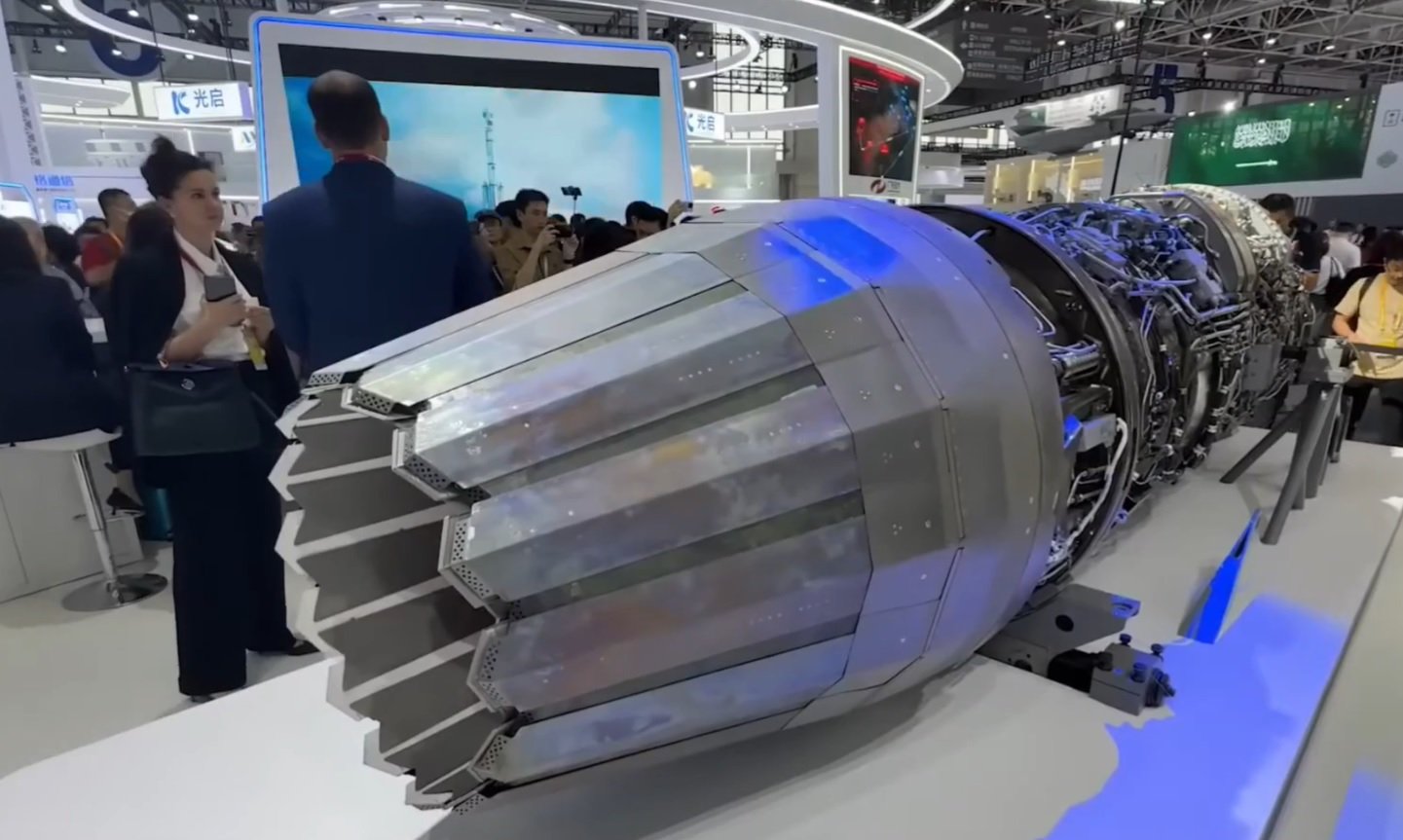
NEW DELHI — Russia has renewed its offer of the Izdeliye 177S turbofan engine for the Indian Air Force’s Su-30MKI fleet during President Vladimir Putin’s visit to New Delhi in September 2026. The proposal is part of discussions surrounding India’s planned Super Sukhoi modernisation programme.
The IAF operates around 260 Su-30MKI fighters, currently powered by the AL-31FP engine. It produces about 12,500 kgf (123 kN) of afterburning thrust and 7,700–7,800 kgf (around 76 kN) of dry thrust. Hindustan Aeronautics Limited (HAL) has extended the engine’s Total Technical Life from 2,000 to 2,500 flying hours, with the first engine under the life-extension programme delivered to the IAF in January 2026.
According to Russian information, the Izdeliye 177S produces around 14,500 kgf (142 kN) of afterburning thrust and 9,000 kgf (88 kN) of dry thrust. Its afterburning thrust is about 16 percent higher than the AL-31FP. The manufacturer also states a 6,000-hour service life and claims about 7 percent lower fuel consumption.
The 177S is described as dimensionally compatible with the AL-31FP installation, with similar weight and inlet diameter. This could allow the engine to be integrated into existing Su-30MKI aircraft without major structural modifications, subject to technical evaluation.
The Super Sukhoi programme, estimated at about $11 billion, is expected to initially cover 84 aircraft, with the remaining fleet to be upgraded later. The modernisation is planned to include AESA radars, new avionics, improved electronic-warfare systems and weapons integration. The higher-thrust engine is being considered to help compensate for the additional weight and power and cooling requirements of the new systems.
Technology transfer remains a key issue. HAL already manufactures and overhauls the AL-31FP at its Koraput facility. For the 177S, India is seeking substantial technology transfer and local manufacturing capabilities, including access to important engine technologies such as hot-section metallurgy and digital engine controls.
India has not yet made a final decision on the engine. The selection will depend on technical performance, reliability, integration requirements, lifecycle costs and the actual scope of technology transfer offered by Russia.
——— End of Article ———