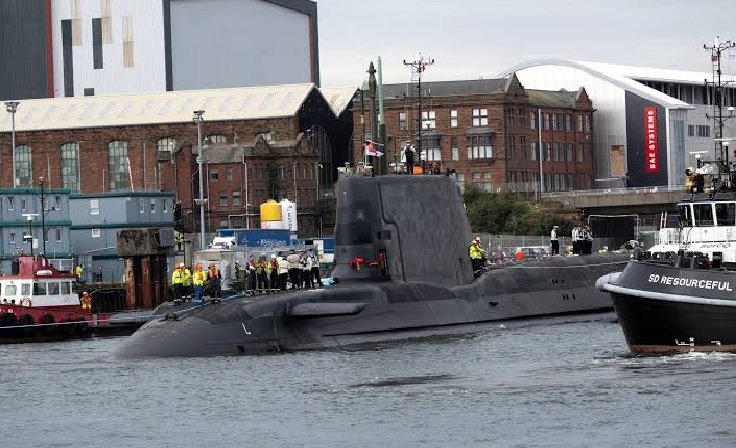
BARROW-IN-FURNESS, UK — The Royal Navy’s newest nuclear-powered attack submarine, HMS Agamemnon (S124), has departed BAE Systems’ shipyard in Barrow-in-Furness to begin sea trials.
The sixth of seven Astute-class submarines left the shipyard on September 24, 2026, following a planned two-day operation through the yard’s basins, docks and locks before passing through the narrow Walney Channel into the Irish Sea. She is now heading toward HM Naval Base Clyde, where further trials, crew training and preparations for operational service will take place.
HMS Agamemnon, known by her crew as “Awesome Aggie,” is conventionally armed and nuclear-powered. The submarine has a displacement of around 7,400 tonnes, measures 97 metres in length and is designed to operate for long periods underwater. Her Rolls-Royce nuclear reactor does not require refuelling during her service life, while onboard systems can generate air and drinking water.
The submarine is designed for anti-submarine warfare, intelligence gathering, precision strike and support for maritime task groups. She is equipped with six 21-inch torpedo tubes and will carry Spearfish heavyweight torpedoes and Tomahawk land-attack cruise missiles, which can strike targets at ranges of more than 1,000 miles. Astute-class submarines can also support Royal Marines operations and contribute to the UK's continuous at-sea nuclear deterrent.
Long construction and testing programme
Construction of HMS Agamemnon began when her keel was laid on 18 July 2013. She was christened in April 2024 and launched in October 2024.
King Charles III formally commissioned the submarine into the Royal Navy on September 22, 2025, during a ceremony in Barrow. In October 2025, she completed a three-day trim dive in a deepened shipyard basin to test her watertight integrity, ballast systems, stability and centre of gravity.
Further testing continued at Barrow involving her roughly 100-strong crew and industry teams before the submarine's departure for sea trials.
First Sea Lord General Sir Gwyn Jenkins said the submarine's move to sea was an important step toward joining the fleet and highlighted the importance of the Royal Navy's submarine force to UK and NATO defence.
Final Astute-class submarine
The seventh and final Astute-class submarine, HMS Achilles, is at an advanced stage of construction at Barrow.
The Astute class will eventually be replaced by the planned SSN-AUKUS nuclear-powered attack submarines. Current plans call for construction of the first UK SSN-AUKUS submarine to begin in 2027, with the first boat expected to enter Royal Navy service in the late 2030s.
The UK’s Defence Nuclear Enterprise supports more than 47,000 jobs across the country, including major employment in Barrow linked to submarine design, construction and support.
HMS Agamemnon is the sixth Royal Navy vessel to carry the name Agamemnon, which comes from the mythological King Agamemnon of Mycenae. Her sea trials will now test the submarine and its systems at sea before she progresses toward operational service with the Royal Navy's submarine force.
——— End of Article ———