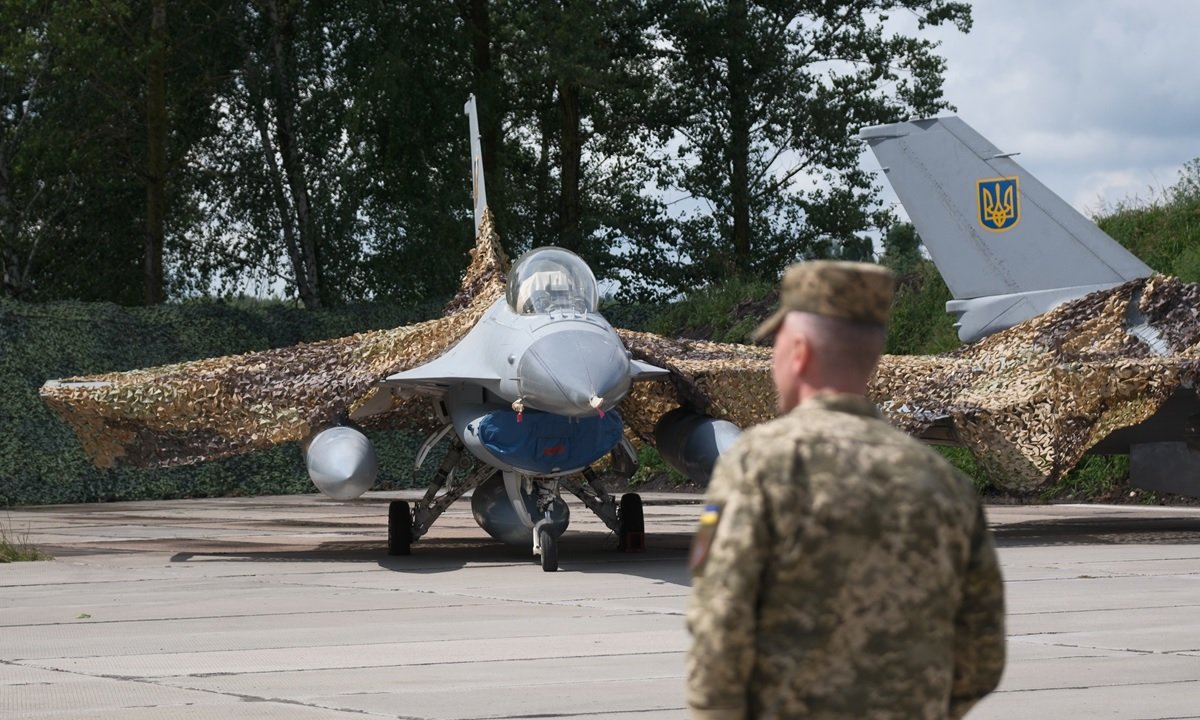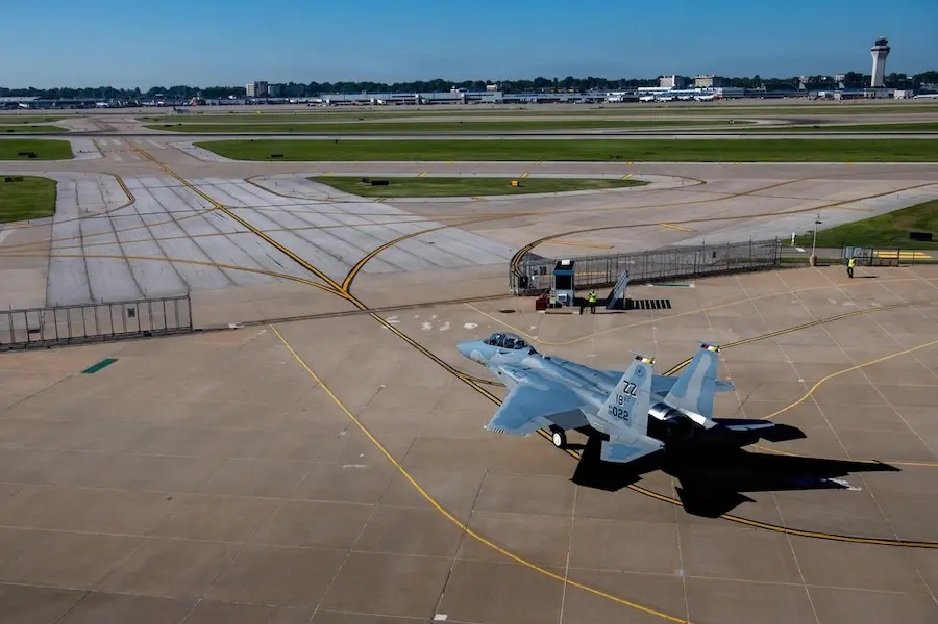
ST. LOUIS, Missouri — The first F-15EX Eagle II fighter designated for Kadena Air Base in Okinawa, Japan, departed Boeing’s facility in St. Louis on August 28, marking another step toward the U.S. Air Force’s permanent deployment of the aircraft to Japan.
The aircraft departed for Portland Air National Guard Base in Oregon, where it will receive additional updates and preparations before eventually continuing its journey to Kadena. The Air Force has announced that F-15EX aircraft are scheduled to begin arriving at Kadena in fiscal year 2027.
The F-15EX deployment is part of the U.S. Air Force’s broader modernization of the permanent fighter force at Kadena. The new aircraft will replace the base’s legacy F-15C/D fleet.
Kadena is scheduled to receive 36 F-15EX aircraft, compared with the 48 F-15s previously associated with the base. The transition follows the retirement and withdrawal of Kadena’s older F-15C/D aircraft.
Preparations Already Underway at Kadena
Kadena personnel have already gained experience with the F-15EX ahead of the permanent deployment.
In July 2025, two F-15EX aircraft from the 85th Test and Evaluation Squadron at Eglin Air Force Base, Florida, visited Kadena for integration and familiarization training with local units and joint partners.
The F-15EX returned to Kadena on June 29, 2026, again supporting familiarization and integration activities. The deployment gave 18th Wing personnel additional opportunities to train with the aircraft and prepare for its long-term mission at the base.
The 67th Fighter Squadron is planned to become Kadena’s first operational F-15EX unit. Its personnel have been involved in preparations to build the operational and technical knowledge needed to operate the aircraft.
F-15EX Capabilities
The F-15EX is the latest version of the F-15 family and incorporates modern avionics, digital fly-by-wire controls, an all-glass cockpit, modern mission systems and an open mission-systems architecture. Boeing also lists an advanced AESA radar and the Eagle Passive Active Warning Survivability System (EPAWSS) electronic-warfare suite.
The aircraft is designed for both air-to-air and air-to-ground missions and provides a substantially larger weapons payload than many fighter aircraft. Boeing lists a maximum payload of 29,500 pounds, while the aircraft can carry up to 12 AIM-120 AMRAAMs, depending on configuration.
The Air Force also views the F-15EX as a complement to fifth-generation fighters, providing additional weapons capacity, sensors and electronic-warfare capabilities.
Second U.S. Location for Combat-Coded F-15EX
Once the Kadena aircraft become operational, the base will become the second U.S. Air Force location with combat-coded F-15EX aircraft.
The first is the Oregon Air National Guard’s 142nd Wing at Portland Air National Guard Base, which has already begun operating the Eagle II and conducting weapons training with the aircraft.
Brig. Gen. John Gallemore, commander of the 18th Wing, described the latest movement as an important step toward bringing the aircraft to Kadena.
“This is an important next step toward bringing the F-15EX home to Kadena,” Gallemore said.
The permanent arrival of the F-15EX is expected to strengthen Kadena’s ability to generate combat-ready airpower while supporting continued training with U.S. allies and partners.
The 18th Wing regularly conducts bilateral training with Japan Air Self-Defense Force (JASDF) F-15 units based at Naha Air Base. The Air Force says integrating the F-15EX into these activities will provide additional opportunities to improve interoperability between U.S. and Japanese forces.
The departure of the first Kadena-bound F-15EX from Boeing is therefore the latest publicly announced milestone in the transition from Kadena’s legacy F-15C/D fleet to the F-15EX Eagle II. The aircraft’s next stop at Portland will precede its eventual movement to Japan, with deliveries to Kadena now scheduled to begin in fiscal year 2027.
——— End of Article ———