WASHINGTON — The Pentagon has raised concerns about whether the U.S. defense industrial base has enough skilled personnel and production capacity to simultaneously develop and eventually mass-produce the U.S. Air Force’s F-47 and U.S. Navy’s F/A-XX, two advanced sixth-generation fighter programs.
The concerns were outlined by U.S. Air Force Lt. Gen. Dale R. White, the service’s senior official overseeing major acquisition programs, during a media roundtable at the Air & Space Forces Association’s Air, Space & Cyber Conference in National Harbor, Maryland. The conference was held September 14–16, 2026.
White identified three major challenges: the technical complexity of the aircraft, shortages of skilled personnel and limited production capacity. He said these problems are not limited to the F-47 or F/A-XX, but are affecting multiple major defense programs across the industrial base.
F-47 Remains on Track
Despite the broader industrial-base concerns, the F-47 program continues to progress.
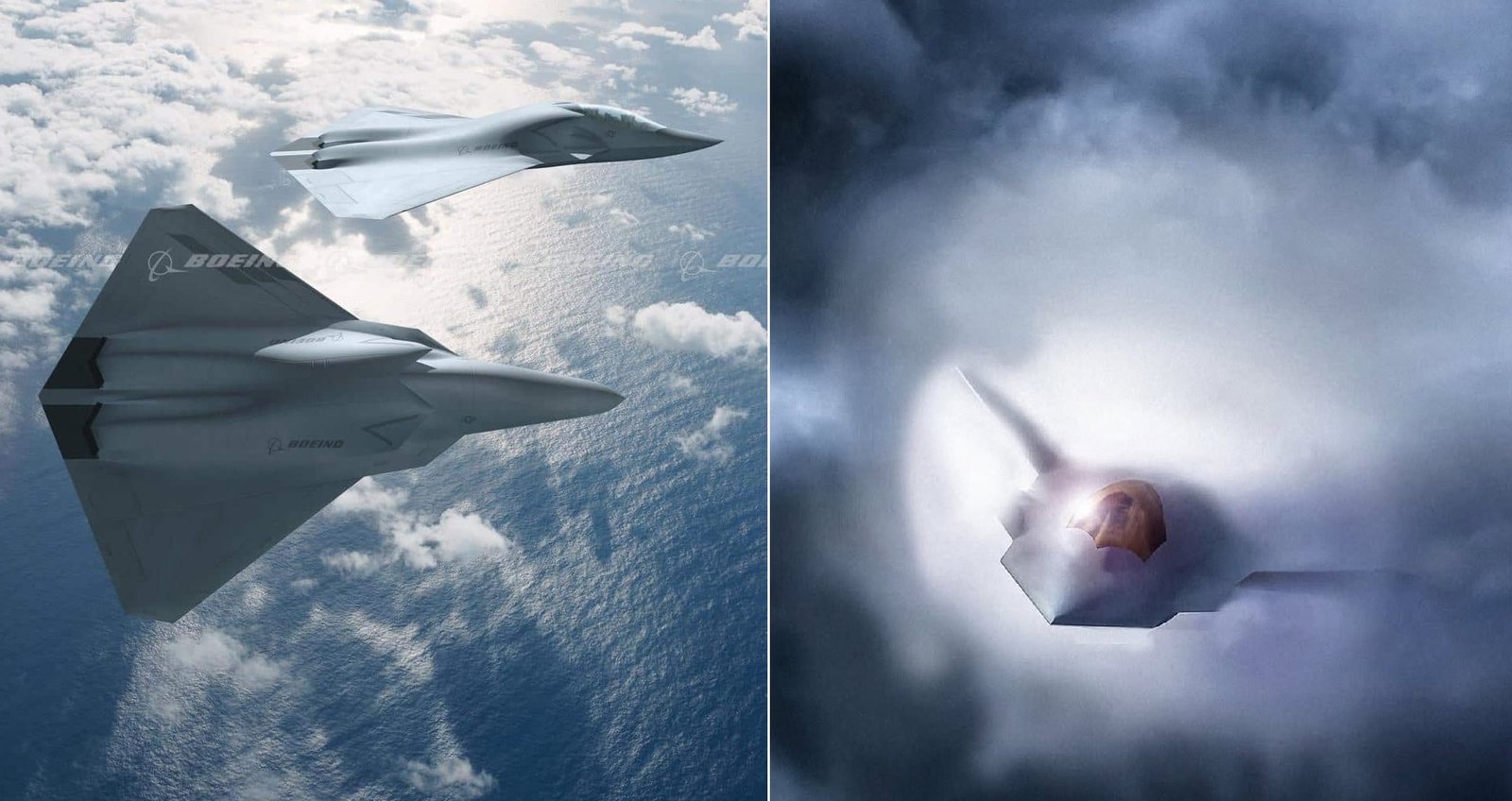
Boeing received the Air Force contract for the Next Generation Air Dominance (NGAD) platform in March 2025. The F-47 is being developed as the Air Force's sixth-generation crewed fighter.
White said Boeing is making significant capital investments in production infrastructure. However, several important steps remain before the aircraft can move into serial production, including completing the design, conducting flight testing and progressing software development and configuration.
The Air Force currently expects the F-47 to conduct its first flight within the next two years. Officials have continued to identify 2028 as the target for the aircraft's first flight.
White also said the program has benefited from many years of technology maturation and risk-reduction work before the current development phase.
F/A-XX Program Faces a Longer Timeline
The Navy's F/A-XX program, intended to provide a future carrier-based fighter, has faced delays in selecting its prime contractor.
The competition has been narrowed to Boeing and Northrop Grumman. Earlier in 2026, Navy leadership had indicated that a downselect was expected in August, but the service had not announced the final contractor as of the latest reports.
The F/A-XX program has also faced questions over industrial-base capacity. The Pentagon previously moved to limit resources for the program while concentrating greater resources on the F-47, although Congress provided additional funding to keep the Navy effort active.
Navy leadership has continued to support the requirement for F/A-XX, with Chief of Naval Operations Adm. Daryl Caudle pointing to advances in potential adversaries' aviation and air-defense capabilities as reasons for maintaining the program.
Industrial Capacity Remains a Key Issue
The Pentagon's concern is not limited to whether either fighter can be developed individually. The larger question is whether the U.S. industrial base can support the workforce, manufacturing infrastructure and production rates required if both programs move forward at the same time.
Boeing has previously said it has the scale and production capability to support both aircraft programs. Company representatives have also discussed investments in facilities and personnel for future production requirements. If Boeing is selected for F/A-XX, commonality in some systems and design elements between the two programs could potentially reduce duplicated engineering work and support development.
For now, the two programs remain at different stages. The F-47 is progressing toward its planned first flight, while the Navy continues its process for selecting the F/A-XX prime contractor. White's latest comments indicate that workforce availability and production capacity will remain important factors as both programs move toward development and eventual production.
——— End of Article ———