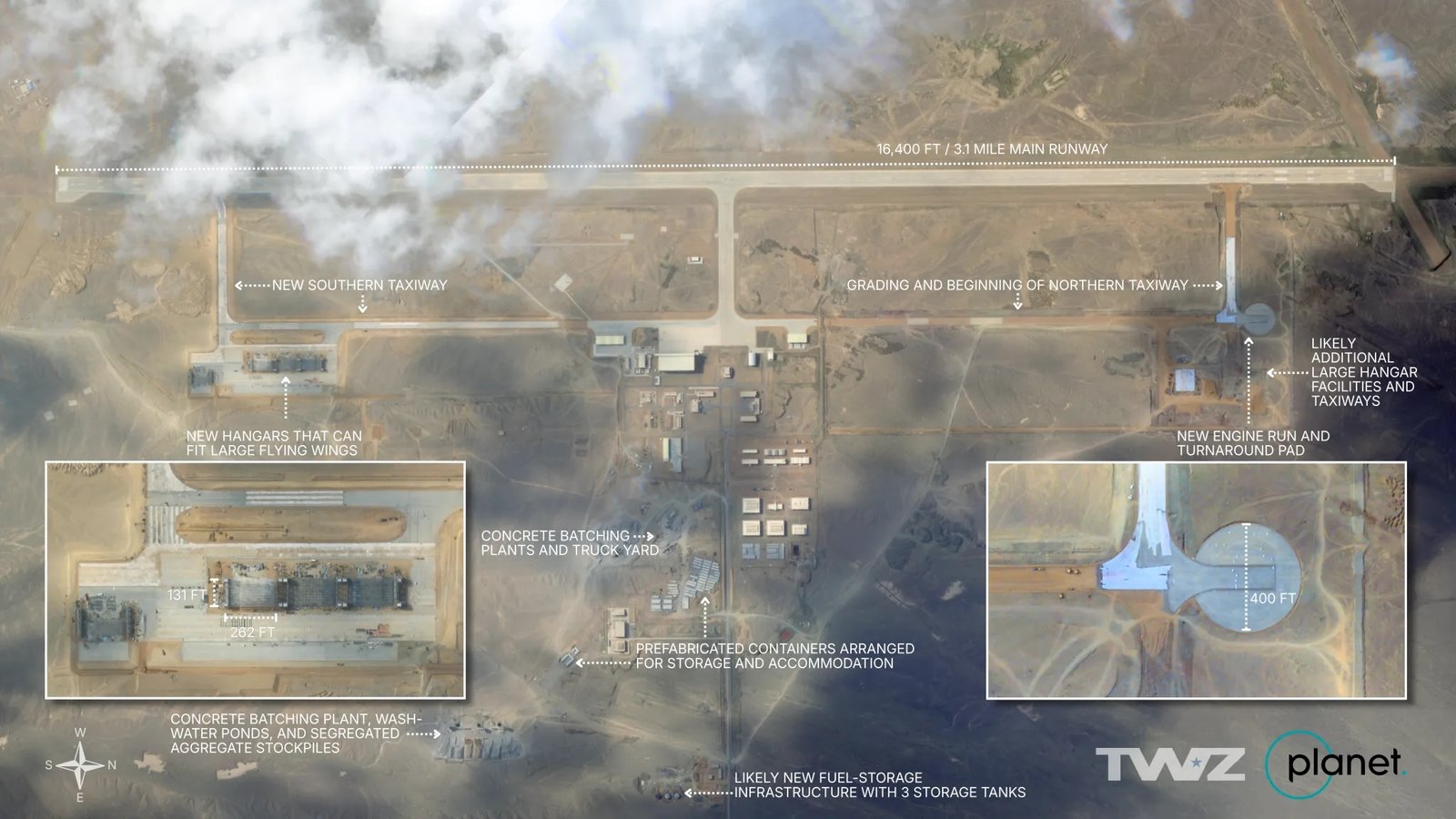
LOP NUR, Xinjiang, China — China is rapidly expanding a remote flight-test facility near Lop Nur in Xinjiang, with new satellite imagery showing large hangars, taxiways, aircraft turning areas and possible fuel-storage infrastructure under construction.
The facility, which is used for testing experimental platforms and next-generation combat aircraft, has developed from a relatively basic airfield into a larger People’s Liberation Army (PLA) flight-test center. The site is sometimes compared with the U.S. Area 51 because of its remote location and apparent role in testing sensitive aerospace programs.
High-resolution satellite imagery collected by Planet Labs on August 27, 2026, shows the latest construction across the base. The airfield has a runway approximately 16,400 feet (about 5 kilometers) long, making it one of the longest military runways of its type.
Geo-intelligence researcher Damien Symon, who assisted The War Zone in analyzing the imagery, said the new taxiways, aircraft turning pads, hangars and possible fuel-storage infrastructure substantially increase the facility's ability to support aircraft movements and sustained flight-test activity.
From a Basic Airstrip to a Major Test Facility
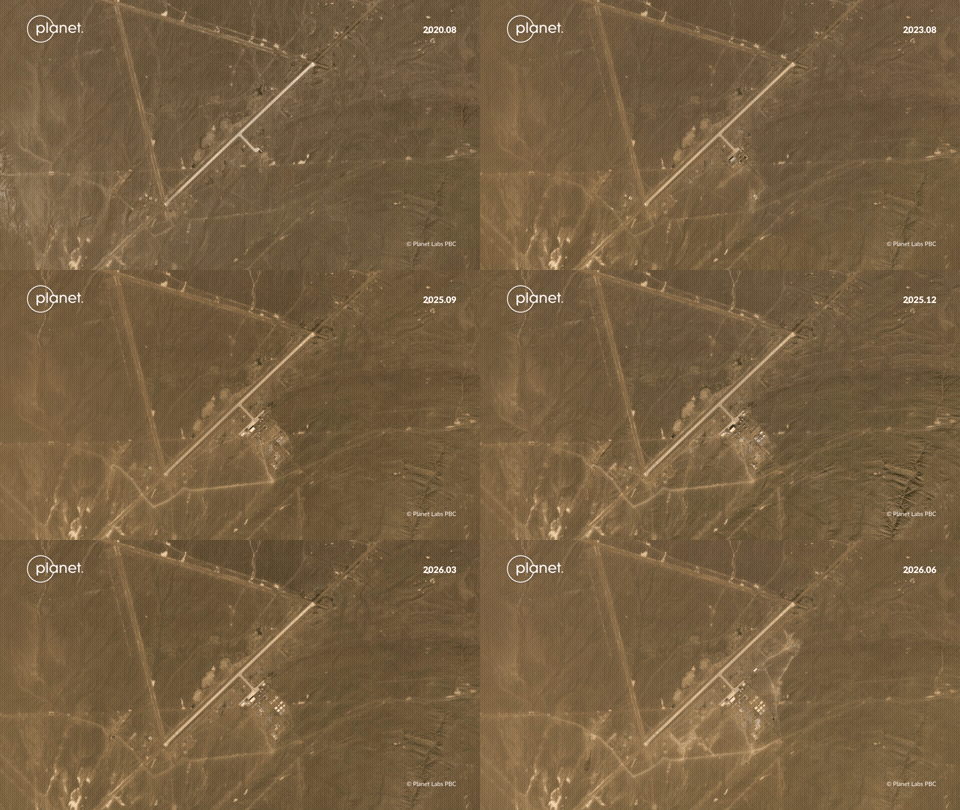
The Lop Nur facility was considerably smaller when it attracted attention in 2020. At that time, satellite imagery showed a 3.1-mile runway, a small hangar and a limited number of vehicles. The site was also associated with Chinese military space-development activities, including testing of reusable spaceplanes.
The facility expanded significantly in the following years. In 2023, the main apron was enlarged and a large hangar was added. Additional hangars appeared on both sides of the main ramp in 2025, with their configuration indicating that they were intended for tactical fixed-wing aircraft.
Construction activity increased further from May 2025 and has continued since then. The facility's growing infrastructure has coincided with the appearance of advanced Chinese aircraft at the site.
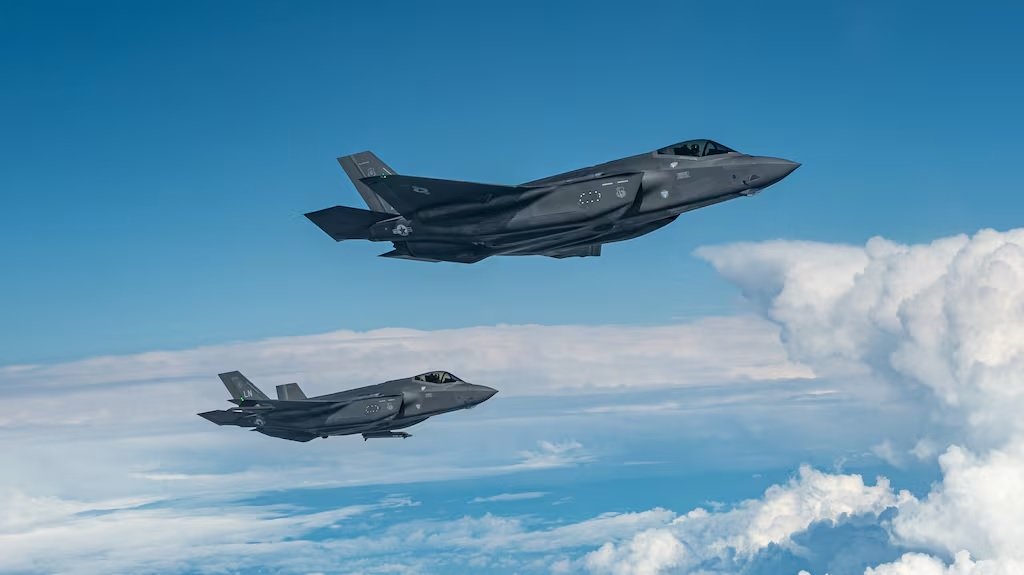
In 2025, both of China's publicly identified sixth-generation fighter designs, the Chengdu-associated J-36 and Shenyang-associated J-XDS, were observed at Lop Nur for the first time. Their presence was notable because the aircraft were operating away from the home airfields associated with their manufacturers.
Four Large Hangars Under Construction
One of the most significant developments visible in the latest imagery is the construction of four large hangars on the southern apron.
Three of the hangars measure approximately 80 by 40 meters (262 by 131 feet), while a fourth nearby structure has different dimensions. All four have access to the new southern taxiway.
According to Symon's assessment, the dimensions of these structures are sufficient to accommodate tactical and strategic aircraft currently operated by the PLA. For comparison, China's operational Xi'an H-6 strategic bomber has a wingspan of approximately 108 feet.
The wide proportions of the new hangars are also similar to structures at another Chinese test facility near Malan in Xinjiang, which has been associated primarily with unmanned aircraft testing. However, Lop Nur appears to have a greater focus on crewed aircraft.
The large hangars have led to speculation that the facility could eventually support testing of China's H-20 stealth bomber. However, the H-20 has not yet appeared publicly, and there is no confirmation that the new Lop Nur hangars are being built specifically for that aircraft. The War Zone also describes this possibility as speculation.
New Taxiways Increase Aircraft Movement Capacity
A new taxiway is nearing completion along the southern side of the main runway. It runs parallel to the runway and connects with the central apron and main hangar area.
Once completed, the taxiway will allow aircraft to move between areas of the facility without having to back-taxi along the main runway. This would provide greater flexibility for aircraft movements during flight-test operations.
Construction is also continuing at the northern section of the facility. Grading is underway for another taxiway intended to connect the central apron with the northern portion of the runway, with concrete work already beginning.
A circular pad approximately 400 feet in diameter has also been constructed in the northern area. It has direct connections to both the runway and the main base area. Analysts assess the feature as likely being intended for engine runs and aircraft turnaround activities, although its exact purpose has not been officially confirmed.
An additional apron extension is being built nearby, with at least two large hangars under construction. These structures have more conventional proportions than the four wide hangars on the southern apron.
Possible Fuel Infrastructure and Construction Support
The latest imagery also shows possible fuel-storage infrastructure under construction. The structures appear to include three potential storage tanks, although their exact purpose has not been confirmed.
Symon assessed that, if confirmed as fuel-storage facilities, the infrastructure could support higher sortie rates and longer periods of sustained flight-test activity.
Construction-support infrastructure has also expanded. Buildings that were still under development in late 2025 are now complete, while rows of prefabricated containers have appeared behind the central apron. Their exact purpose is not confirmed, although the structures could provide storage or accommodation associated with the ongoing construction work.
A concrete batching plant, including wash-water ponds and aggregate stockpiles, has also been established farther east on the facility's outskirts. Other construction sites are visible nearby, but their eventual purpose remains unclear.
Lop Nur's Role in China's Advanced Aircraft Testing
The continued expansion suggests that Lop Nur is being developed to support a larger volume of aircraft testing and associated activities. Its remote location, long runway and growing hangar and taxiway infrastructure provide the facility with additional capacity for experimental aircraft programs.
The presence of the J-36 and J-XDS prototypes has already linked the base with China's advanced combat-aircraft development. The new hangars are large enough for aircraft substantially larger than conventional fighter aircraft, but their specific intended occupants have not been publicly identified.
The possible connection to the H-20 remains unconfirmed. China has not publicly revealed a testing location for the bomber, and there is currently no verified evidence establishing that the aircraft will be tested at Lop Nur.
The facility is located near China's historic Lop Nur nuclear test area, where China conducted its first nuclear test, Project 596, in 1964. The region has therefore been associated with highly sensitive Chinese military and strategic programs for decades.
The latest satellite imagery shows that the Lop Nur flight-test facility is continuing to expand, with new hangars, taxiways, aircraft operating areas and support infrastructure increasing its capacity. However, the specific aircraft and programs that will use the newest facilities remain largely unconfirmed.
Source : TWZ
——— End of Article ———