Khartoum, Sudan — A newly revealed intelligence dossier has provided additional evidence to allegations that the Sudanese Armed Forces (SAF) developed, produced and used chlorine-based chemical munitions during the civil war against the Rapid Support Forces (RSF).
The dossier, shared with The New York Times by a Middle Eastern intelligence agency, contains documents, photographs, videos and intercepted communications detailing a secret program that operated for about six months in 2024.
Chemical weapons program
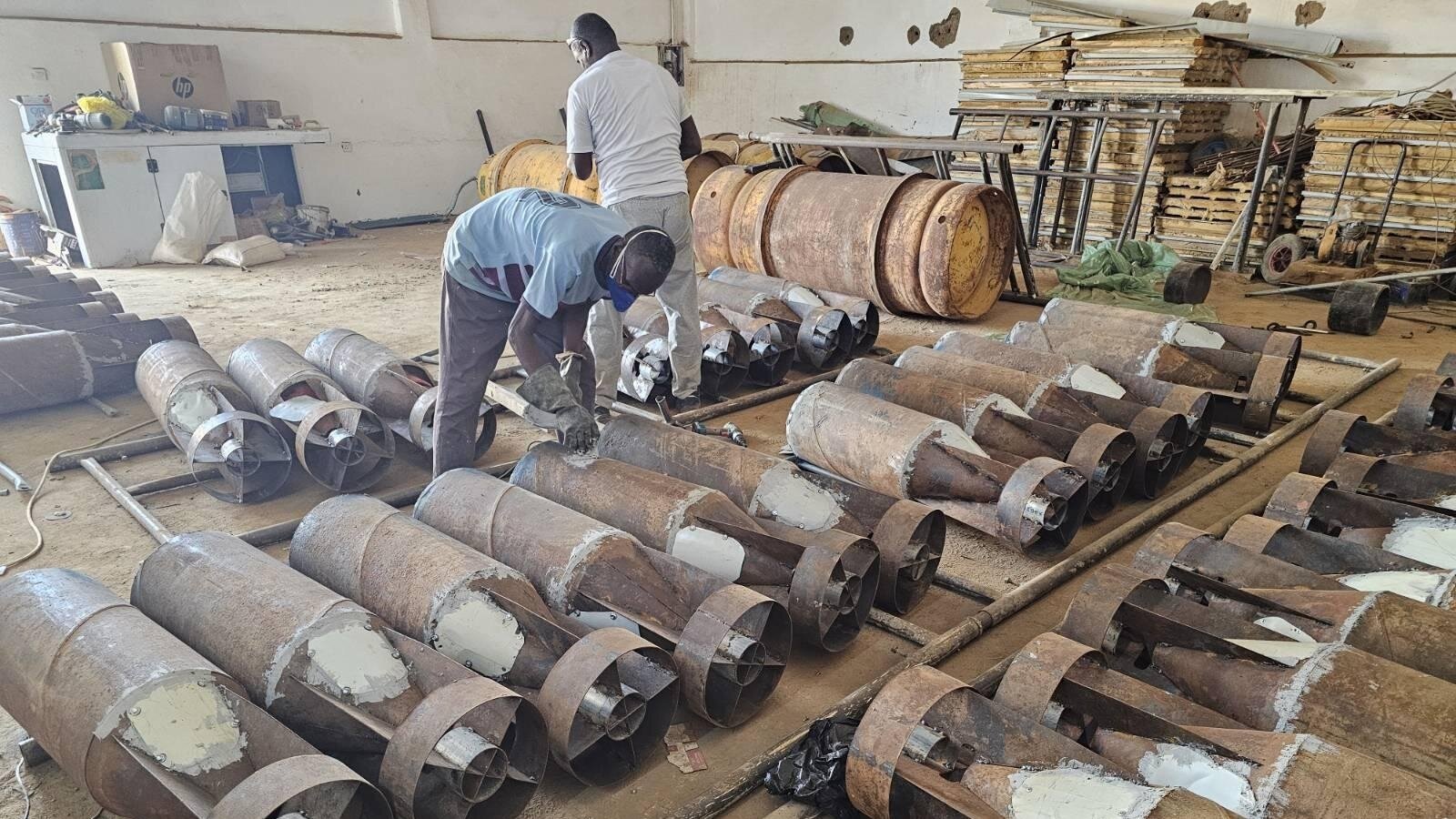
The documents include bomb blueprints, desert test records and references to munitions filled with chlorine and described in some files as “dual-effect” weapons carrying “choking gas.”
Videos show tests producing green-yellow vapor clouds, which experts associate with chlorine. One photograph set from a production site showed dead scorpions on the factory floor, consistent with exposure to the gas.
According to material reviewed by The New York Times and The Washington Post, Sudanese Army Colonel Tariq Madani directed much of the program. Messages and voice notes attributed to him discuss the assembly, testing and storage of the weapons.
The bombs were designed to carry about 15 kilograms of chlorine, and one test was recorded as successful in July 2024.
Production and storage
By October 2024, internal messages indicated that approximately 290 to 300 chemical munitions had been manufactured.
Most were reportedly stored at Merowe Airport, also known as Merowe Air Base, a major Sudanese Air Force installation. Messages from late 2024 reported that 106 of the bombs had been used against RSF positions.
The dossier says chlorine was obtained from several sources. Twenty large cylinders were imported through an Egyptian border crossing and were described as sufficient for about 1,100 bombs.
Additional chlorine was reportedly taken from the Al-Manara water treatment station in Omdurman, where the chemical was used for civilian water purification. Some supplies at the facility had been provided through international aid channels.
Earlier evidence of chlorine attacks
The dossier adds to previous investigations into alleged chlorine attacks in Sudan.
A France 24 investigation supported by C4ADS documented two incidents in September 2024 near the Garri military base and Al-Jaili oil refinery north of Khartoum. Videos and photographs from the sites showed damaged industrial chlorine cylinders and yellow-green clouds.
Five independent experts assessed the imagery as consistent with aerial drops of chlorine containers. The reported deliveries were attributed to the SAF's aircraft capability.
Trade records also linked some chlorine cylinders to Indian exporter Chemtrade International Corporation, which said the shipments were intended solely for water treatment.
U.S. determination and alleged cover-up
The United States formally determined in April 2025 that the Government of Sudan had used chemical weapons in 2024, violating the Chemical Weapons Convention. The determination triggered sanctions, including restrictions on U.S. exports and access to U.S. government credit lines.
U.S. officials had earlier said Sudanese forces appeared to have used chemical weapons, apparently involving chlorine, on at least two occasions against RSF fighters in remote areas.
The new dossier indicates that SAF chief Gen. Abdel Fattah al-Burhan was informed about the chemical-weapons program.
After the U.S. sanctions, communications attributed to senior officers reportedly contained instructions to remove evidence and traces of the program from storage sites. A September 2025 message attributed to Madani said a base had been “emptied of traces and residue.”
Sudan denies allegations
The Sudanese military has consistently denied using chemical weapons.
Sudanese officials have said there is no evidence supporting the allegations and pointed to an internal national committee that found no contamination at the sites it examined. Sudan also said a U.S. team visited and collected samples without publicly producing evidence of chemical-weapons use.
Sudan has called for the issue to be handled through the Organisation for the Prohibition of Chemical Weapons (OPCW).
International law
The conflict between the SAF and RSF began in April 2023 and has caused large-scale displacement, famine conditions and extensive civilian harm.
Chlorine is widely used for water treatment, but its use as a weapon is prohibited under the Chemical Weapons Convention and constitutes a war crime under the Rome Statute.
The newly revealed dossier adds specific details about the alleged production, testing, storage and deployment of chlorine munitions, as well as information about the military command structure, building on earlier U.S. findings and open-source investigations.
——— End of Article ———