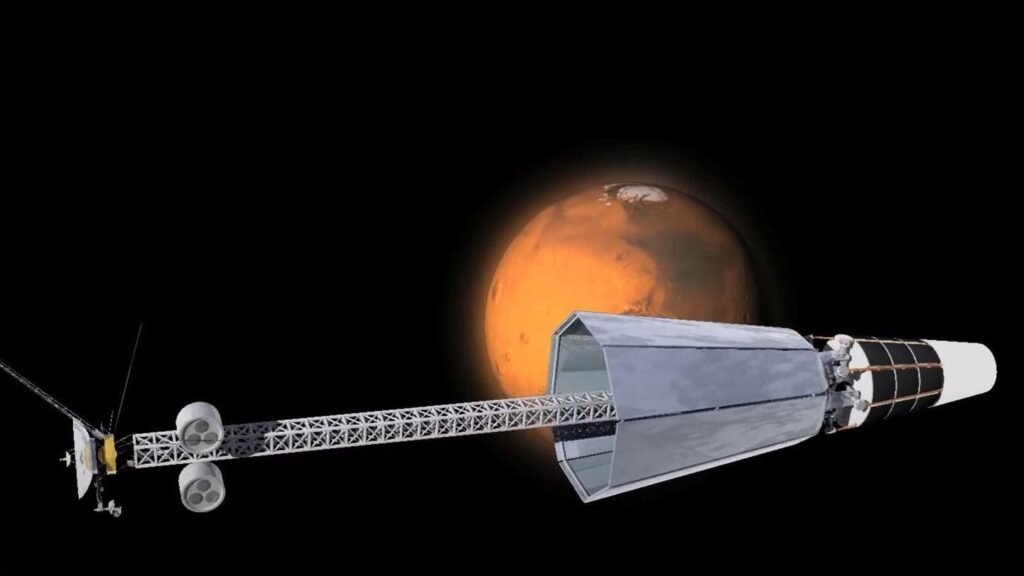
TORRANCE, Calif. — The Office of the Assistant Secretary of the U.S. Air Force for Space Acquisition and Integration has awarded California-based nuclear energy startup Antares $161 million under a Strategic Breakthrough contract to develop a nuclear reactor designed to power operational spacecraft.
Antares said the award is the largest defense contract to date focused specifically on space-based nuclear power. The contract covers two parallel technical tracks.
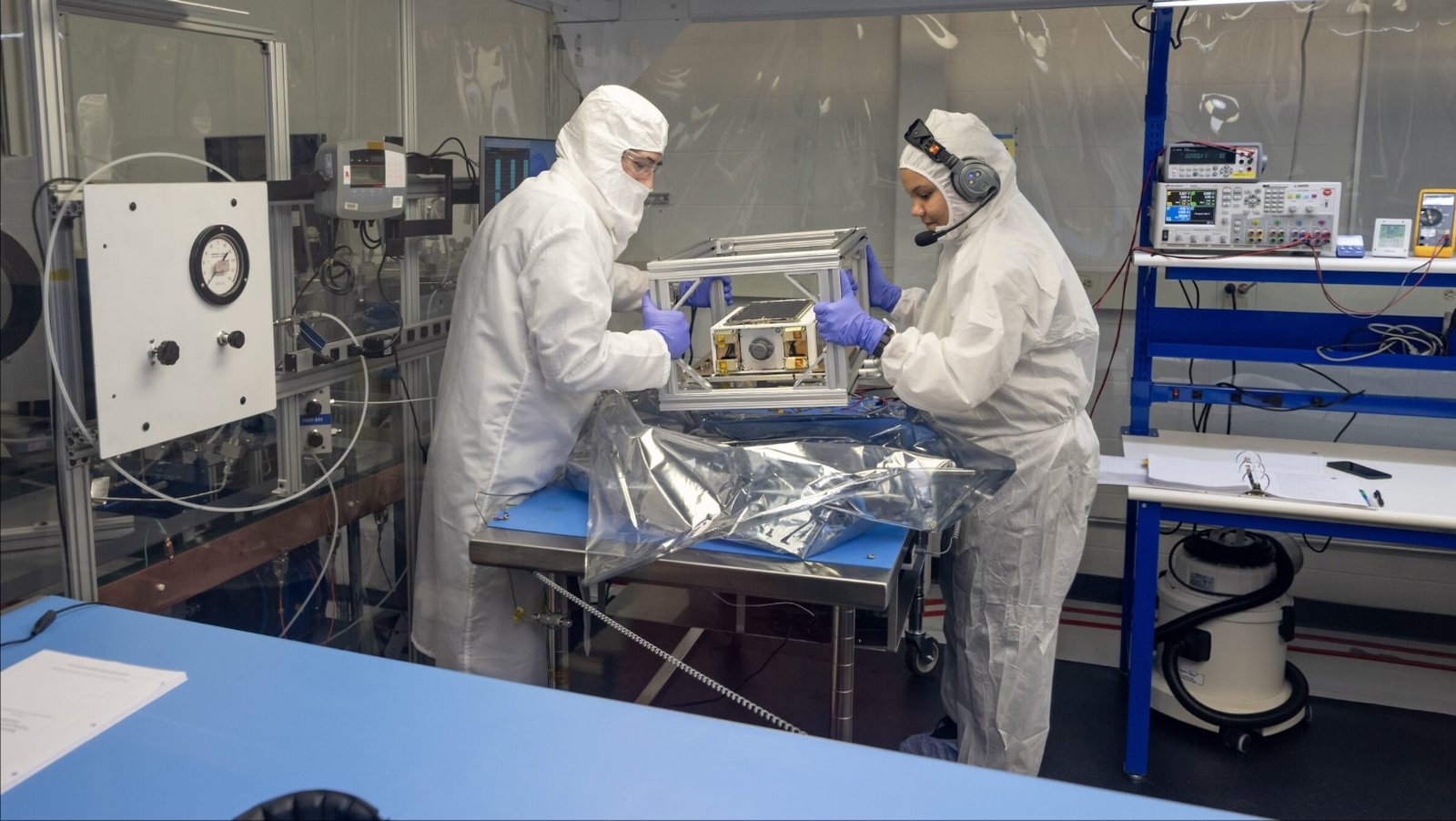
Under the first, Antares will conduct a ground demonstration of its R1-S reactor, a compact system that uses solid-state heat pipes instead of mechanical pumps to transfer heat from the reactor core. After ground validation, the reactor will be integrated into a spacecraft and prepared for flight certification ahead of an orbital launch.
The second track involves the Mark-1 reactor, an electricity-producing design scheduled to begin multi-month operational testing in 2027 using a closed Brayton cycle power-conversion system. The reactor will be used to power a ground-to-space military asset.
“Space has been core to the Antares thesis since the company was founded,” said Jordan Bramble, CEO and co-founder of Antares. “This partnership with the Space Force turns that long-held vision into a codified space mission. Fission will unlock strategic capabilities that are impossible today.”
Nuclear Power for Spacecraft
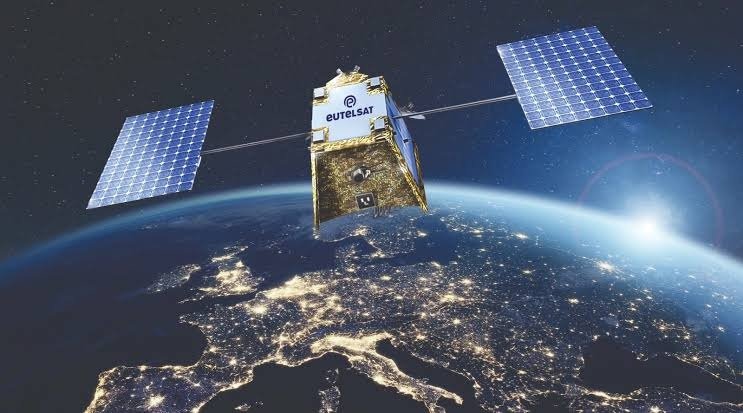
Most modern satellites use solar arrays and batteries. Antares says a compact fission reactor could provide continuous multi-kilowatt or megawatt-class power regardless of sunlight, orbital shadows or distance from the Sun.
The company identifies potential applications including high-throughput edge computing and automated data processing, long-range active radar, directed-energy payloads, and high-power electronic warfare and electromagnetic-spectrum operations. Greater onboard power could also support more flexible spacecraft maneuvering.
The United States has not operated a nuclear reactor in orbit since NASA launched SNAP-10A in 1965, leaving a six-decade gap in U.S. space fission systems.
Mark-0 Reached Criticality
The contract follows Antares' June 4, 2026, milestone at Idaho National Laboratory (INL), where its Mark-0 microreactor reached criticality, meaning the fission reaction became self-sustaining.
The test was conducted under Department of Energy authorization with INL and nuclear fuel supplier BWX Technologies (BWXT), with U.S. Army personnel observing. Antares said it became the first private entity to achieve criticality under the DOE's Reactor Pilot Program and that Mark-0 was the first newly designed reactor to reach criticality at the Idaho site in more than 50 years.
The test provided validation of core physics and safety profiles for Antares' HALEU TRISO fuel compacts, which use ceramic coatings designed to retain fission products and withstand high temperatures without melting.
Other U.S. Defense Programs
Antares is also using its reactor architecture across other military programs. Data from Mark-0 is supporting Project Pele, the Department of Defense's effort to develop a transportable terrestrial microreactor.
The company is also a supplier under the U.S. Army's Project Janus, which focuses on fixed microreactors for domestic military installations, including Fort Moore, Georgia, formerly Fort Benning. Earlier in 2026, Antares was selected through the Defense Innovation Unit to build a prototype installation system at Joint Base San Antonio.
Space Nuclear Power Plans
Antares linked the Air Force award to Executive Order 14369, “Ensuring American Space Superiority,” and the National Initiative for American Space Nuclear Power outlined in NSTM-3. These policies call for demonstrating an operational nuclear reactor in orbit as early as 2028, followed by deployment of a surface power reactor on the Moon by 2030.
Founded in 2023 in Torrance, California, Antares has engineering and testing facilities in Idaho Falls, Idaho, and Aiken, South Carolina. The company has raised more than $600 million in private capital, including a $470 million Series C round completed in July 2026.
The Air Force and Antares have not disclosed the target launch date for the R1-S, the specific spacecraft bus or mission profile, or how the $161 million contract will be divided between the R1-S flight demonstration and Mark-1 ground testing.
——— End of Article ———