MOSCOW — Satellite imagery has confirmed damage to Russian military infrastructure and aircraft following separate Ukrainian drone strikes on the Millerovo airbase in Rostov Oblast and the Sochi area in Krasnodar Krai.
The imagery provides additional evidence of the results of attacks carried out on August 30 and September 4, 2026, including damage to radar systems, an ammunition storage facility, a maintenance facility and Russian military helicopters.
Damage at Millerovo Airbase
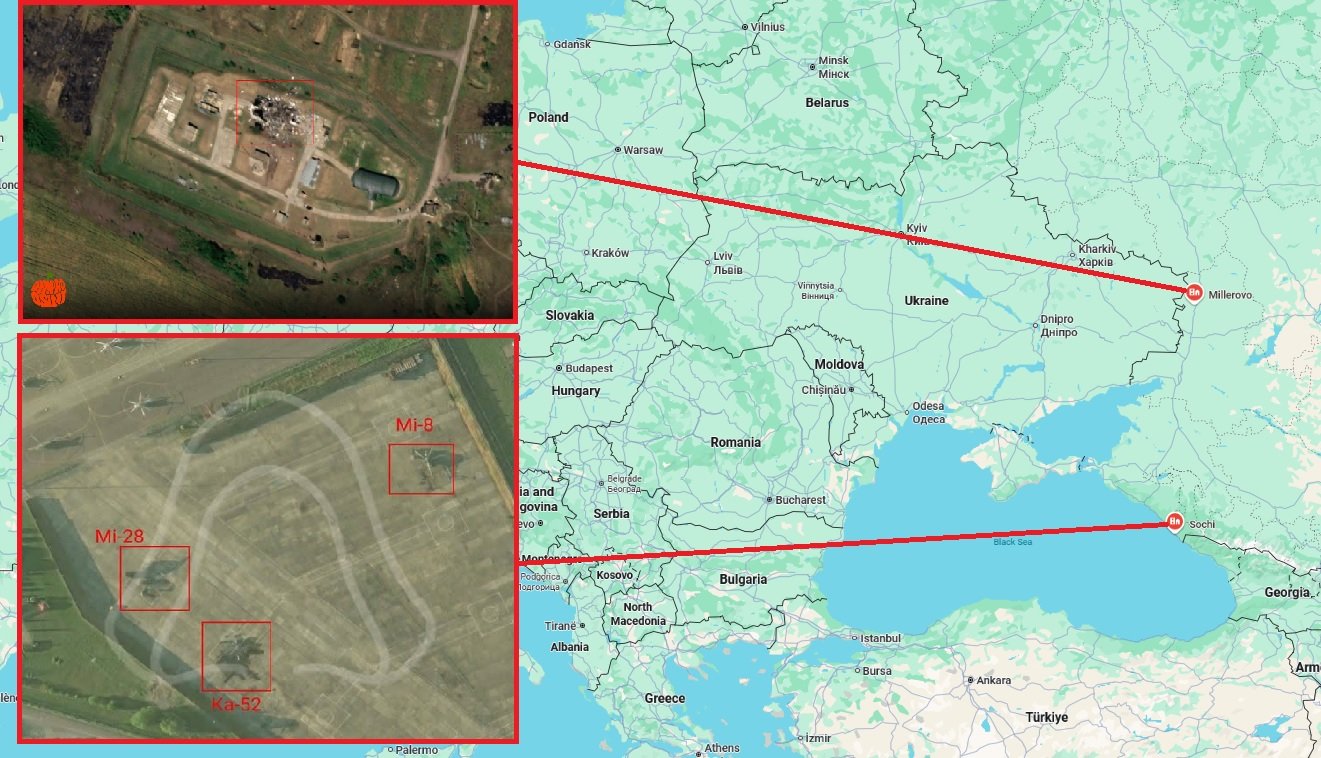
The first strike took place during the night of August 30 at Millerovo airbase in Rostov Oblast. Satellite imagery published by the open-source intelligence group Dnipro OSINT confirmed the destruction of an ammunition storage facility and the airbase's technical and maintenance facility, known as the TECh.
The imagery also showed damage to an RSP-27 precision approach radar and a Nebo-SV early warning radar.
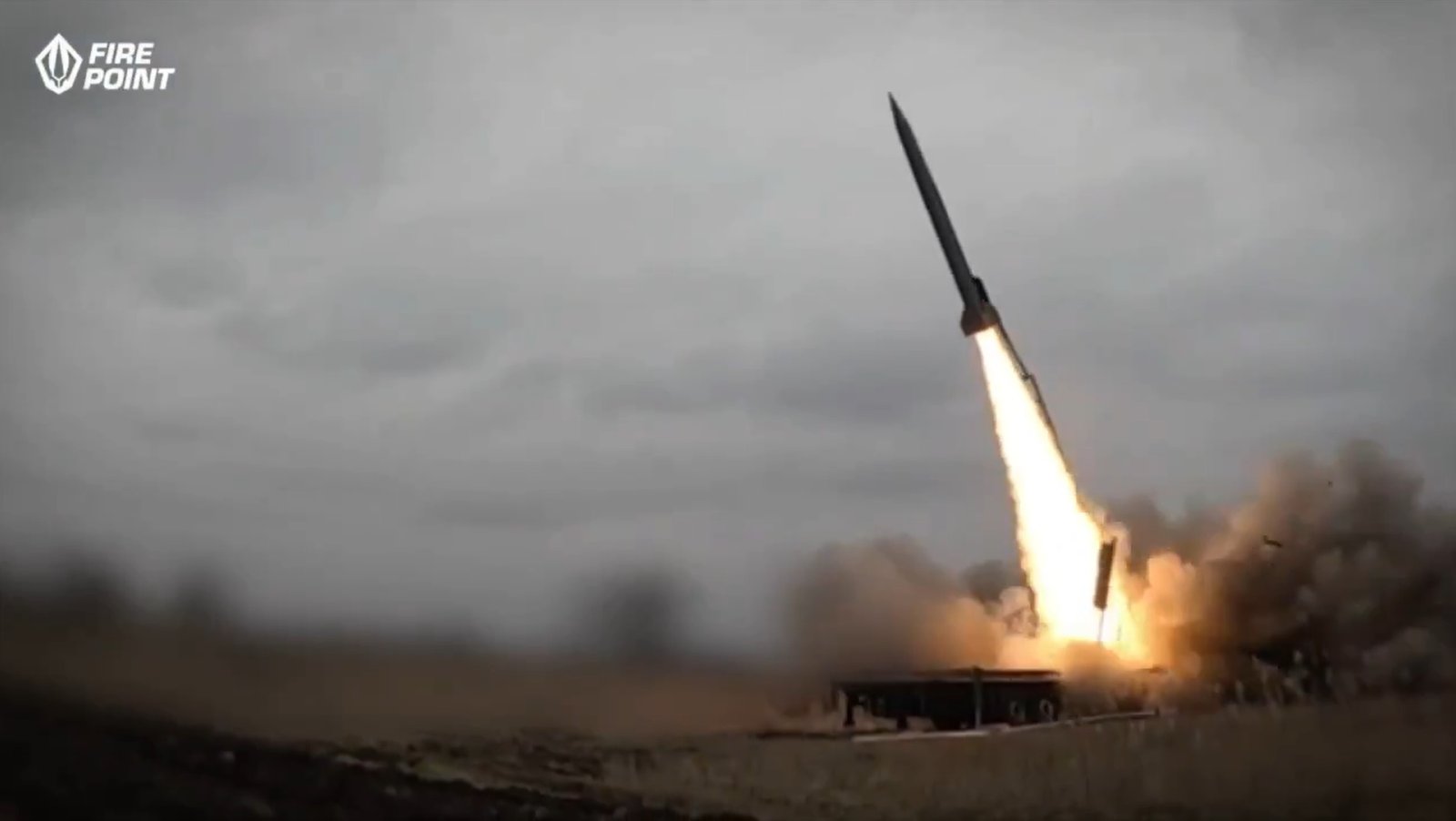
Ukrainian outlet Militarnyi reported that the attack was carried out by Ukraine's 1st Separate Center of the Unmanned Systems Forces using FP-1 long-range strike drones. The same operation also targeted Russian military assets at Yeysk airbase, where a Pantsir-S1 air-defense system, a Sopka-2 radar and an aviation weapons storage facility were reportedly struck. A Kasta 2E2 radar near Shabelskoye was also targeted.
Robert “Madyar” Brovdi, commander of Ukraine's Unmanned Systems Forces, said the main target at Millerovo was the DRL-27 module of the RSP-27 aircraft landing radar system. The DRL-27 is used for detecting airborne targets and forms part of the airfield's air traffic control system when combined with the PRL-27 landing radar.
Millerovo airbase is located about four kilometres northwest of Millerovo city, near Dolotinka. The facility has hosted Russia's 31st Guards Fighter Aviation Regiment, which operates Su-30SM fighters. Ukrainian officials have described the airfield as a staging location for Russian frontline aviation supporting operations in eastern and southern Ukraine. The base has previously been targeted, including in December 2023 and July 2025.
NASA's FIRMS system also recorded a fire at the airbase during the early hours of August 30 following a drone alert in the area.
FP-1 drones used in the attack
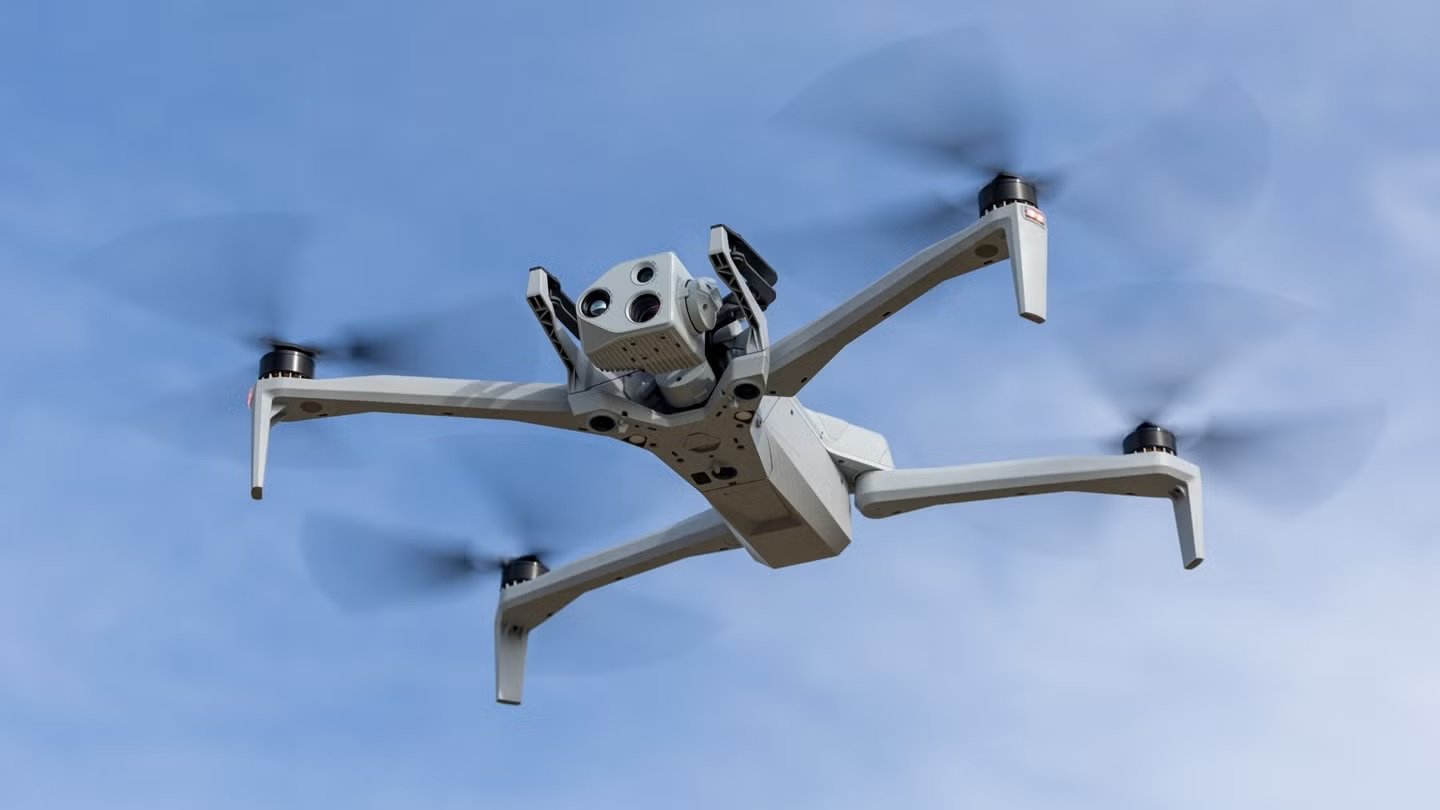
The FP-1 is a long-range one-way attack drone developed by Ukrainian defense company Fire Point. The baseline version has a publicly documented range of up to 1,600 kilometres and can carry a modular warhead in the 60–120 kilogram range, depending on configuration. Fire Point has also stated that the drone costs about $55,000 per unit.
An extended-range version has subsequently been associated with ranges of up to about 3,400 kilometres, although specifications vary between different versions and configurations.
The FP-1 has been used by Ukraine for long-range strikes against military and logistical targets inside Russia. The platform is among the systems Ukraine has developed to conduct deep strikes without relying on Western long-range missiles.
Helicopters damaged at Sochi
A separate Ukrainian drone strike on September 4 caused damage at Sochi International Airport in Krasnodar Krai.
Satellite imagery reviewed after the attack showed a destroyed Russian Ka-52 attack helicopter and a destroyed Mi-28 attack helicopter at the airport's military helicopter parking area. A Mi-8-family transport helicopter was also damaged.
The strike also affected fuel infrastructure near the airport. Reports based on satellite imagery identified six destroyed fuel storage tanks at the BATO aviation fuel depot. A nearby Lukoil facility was also hit, with three additional storage tanks reported destroyed or damaged.
Satellite evidence also indicated damage at a nearby Russian air-defense position, with one launcher from an S-300 or S-400 system reportedly detonating during the attack. The exact system involved has not been independently confirmed.
The attack had an impact on airport operations. Sochi airport operated under restrictions for more than 11 hours, while flights were delayed, cancelled or diverted. Temporary restrictions were also placed on aircraft refueling.
Previous attacks
Sochi airport and nearby infrastructure have previously been affected by Ukrainian strikes. A helicopter parking area in the Adler district was targeted in October 2023, while an August 2025 attack caused a fire at nearby oil infrastructure and disrupted airport operations.
Millerovo has likewise been targeted several times since Russia's full-scale invasion of Ukraine, including attacks reported in December 2023 and July 2025.
As of September 6, Russian authorities had not publicly provided a specific assessment of the damage to the Millerovo facilities or the helicopters and military infrastructure identified in the satellite imagery from the September 4 attack.
Main Source : defence-blog
——— End of Article ———