RIYADH, — Saudi Arabia is moving ahead with emergency work to restore crude oil flows through its East-West Pipeline after drone attacks damaged several pumping stations earlier this month.
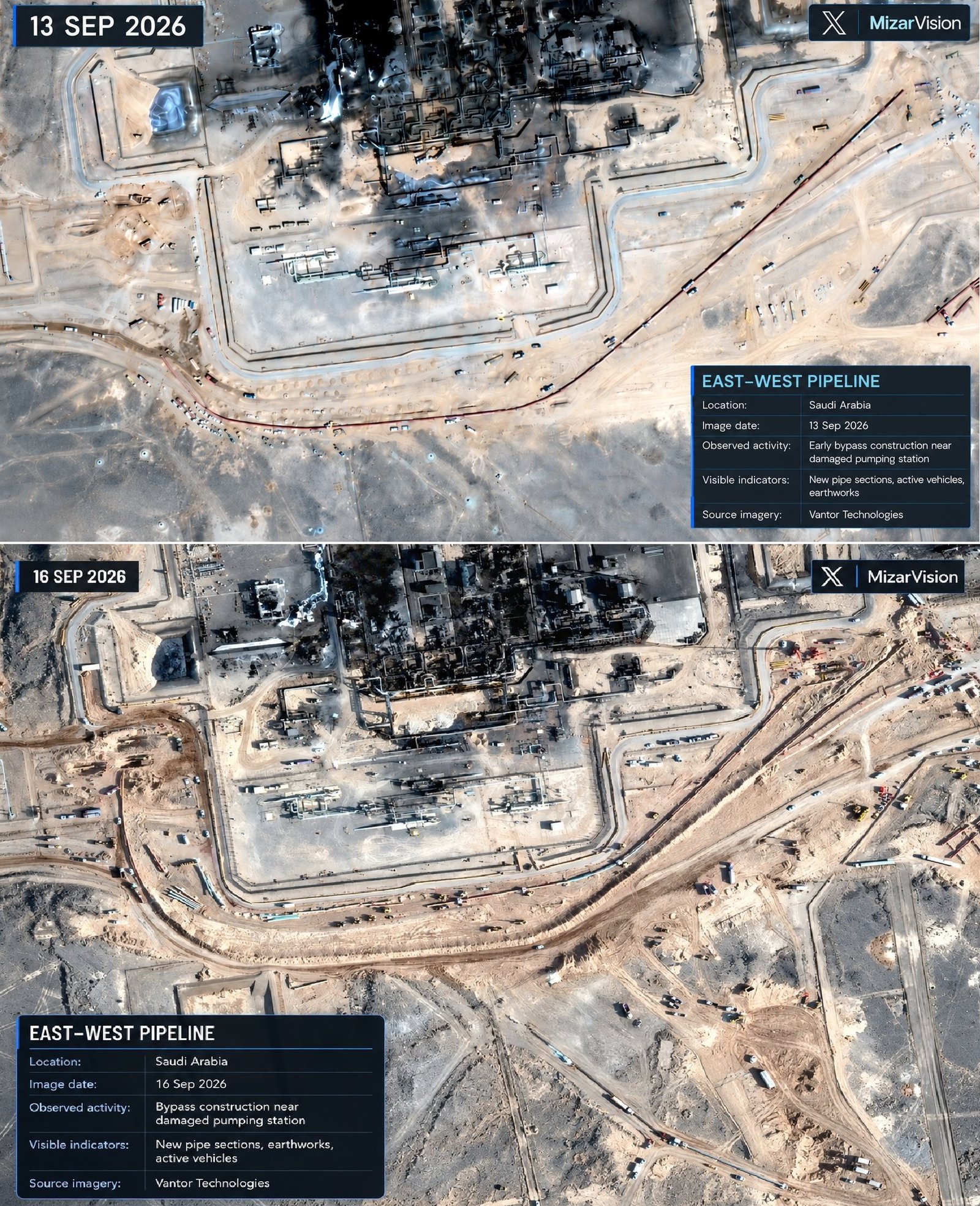
Satellite imagery captured by Vantor Technologies on September 16 shows Saudi crews constructing a temporary bypass around one of the damaged pumping stations. Workers appear to be laying and welding two new sections of pipeline that could allow crude to flow around the affected facility while permanent repairs continue.
The imagery provides visual evidence of the ongoing construction activity. Reuters separately reported on September 17 that three pumping stations along the pipeline were damaged in the attack, increasing the number from two identified in earlier assessments.
The attacks took place on September 10 and 11. Saudi Arabia subsequently shut down the East-West Pipeline as a precaution. Reuters reported that the attacks originated from Iraqi territory, while the Islamic Resistance in Iraq denied involvement and no group has claimed responsibility.
Temporary bypass aimed at restoring flows
The temporary bypass is intended to route crude around a damaged pumping facility rather than waiting for the complete repair of the original equipment.
Reuters reported that industry and oil sources estimate that full repairs could take five to six weeks, while partial pipeline operations could resume earlier. Bloomberg separately reported that Saudi Aramco is working to bypass the damaged section and aims to restore about half of the pipeline's capacity within days.
The exact progress and operational capacity of the temporary bypass have not been publicly detailed by Saudi Aramco or Saudi government representatives.
East-West Pipeline is a major alternative export route
The 1,200-kilometer (745-mile) East-West Pipeline, also known as Petroline, connects Saudi Arabia's eastern oil-producing and processing areas with Yanbu on the Red Sea coast. Saudi Aramco describes the pipeline as providing flexibility to export crude from both the eastern and western coasts of the Kingdom.
According to Reuters, the pipeline has a capacity of about 7 million barrels per day and had been transporting around 4 million to 5 million barrels of crude per day in recent months, equivalent to roughly 4% to 5% of global oil supply. The system includes 11 pumping stations and two pressure-relief stations.
The pipeline is particularly important because it provides Saudi Arabia with an alternative route to the Red Sea, reducing reliance on tanker shipments through the Strait of Hormuz.
Saudi Arabia is also using other measures to maintain crude exports during the disruption. Reuters reported on September 18 that Saudi Aramco plans to increase crude exports from its Gulf port of Ras Tanura, with ship-to-ship transfers at Oman's Sohar port helping compensate for reduced exports from Yanbu.
If the temporary bypass is completed and operates as intended, Saudi Arabia could restore part of the East-West Pipeline's crude flows before permanent repairs to the damaged pumping equipment are finished.
Main Source : MizarVision
——— End of Article ———