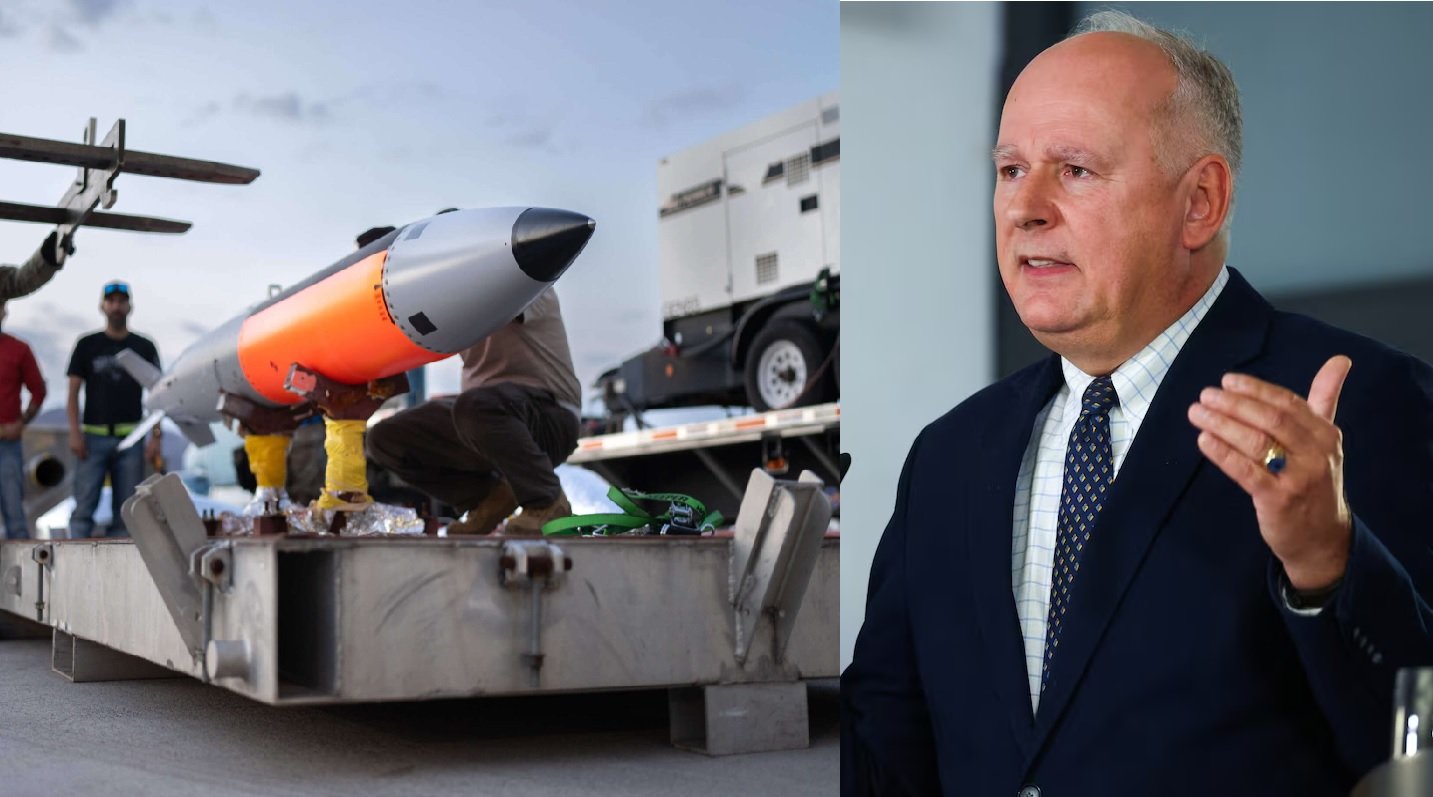
WARSAW, — Poland does not plan to host nuclear warheads on its territory, Deputy Defence Minister Paweł Zalewski said Thursday during a briefing at NATO headquarters in Brussels.
“I would like to say this very clearly and openly. Poland does not want to have nuclear warheads on its territory,” Zalewski said.
His comments came in response to questions about whether a future permanent U.S. military presence in Poland could include nuclear capabilities. Zalewski said that even if the U.S. military presence is expanded, the deployment of nuclear warheads on Polish territory is not being considered.
At the same time, Poland wants to remain an active participant in NATO’s nuclear deterrence system. Zalewski said participation does not require nuclear warheads to be physically stationed in Poland.
Poland Seeks Greater NATO Role
Defence Minister Władysław Kosiniak-Kamysz has also said Poland remains interested in NATO’s Nuclear Sharing programme and is involved in discussions about a broader European nuclear protection framework.
Under NATO’s Nuclear Sharing arrangements, the United States maintains nuclear weapons in several European allied countries, including Belgium, Germany, Italy and the Netherlands. The arrangements allow participating non-nuclear allies to contribute to NATO’s nuclear deterrence mission while the United States retains control of its nuclear weapons.
Poland’s position comes after several years of domestic debate about whether the country should seek a more direct role in nuclear deterrence.
Earlier Calls for Nuclear Protection
In April 2025, then-President Andrzej Duda said Poland should seek protection under France’s nuclear deterrence and also called for U.S. nuclear weapons to be stationed in Poland. He said the two approaches were not contradictory.
In September 2025, the French Air and Space Force deployed Rafale fighter jets to Poland. The aircraft are capable of carrying ASMP missiles that can be fitted with nuclear warheads. The deployment was part of NATO efforts to strengthen air defences on the eastern flank following Russian drone incursions into Polish airspace.
In February 2026, current President Karol Nawrocki went further, saying Poland should consider developing its own nuclear weapons. He described himself as a strong supporter of Poland joining a nuclear project while stressing that any such steps would have to comply with international regulations.
Domestic Opposition
Zalewski’s position has faced criticism from opposition figures and officials close to President Nawrocki.
Marcin Przydacz, head of the president’s International Policy Bureau, called Zalewski’s remarks “strange” and “absurd” and said they were contrary to Poland’s previous policy. He argued that genuine participation in Nuclear Sharing requires hosting nuclear weapons.
Former Defence Minister Mariusz Błaszczak also argued that Poland should seek full inclusion in the programme to strengthen NATO’s eastern flank. Retired Brigadier General Stanisław Koziej described the government’s position as a strategic mistake and argued that the presence of allied nuclear assets would strengthen deterrence against Russia.
Zalewski defended the government’s approach, saying that deterrence comes from real domestic and allied capabilities rather than intentions.
U.S. Military Presence Also Discussed
During his visit to Brussels, Zalewski met U.S. Deputy Secretary of Defense Elbridge Colby. Their talks included the implementation of NATO 3.0, under which European countries would take greater responsibility for the continent’s security. Zalewski said Poland supports the approach and wants to play an active role in strengthening NATO.
The two sides also discussed a possible permanent U.S. military presence in Poland. Zalewski said several locations are being considered for American bases and that a U.S. administration representative is expected to visit Poland to review Warsaw’s proposals.
He said the United States has important interests in Poland and wants a permanent presence there. The discussions also concern capabilities that Poland does not yet fully possess.
Zalewski said Poland would prefer decisions on the U.S. presence to come around the conclusion of Washington’s review of its military presence in Europe, although he stressed that finding practical solutions is more important than meeting a fixed deadline.
Poland remains a party to the Treaty on the Non-Proliferation of Nuclear Weapons.
——— End of Article ———