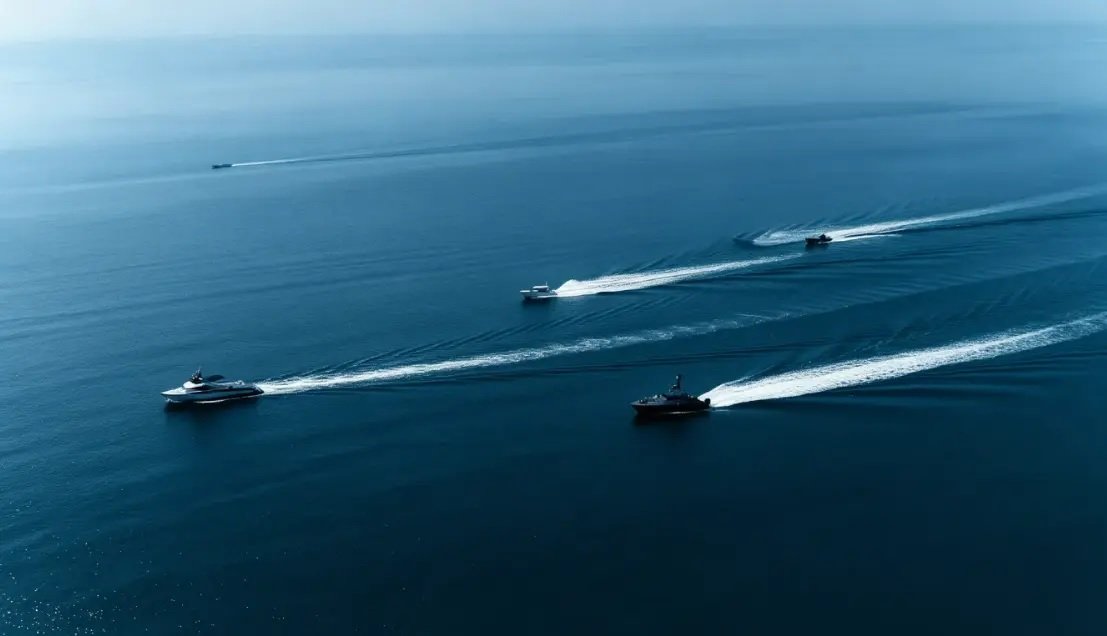
WASHINGTON, — Rolls-Royce has received U.S. Navy certification for its mtu Series 4000 and Series 2000 marine engines, clearing the engines for use in autonomous naval vessel operations. The certification supports the U.S. Navy’s effort to expand its unmanned maritime fleet with vessels capable of operating for extended periods without onboard crews or routine maintenance.
The certification is based on requirements set out in the National Defense Authorization Act (NDAA) for unmanned systems. Under the requirements, qualifying propulsion systems must complete demanding reliability and operational tests without human intervention and without preventive or corrective maintenance or repairs to their main propulsion, fuel and oil systems. Successful systems can support unmanned deployments of up to 30 days without maintenance personnel.
Series 4000 completes 720-hour durability tests
The mtu Series 4000 received certification after completing two 720-hour durability tests. The engine is certified for autonomous applications with up to 4,300 kW of propulsion power and up to 3,000 kWe of electrical generation.
The Series 4000 is available in V8, V12, V16 and V20 configurations. The testing was intended to demonstrate that the propulsion system could maintain continuous operation for the required period without human intervention or maintenance.
The U.S. Navy has previously conducted 720-hour demonstrations for unmanned vessel power systems. In one such test, an mtu 8V4000M24S completed a 720-hour demonstration without human intervention or preventive or corrective maintenance, making the tested engine model eligible for future use on unmanned surface vessel platforms.
Series 2000 also receives certification
The mtu Series 2000 was certified following extensive component testing and thousands of hours of field operation.
The engine family is offered in V10, V12 and V16 configurations and provides up to 1,939 kW of propulsion power.
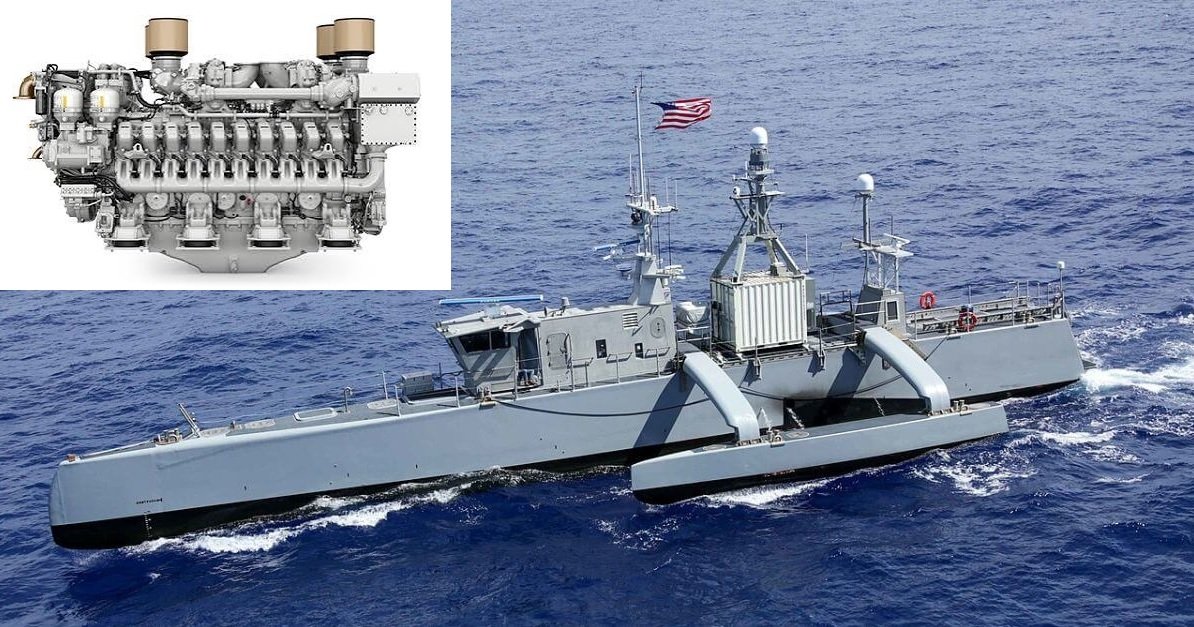
One of the U.S. Navy’s existing unmanned vessels, Sea Hunter, is powered by two mtu 12V 2000 engines. According to Rolls-Royce, Sea Hunter has accumulated tens of thousands of operational hours since it was christened in 2016.
The Navy deployed Sea Hunter and Seahawk earlier this year as its first dedicated division of unmanned surface vessels. The vessels form part of the Navy’s wider effort to develop and operate autonomous maritime systems.
Certification covers more than engine durability
The Navy’s approval process also includes validation of associated engine control systems, cybersecurity measures and safety-critical functions. These requirements are intended to support the safe and reliable operation of autonomous systems during maritime missions.
For unmanned surface vessels, propulsion reliability is particularly important because extended autonomous missions reduce or eliminate the ability to carry onboard mechanics for routine maintenance. The certification therefore establishes that the certified engine systems meet the specified requirements for long-duration unmanned operation.
Scott Hanson, Vice President of Governmental Sales at Rolls-Royce Power Systems in North America, said the certification demonstrates the reliability and technology of the mtu Series 4000 and Series 2000 marine propulsion systems.
“The certification of our engines for unmanned operations further demonstrates the reliability and advanced technology of our mtu Series 4000 and 2000 marine propulsion systems,” Hanson said.
Hanson also said the certification addresses the increasing importance of autonomous missions and the need for power systems capable of supporting long-endurance unmanned vessels.
Rolls-Royce already supplies engines for U.S. unmanned systems
The certification expands Rolls-Royce’s existing involvement in U.S. military unmanned platforms. In aviation, the company’s engines power the RQ-4 Global Hawk and MQ-4C Triton unmanned aircraft.
Rolls-Royce has also supported test flights of the Navy’s MQ-25A Stingray, which uses the company’s AE 3007N engine. During testing, the unmanned aircraft autonomously completed taxiing, take-off, flight manoeuvres and landing.
The new maritime certification gives the U.S. Navy additional certified propulsion options for autonomous vessel applications. It also reflects the increasing importance of propulsion systems that can operate reliably for long periods without onboard maintenance crews.
——— End of Article ———