SAN DIEGO, — Kratos Defense & Security Solutions, Inc. is allocating part of its expanded Spartan engine production capacity to supply TDI-J85 turbojet engines for Boeing’s Joint Direct Attack Munition Long Range (JDAM LR) production program.
Earlier this month, the U.S. Air Force awarded Boeing a $75 million Undefinitized Contract Action (UCA) to acquire the BSU-111/B Payload Delivery Unit (PDU) for JDAM LR. The weapon can travel more than 300 nautical miles (555 km) while carrying a 500-pound-class (226-kg) payload.
JDAM LR combines the existing JDAM guidance kit with a wing kit and a compact turbojet engine. It is designed for precision conventional land strike, naval strike and maritime aerial-mining missions. The system is intended for aircraft already certified to carry conventional JDAM weapons, including the F/A-18 Super Hornet, F-15E, certain bombers and the MQ-9A Reaper.
Boeing has invested nearly $100 million of its own funds in the program. During flight testing in early April 2026, a U.S. Navy F/A-18 Super Hornet launched JDAM LR off the California coast, with the test successfully demonstrating engine start, cruise and guided flight over nearly 200 nautical miles.
Kratos J85 Engine
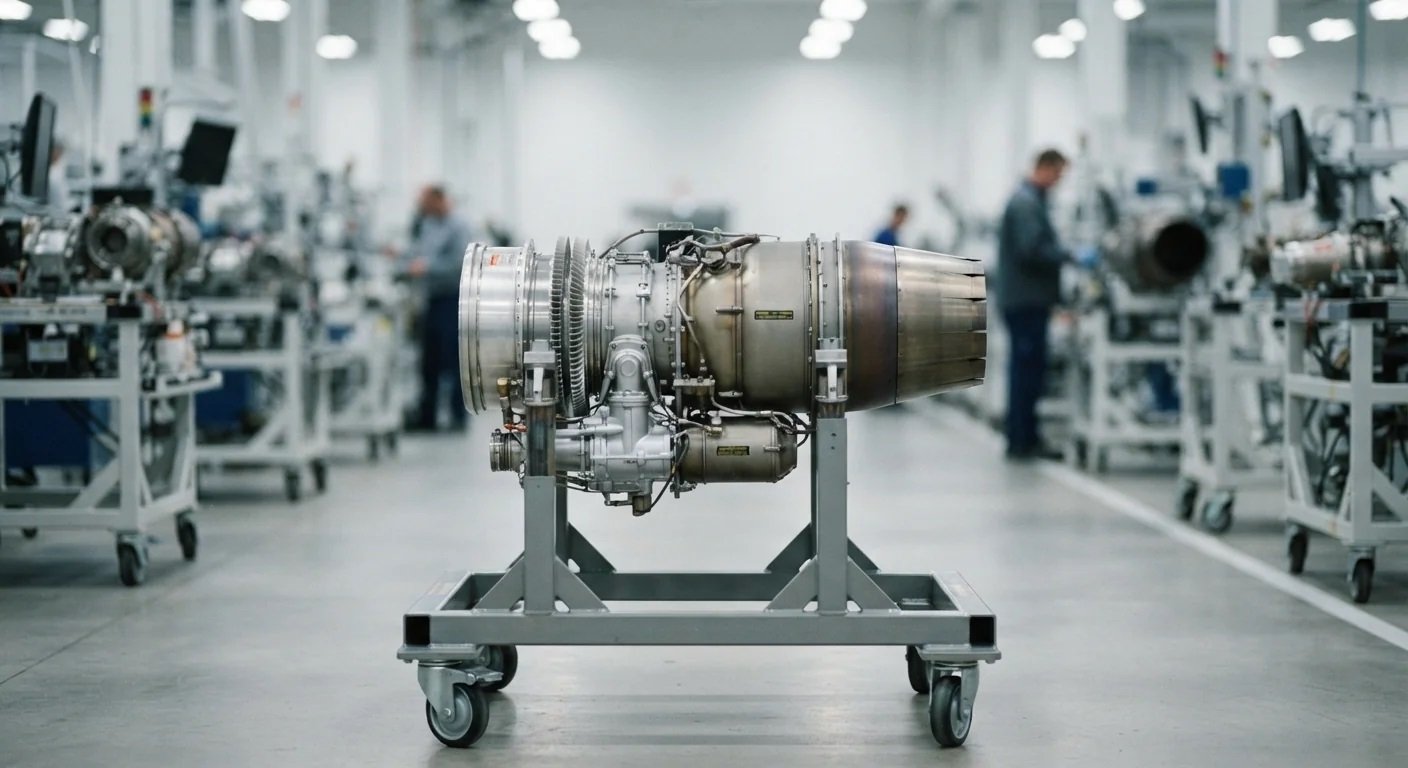
The JDAM LR is powered by Kratos’ TDI-J85, part of the company’s Spartan family of low-cost, compact military turbojet engines developed for uncrewed aerial systems and tactical missiles.
The J85 produces up to 200 pounds of thrust at sea-level static conditions. It is approximately 8.5 inches in diameter and 14.3 inches long, weighs about 30 pounds, and can operate at up to 40,000 feet and Mach 0.90. The engine includes an integral generator providing up to 1.5 kW of continuous electrical power.
It can use JP-10, JP-8, JP-5, Jet-A and Jet-A1 fuels and supports pyrotechnic, windmill and electric starting methods. Kratos says the engines are 100 percent designed and produced in the United States.
Production Expansion
Production is taking place at Kratos’ 22,500-square-foot Propulsion Manufacturing Facility in Auburn Hills, Michigan. The facility is fully operational and configured for sustained full-rate production. It can manufacture all four engines in the Spartan family concurrently, covering thrust levels from about 30 to more than 200 pounds, with production capacity exceeding 50,000 engines per year.
The facility opened in late 2025 and includes manufacturing, assembly and multi-station testing capabilities.
Kratos has begun procuring long-lead components for Spartan engines to support a large production run for multiple customers and applications in 2027. The Boeing JDAM LR program is a key application, with the J85 originally designed with this use in mind.
The company is also implementing a three-phase manufacturing infrastructure plan to further increase production capacity. Broader plans call for approximately 3,000 Spartan engines in 2027 and 5,000 in 2028 for missile, loitering-munition and related programs.
Kratos Unmanned Systems President Steve Fendley said the company’s internally funded supply-chain investments are intended to support affordable mass production and resilient domestic supply chains.
Kratos TDI Senior Vice President Joseph Kovasity said the Auburn Hills facility’s operational readiness marks the transition from engineering development to high-rate tactical manufacturing and provides a scalable, domestically sourced propulsion solution for JDAM LR.
Kratos and Boeing first formalized cooperation on the powered JDAM concept through a 2023 memorandum of understanding. The current production support builds on that cooperation and Kratos’ investment in U.S.-based Spartan engine manufacturing.
——— End of Article ———