WASHINGTON, D.C. — The U.S. Army has moved its Tactical Intelligence Targeting Access Node (TITAN) program from prototyping into production, awarding delivery orders worth a combined $192 million to Palantir Technologies and Anduril Industries.
The awards, made on August 31, include $127 million for Palantir and $65 million for Anduril. The contracts cover the procurement and integration of eight initial production TITAN systems, consisting of four TITAN Advanced and four TITAN Basic variants. The systems are scheduled for delivery over the next 18 months.
AI-enabled battlefield intelligence system
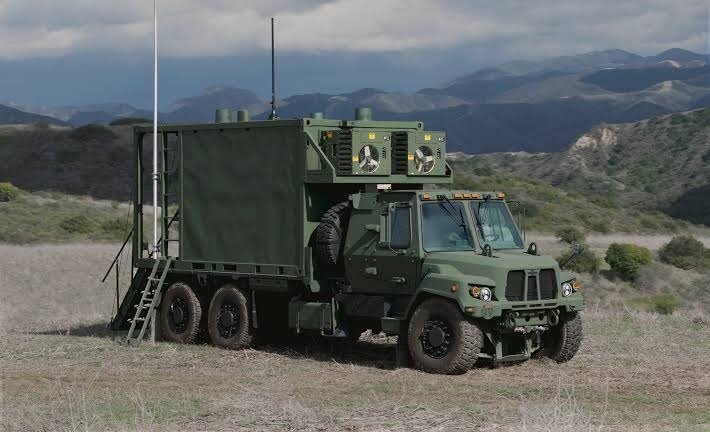
TITAN is an artificial intelligence-enabled, mobile ground station designed to collect, process and distribute information from space, high-altitude, aerial and terrestrial sensors.
The system uses artificial intelligence and machine learning to combine information from multiple sources, create a common intelligence picture and generate target coordinates. The Army says this is intended to improve the speed of target recognition and geolocation while reducing the time between sensor detection and engagement through automated target nominations.
TITAN is being developed to support Multi-Domain Operations, Joint All-Domain Operations and Long-Range Precision Fires. Its ability to process information from different sensors is intended to help battlefield units turn large amounts of intelligence data into usable targeting information more quickly.
Two TITAN variants
The initial production order is divided equally between the two versions.
TITAN Advanced: Four systems will be produced in the Advanced configuration. These systems are mounted on the Family of Medium Tactical Vehicles and are intended for higher-level formations, including corps, military intelligence brigade theater and multi-domain commands. The Advanced version provides greater processing and integration capabilities and has access to space-based intelligence.
TITAN Basic: Four systems will be produced in the Basic configuration. The more mobile version is designed for lower-echelon and division-level operations and is mounted on platforms including the Joint Light Tactical Vehicle. The Army is also continuing integration work involving the Infantry Squad Vehicle-Utility.
Palantir and Anduril roles
Palantir is the prime contractor and will lead overall production and integration of the TITAN systems. Its team includes L3Harris Technologies, Sierra Nevada Corporation, Strategic Technology Consulting and World Wide Technology, which are providing capabilities and technologies for the program.
Anduril is responsible for critical hardware and shelter integration. Its work includes ruggedized vehicle-mounted systems and the integration of power, thermal, control and operator subsystems. Anduril has supported TITAN since 2021 as the program's lead hardware systems architect, with hardware production taking place at its facility in Costa Mesa, California.
Production follows four years of prototyping
The move to production follows four years of prototyping and testing with Army soldiers using TITAN systems in different configurations and operating environments.
Army officials said soldier feedback was used to refine the system. Col. Jonathan Lipscomb, Project Manager for Intelligence Systems and Analytics, said the program has improved the speed of target recognition and geolocation from multiple sensors and reduced sensor-to-shooter timelines through automated target nominations and fusion of the common intelligence picture.
The Army currently retains nine TITAN prototype systems for operational use. The eight production systems from the new orders will join those prototypes once delivered.
The Army expects to award additional production orders for TITAN systems in fiscal year 2027.
——— End of Article ———