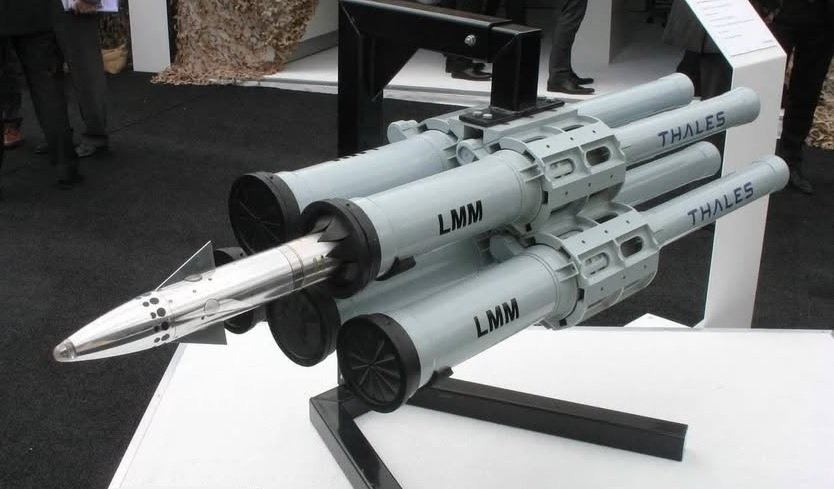
New Delhi/London — India and the United Kingdom are in the final stages of signing an Inter-Governmental Agreement (IGA) for the procurement of British Lightweight Multirole Missiles (LMMs), also known as Martlet, for the Indian Army’s tactical units.
The planned agreement is valued at £350 million ($468 million) and was announced during UK Prime Minister Keir Starmer’s visit to India in October 2025. An initial emergency procurement is already underway, while the formal IGA will expand the purchase into a larger order running into the hundreds of missiles. British officials have indicated that the numbers have increased significantly.
The LMMs are manufactured by Thales at its facility in Belfast, Northern Ireland. Once signed, the Indian order is expected to become the company’s second-largest global LMM order, after the larger Ukrainian order for more than 5,000 missiles under a £1.6 billion arrangement announced in 2025. The Indian deal is also expected to support jobs at the Belfast facility.
The missile weighs approximately 13 kilograms, measures 1.3 metres in length and has a 76 mm diameter. It uses laser beam-riding guidance, reaches about Mach 1.5 and has a range of more than 6 kilometres.
The LMM can be launched from the shoulder, tripod and vehicle-mounted platforms, and can also be used from helicopters and naval vessels. It is designed to engage low-flying aerial threats, including drones and unmanned aerial systems, as well as light armoured, wheeled and tracked targets. The missile has been in service with the British military since 2019 and has also been used by Ukrainian forces.
The procurement forms part of wider India-UK efforts to strengthen defence cooperation and establish reliable defence supply chains. After the missile agreement is concluded, the two countries plan to discuss the co-design and co-creation of future complex weapon systems.
The cooperation also includes a maritime electric propulsion partnership for future Indian Navy warships. An Implementing Arrangement for electric-powered naval engines, with an initial value of £250 million, was signed in October 2025.
——— End of Article ———