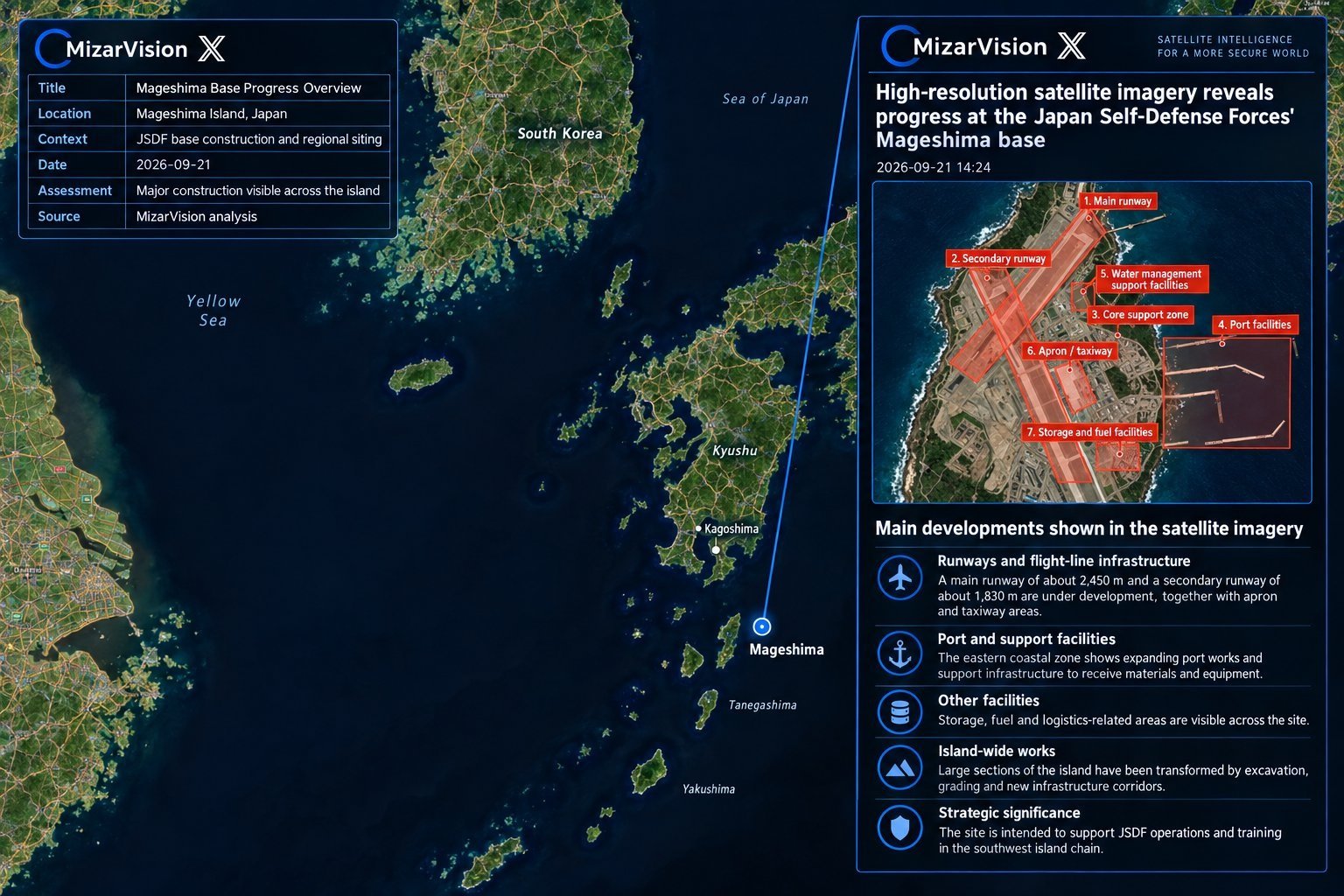
TOKYO — High-resolution satellite imagery captured on September 21, 2026, shows continued construction of the Japan Self-Defense Forces (JSDF) military base on Mageshima Island, south of Kyushu in Kagoshima Prefecture.
The imagery, analyzed by independent OSINT @MizarVision, shows progress across several sections of the planned facility, including the main and secondary runways, taxiways, aircraft aprons, port facilities, logistics areas, and fuel and storage zones.
Large parts of the previously uninhabited island have been reshaped through extensive excavation and grading. Construction is also continuing along the eastern coast, where maritime support facilities, including port and pier infrastructure, are being developed.
High-resolution satellite imagery dated September 21, 2026, provides a detailed look at the continuing construction of the Japan Self-Defense Forces’ new base on Mageshima Island, south of Kyushu.
— MizarVision (@MizarVision) September 22, 2026
I identified significant progress across several key areas of the site, including… pic.twitter.com/PblfNUWYQw
Major Military Facility
Mageshima is an 8.2-square-kilometer island in the Osumi Islands, about 10 kilometers west of Tanegashima and part of Nishinoomote City. The island measures approximately 4.5 kilometers north to south and 2.7 kilometers east to west.
The Japanese government purchased the island in 2019 for 16 billion yen ($146 million) for development as a military facility. Full-scale construction began on January 12, 2023.
The planned base will support JSDF operations and training in Japan’s southwestern islands. It will also become a permanent location for Field Carrier Landing Practice (FCLP) by U.S. Navy carrier-based aircraft, replacing the current training location at Iwo Jima (Iwoto), about 1,360 kilometers from Japan’s main islands.
The facility is also planned to support Air Self-Defense Force F-35B operations and training, as well as logistics and other regional response missions.
Planned infrastructure includes a 2,450-meter main runway, an approximately 1,830-meter secondary crosswind runway, taxiways, aprons, hangars, an air traffic control tower, port and pier facilities, fuel and ammunition storage, and other support areas. Living facilities are also being prepared, although most personnel and their families are expected to live on nearby Tanegashima and commute by boat.
Construction Schedule
The air traffic control tower was completed by the end of 2025. Aerial observations earlier in 2026 showed further development of the main runway, extensive grading and continuing pier and coastal construction.
The project was originally expected to be completed around 2027, but the completion target has been extended to the end of March 2030. Reported factors behind the delay include weather affecting the sea transport of workers and construction materials, labor shortages and site-related challenges.
The Defense Ministry has also proposed extending fishing restrictions around the eastern part of Mageshima and offered additional compensation to local fishing cooperatives.
MizarVision’s latest imagery is consistent with earlier public reports and updates from Japan’s Kyushu Defense Bureau, which regularly publishes information on the project.
The continuing construction reflects Japan’s broader effort to strengthen defense infrastructure and operational capabilities across the Nansei, or southwestern, island chain.
——— End of Article ———