WASHINGTON, — The U.S. Army has selected Westinghouse Government Services’ eVinci microreactor for the next phase of the Janus Program, pairing the system with Fort Drum, New York. The Army announced the selection on August 26, 2026, advancing the eVinci heat-pipe reactor toward potential deployment at a U.S. military installation.
Janus Program
The Janus Program is the Army’s next-generation nuclear power initiative, supported by the Department of War Innovation Unit (DIU). It aims to move microreactor technology from designs and experiments toward reliable commercial hardware that can provide secure, resilient and reliable energy for defense installations.
The Army considers reliable on-site power important for mission assurance, operational readiness and national security.
Five nuclear energy vendors and five initial Army locations have been selected:
| Company | Initial location |
|---|---|
| Antares Nuclear, Inc. | Fort Bragg, North Carolina |
| BWXT Advanced Technologies, LLC | Fort Campbell, Kentucky |
| General Atomics Electromagnetic Systems | Fort Hood, Texas |
| Radiant Industries, Inc. | Fort Benning, Georgia |
| Westinghouse Government Services | Fort Drum, New York |
The companies were selected after their technical, financial and organizational capabilities were assessed by a panel of dozens of experts from across the country.
The Army is awarding up to a combined $2.2 billion through milestone-based agreements covering fiscal years 2027–2031. The vendors will own, construct and operate the microreactors.
With expected private-sector funding, the Army anticipates that more than 20 microreactors could eventually be built and operated across Department of War installations.
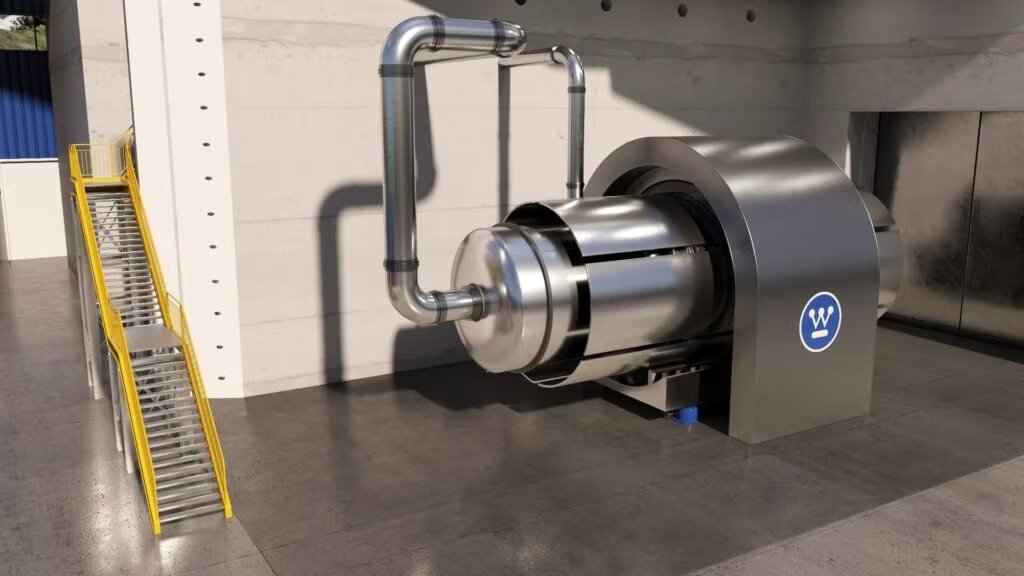
eVinci Microreactor
Westinghouse says the eVinci microreactor is designed to provide electricity 24 hours a day, seven days a week for eight years without refueling.
The system uses a heat-pipe reactor design and TRISO fuel, with passive heat removal. It can produce around 5 megawatts of electricity from a 15-megawatt thermal core.
The reactor has a small footprint and is designed for transport by road, rail or barge. It requires no water for cooling and is intended for above-ground installation.
Westinghouse completed zero-power criticality testing of the eVinci design on August 24, 2026, at the National Criticality Experiments Research Center.
Fort Drum Selection
Fort Drum, home of the 10th Mountain Division, was selected based on factors including mission requirements, power demand, grid conditions, and safety and environmental considerations. The Army’s earlier selection process considered nine military installations.
The planned Janus microreactors will each generate less than 20 megawatts of electricity and occupy less than five acres. They are intended to provide localized resilience for critical mission infrastructure and can integrate with existing commercial power grids.
2028 Target
The Janus Program aims to have at least one Army-regulated nuclear reactor capable of producing usable electricity operating at a domestic military installation by September 30, 2028, consistent with Executive Order 14299, signed in May 2025.
“Reliable energy is fundamental to mission assurance, operational readiness and national security,” said Rich Rademacher, President of Westinghouse Government Services. He said the eVinci selection highlights the role advanced nuclear technology can play in providing resilient, long-duration power for military missions.
Dr. Jeff Waksman, Principal Deputy Assistant Secretary of the Army for Installations, Energy and Environment, said the Janus Program is focused on transitioning from designs and experiments to reliable commercial hardware and securing energy independence.
The Janus Program was launched in October 2025. The Army expects additional sites and potential expansion to other military services to be announced as the program progresses.
——— End of Article ———