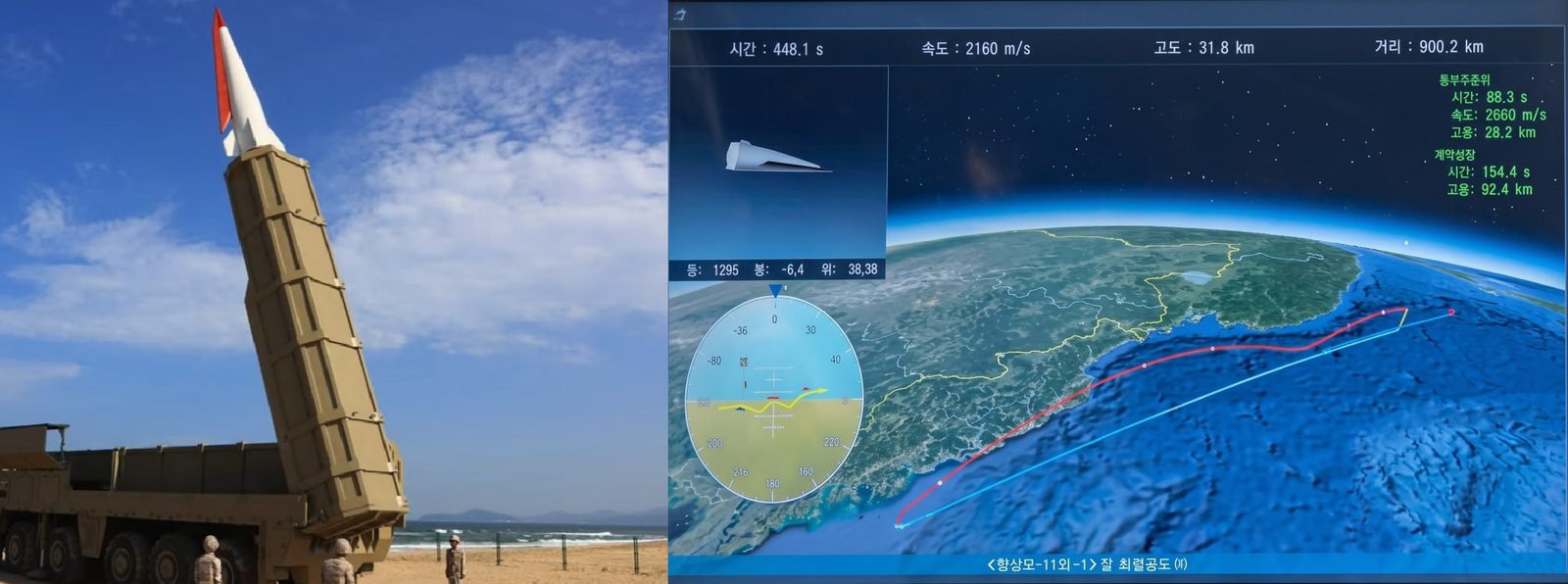
WONSAN, North Korea — North Korea has tested the Hwasongpho-11Ma-1, a solid-fueled short-range ballistic missile equipped with a maneuverable hypersonic glide vehicle (HGV). The September 20, 2026, test provided new information about the missile's design, flight profile and launcher.
Hwasong-11 Family
The Hwasongpho-11Ma-1 belongs to the Hwasong-11 family, known in Western designations as the KN-23 series. It builds on earlier Hwasong-11 variants that use a single-stage solid-propellant booster.
The earlier Hwasong-11Ma, also known as the Hwasong-11E, was first publicly displayed at North Korea's Defence Development-2025 exhibition in October 2025 and was later shown during military parades.
Hypersonic Glide Vehicle
The missile combines a Hwasong-11-series airframe with a wedge-shaped, finned glide vehicle. After the booster burns out, the glide vehicle separates and uses aerodynamic lift to continue toward its target rather than following a conventional ballistic trajectory.
Small control surfaces near the rear allow the vehicle to change direction and altitude. Flight-path information released by North Korea also showed a pull-up maneuver during the later part of the flight.
This lower and maneuverable flight profile can make the trajectory less predictable than that of a conventional ballistic missile.
Flight-Test Data
North Korean state media released the following figures from the September 20 test:
- Speed: 2,146 meters per second, approximately Mach 6.3
- Altitude: 35.8 kilometers
- Flight time: 446.1 seconds
- Displayed distance: 908.2 kilometers
South Korean tracking of related launches recorded ranges of approximately 450 kilometers and more than 600 kilometers, with peak altitudes of about 60 to 70 kilometers.
The difference between the North Korean display and external tracking means the 908.2-kilometer figure is a North Korean-reported flight figure, rather than an independently confirmed range.
Missile and Launcher
Open-source estimates for the Hwasong-11 family place its overall length at roughly 7.3 to 9.8 meters, diameter at about 0.9 meters, and launch mass at around 3,400 kilograms.
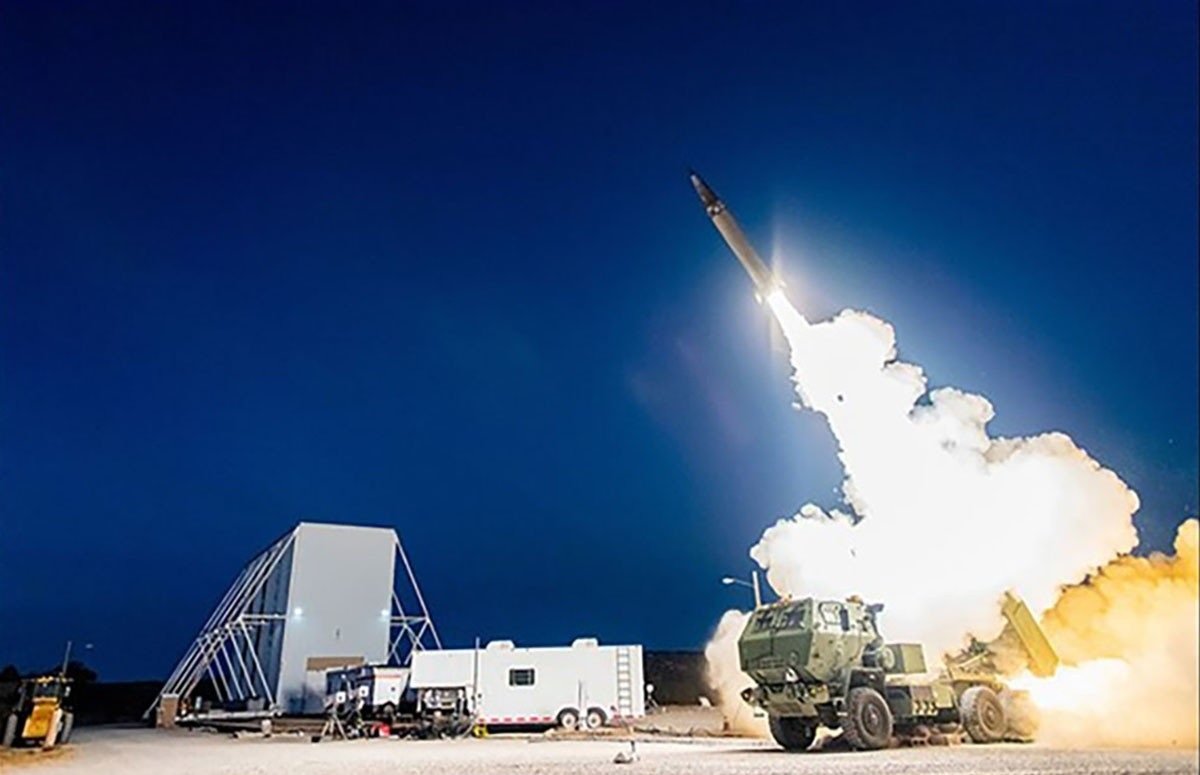
The Hwasongpho-11Ma-1 uses a six-axle wheeled TEL carrying the missile inside a launch container. Earlier Hwasong-11 variants have also been displayed on eight- and ten-wheeled launchers capable of carrying two missiles.
Its solid-fuel propulsion allows rapid preparation for launch, while the mobile launcher allows the system to be relocated before or after firing.
Development of Hypersonic Technology
North Korea began testing hypersonic glide-vehicle technology with the Hwasong-8 in September 2021. The technology was later applied to systems including the Hwasong-12B and solid-fueled Hwasong-16B.
The Hwasong-11Ma-1 represents the application of this technology to a shorter-range, solid-fueled missile platform. North Korean descriptions have presented the system as intended for ultraprecision strikes against targets hundreds of kilometers away and for improving the ability to penetrate missile defenses.
The combination of a mobile solid-fuel missile, a maneuverable glide vehicle and a lower flight profile is the main feature distinguishing the Hwasongpho-11Ma-1 from conventional ballistic missiles in the Hwasong-11 family.
——— End of Article ———