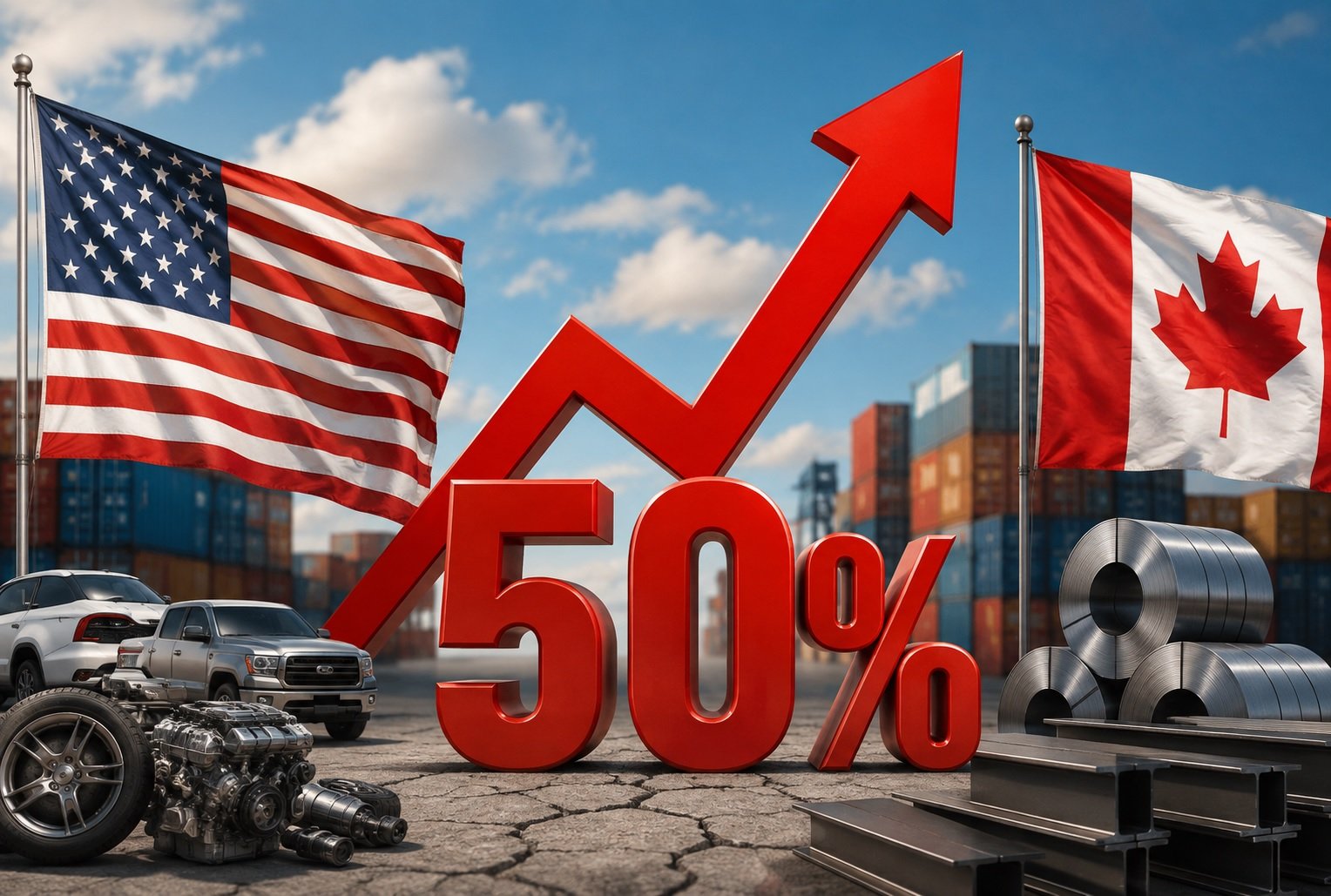
WASHINGTON — U.S. President Donald Trump has announced that tariffs on all Canadian cars, trucks, automotive parts and steel will rise to 50% from January 1, 2027, escalating the trade dispute after U.S.-Canada negotiations collapsed over the weekend.
In a Truth Social post, Trump accused Canada of “ripping off” the United States for years, citing Canadian tariffs on American agricultural products. He said these policies had contributed to a $60 billion U.S.-Canada trade deficit and called the situation unsustainable. Trump also said U.S.-built vehicles would face zero tariffs and argued that Canada depends heavily on the American market.
The announcement follows the introduction on Saturday of 50% U.S. tariffs on about $20 billion of Canadian goods, including wine, dairy, cement, clothing, furniture and hockey equipment. The tariffs were imposed under Section 338 of the Tariff Act of 1930 and affect about 5% of Canadian exports to the United States. Energy, potash, fish and certain critical minerals were excluded.
The United States currently applies a 25% tariff on Canadian automobiles, with adjustments for U.S. content under the USMCA, while steel tariffs are already at 50%. The planned 2027 measure would increase the auto rate and apply the 50% rate more broadly to automotive parts.
Trade Talks Collapse
Canadian Prime Minister Mark Carney suspended negotiations, saying last-minute U.S. demands were “unfair” and “uneconomic.” The United States had sought measures including a 4-million-ton quota on Canadian steel exports, changes to Canada's dairy supply-management licensing system and automotive rules under which only American-made content would qualify for tariff exemptions.
The talks had appeared close to a possible agreement earlier in the week after Washington temporarily paused the $20 billion tariff package. However, the two sides failed to finalize a deal, and no new round of talks is currently scheduled.
Canada Prepares Retaliation
Canada plans to impose dollar-for-dollar retaliatory tariffs on U.S. goods from September 8. The measures are expected to target steel, dairy products, appliances, agricultural equipment, pulp and paper, and electronics, although the final details are still being prepared.
The Canadian Federation of Independent Business estimates that 40% of small Canadian exporters will be directly affected by the initial U.S. tariffs, with nearly one-third expecting their revenues to fall by half or more. U.S. lawmakers from border states have also warned that the dispute could increase consumer prices and disrupt supply chains.
The North American automotive industry is particularly exposed because manufacturers operate on both sides of the U.S.-Canada border. Industry observers have noted that previous major tariff announcements have sometimes been modified or delayed, but the announced January 2027 measures remain the current policy.
Canada is one of the largest sources of U.S. imports, with bilateral goods trade worth hundreds of billions of dollars annually. The latest measures add to sector-specific U.S. tariffs that have been in place since 2025 and further increase pressure on both governments to reach a new trade agreement.
——— End of Article ———