RIYADH/SANAA — Yemen’s Houthi movement, also known as Ansarullah, said Tuesday that it launched dozens of ballistic missiles and drones against Saudi Aramco facilities and military targets in southern Saudi Arabia.
The Houthis said the attack was carried out in response to 121 Saudi airstrikes conducted over the previous three days across several Yemeni provinces, including Ma’rib, Al-Bayda, Al-Hudaydah, Taiz and Al-Jawf.
Yemen’s Houthis said Tuesday they launched dozens of ballistic missiles and drones at Aramco facilities and military targets in southern Saudi Arabia.
— Clash Report (@clashreport) September 8, 2026
The group said the attack was in response to 121 Saudi airstrikes carried out over the past three days across several Yemeni… pic.twitter.com/KAKgCuSDwW
The group also said one Saudi strike hit a prison in Al-Hazm, Al-Jawf, causing multiple casualties, including women and children. The Houthis warned that further Saudi attacks would be met with wider strikes inside Saudi Arabia.
73 Civilians Wounded in Saudi Arabia
Saudi Arabia said Ansarullah targeted civilian and economic sites in southern Saudi Arabia using drones and missiles.
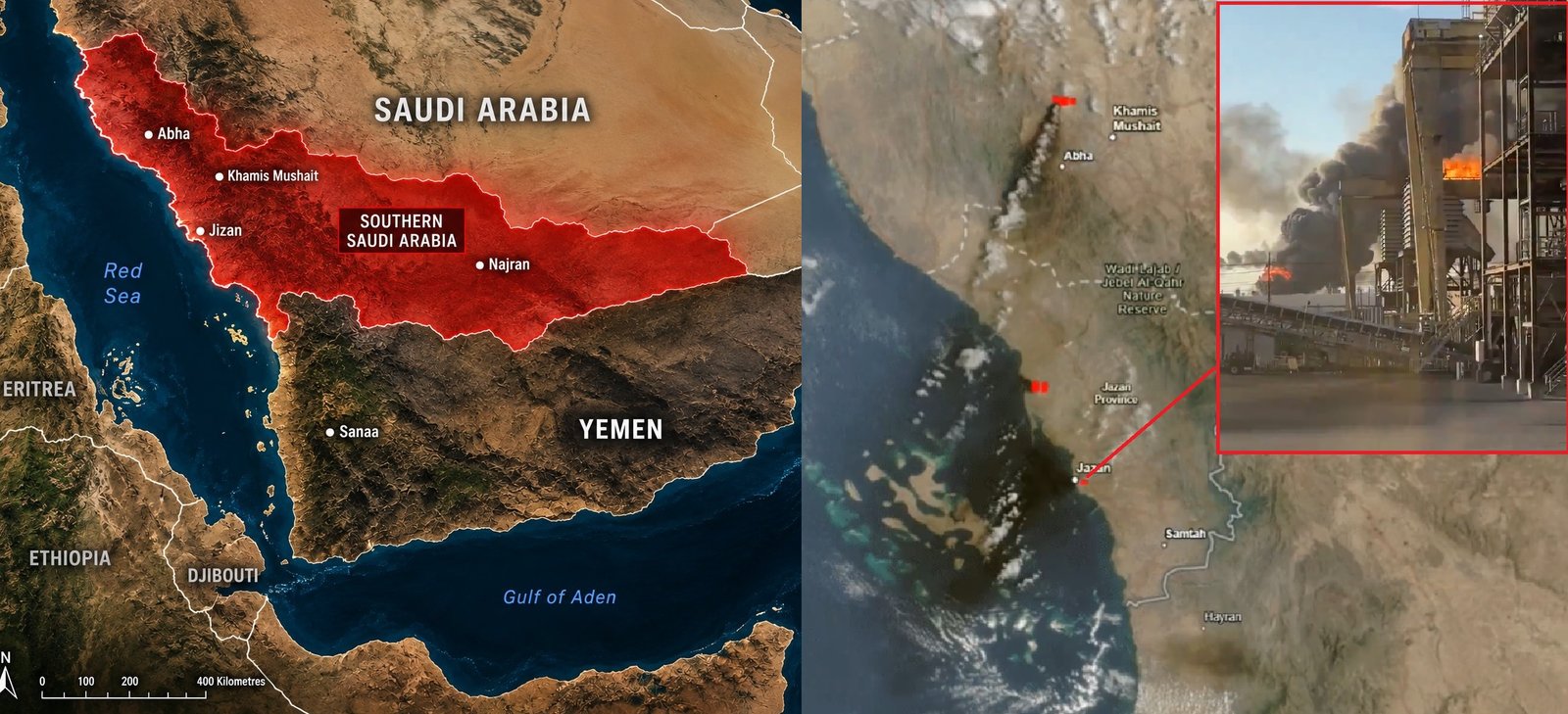
The Saudi-led coalition said the attacks wounded 73 civilians, including women and children. Saudi authorities confirmed that strikes affected areas including Abha, Khamis Mushait, Jazan and Najran.
The Saudi military described the overnight operation as a dangerous escalation and said the Kingdom would respond firmly.
Fires were reported at several energy facilities following the attacks. The Saudi Energy Ministry said some operations were temporarily halted while firefighting and specialised teams worked to contain the fires and assess the damage.
Saudi authorities have not released detailed figures on damage or production losses from the latest attacks. Saudi Aramco has also not provided a detailed public assessment of the damage.
Satellite Imagery Shows Fires at Aramco Facilities
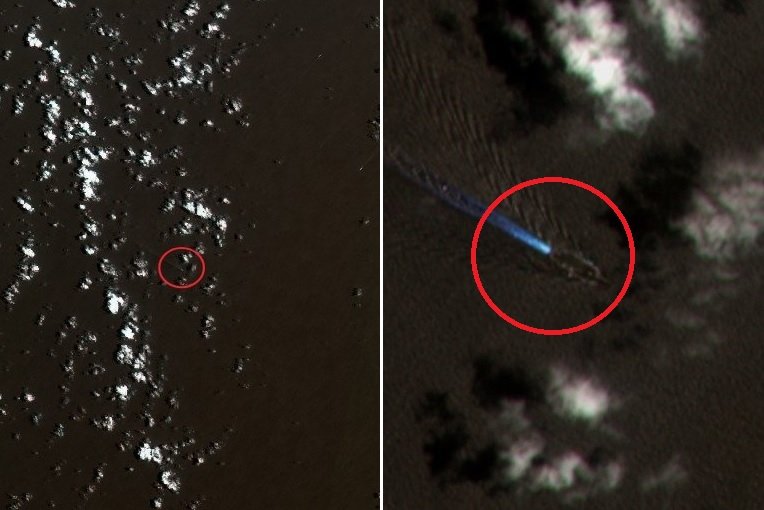
Satellite imagery has provided indications of fires at several energy facilities in southwestern Saudi Arabia following the Houthi strikes.
NASA’s Terra satellite imagery shows large black smoke plumes rising from at least three sites in Jazan and Abha, including:
- Aramco’s Jazan oil refinery
- Aramco’s Jazan bulk plant
- Aramco’s Abha bulk plant
Satellite imagery and information provided by Soar Earth and Atlas have also been cited as showing massive fires at Saudi Aramco’s Abha Bulk Plant and Jizan Refinery.
The fires were reportedly large enough to be visible from space following the attacks on the energy infrastructure.
🛰🇸🇦🇾🇪 NASA Terra satellite imagery shows large black smoke plumes rising from at least three sites in Jazan and Abha, southwestern Saudi Arabia, following Houthi strikes:
— Egypt's Intel Observer (@EGYOSINT) September 8, 2026
— Aramco’s Jazan oil refinery
— Aramco’s Jazan bulk plant
— Aramco’s Abha bulk plant https://t.co/aio2lGVwi0 pic.twitter.com/CBILfJTfVX
The imagery provides evidence of fires and smoke at the reported locations, but it does not by itself establish the full extent of physical damage or the impact on production. Saudi authorities are continuing to assess the affected facilities.
Sentinel-2L Imagery Indicates Damage at King Khalid Air Base
Separate Sentinel-2L satellite imagery has been cited as showing indications of damage at King Khalid Air Base in Khamis Mushait, southwestern Saudi Arabia, another location identified by the Houthis as a target.
According to the imagery assessment, a direct impact is visible on shelters housing RSAF F-15 fighters. Another apparent impact is visible on a building or warehouse, while a burn scar can also be seen near one of the base’s aprons.
The imagery assessment indicates possible physical effects at multiple locations inside the air base. However, satellite imagery alone does not establish the precise cause of each observed feature or confirm whether aircraft were damaged or destroyed.
🛰🇸🇦🇾🇪 Sentinel-2L imagery confirms damage from Houthi strikes on King Khalid Air Base in Khamis Mushait, SW Saudi Arabia.
— Egypt's Intel Observer (@EGYOSINT) September 8, 2026
A direct impact is visible on shelters housing RSAF F-15 fighters, with another impact on a building/warehouse and a burn scar near one of the base aprons. https://t.co/zpKmEJ4hEp pic.twitter.com/aNggaWEnGr
The Houthis said their operation targeted King Khalid Air Base along with Aramco facilities and other economic sites. Houthi military spokesperson Yahya Saree claimed the strikes were precise and direct and caused significant damage, although detailed independent damage assessments remain limited.
Houthis Link Attack to Saudi Airstrikes
Houthi military spokesperson Yahya Saree said the missile and drone operation was a response to the 121 Saudi airstrikes carried out during the previous three days.
According to the Houthis, the Saudi strikes targeted several Yemeni provinces, including Ma’rib, Al-Bayda, Al-Hudaydah, Taiz and Al-Jawf.
The group specifically cited the reported strike on a prison in Al-Hazm, Al-Jawf, saying it caused casualties among inmates and visitors, including women and children.
The exact number of casualties from the prison strike has varied in reports and has not been independently verified.
The Houthis said continued Saudi attacks would result in a wider response against Saudi targets.
Saudi Arabia Links Escalation to Red Sea Attacks
The latest Ansarullah attack came after Saudi warplanes struck Houthi positions in Yemen.
Saudi Arabia has linked its military operations to Houthi actions involving a declared blockade of Saudi Arabia in the Red Sea and attacks on Saudi military supplies in Yemen.
The conflict has therefore expanded across both the Yemeni battlefield and Saudi territory, with Houthi missiles and drones targeting Saudi infrastructure while Saudi aircraft continue operations against Houthi positions in Yemen.
Saudi Arabia has also condemned continued Houthi attacks on commercial vessels in the Red Sea, saying they threaten maritime navigation.
Fighting Continues Between Houthis and Saudi-Backed Forces
Major fighting is currently taking place inside Yemen between Ansarullah forces and Saudi-backed PLC fighters.
Following recent clashes, reports have circulated that Houthi forces seized several armored vehicles belonging to the Pakistan Army that had been provided by Saudi Arabia to Pakistani troops.
Following the clashes, Houthi forces have reportedly seized several armored vehicles belonging to the Pakistan Army that had been provided by Saudi Arabia to Pakistani troops.
— THE UNKNOWN MAN (@Theunk5555) September 7, 2026
Pakistani personnel were reportedly deployed to support Saudi Arabia’s defense operations, while… pic.twitter.com/ctfWiq2ruU
There have also been reports that Pakistani personnel were deployed to support Saudi Arabia’s defense operations, while other reports have claimed that several Pakistani soldiers were killed in the clashes.
However, Pakistani and Saudi authorities have not publicly confirmed specific Pakistani military losses or the reported seizure of Pakistan Army vehicles in these latest clashes.
The claims therefore remain unconfirmed.
Mecca Defence Agreement Under Scrutiny
The latest escalation comes about one month after Saudi Arabia, Pakistan and Türkiye signed the Mecca Joint Defence Agreement on August 7, 2026.
The agreement provides for expanded defence cooperation and coordination among the three countries. It states that an armed attack against one member is to be regarded as an attack against all three.
As of Tuesday, there had been no publicly announced Turkish or Pakistani military deployment specifically in response to the latest Houthi attacks.
The latest strikes have nevertheless drawn attention to the practical implications of the new defence arrangement as Saudi Arabia faces continued missile and drone attacks and fighting involving Saudi-backed forces continues inside Yemen.
Conflict Enters Another Escalation
The latest Houthi operation is described by Saudi authorities as one of the most extensive Ansarullah attacks on Saudi Arabia in years.
With 73 civilians reported wounded, fires at several energy facilities and satellite imagery indicating fires and possible impacts at Aramco facilities and King Khalid Air Base, the attacks have affected both civilian and economic infrastructure and military sites.
At the same time, fighting continues inside Yemen and Saudi air operations against Houthi positions remain part of the broader conflict.
The full extent of damage to the affected Aramco facilities and King Khalid Air Base, as well as any impact on Saudi energy production or military aircraft, remains under assessment. Saudi authorities have confirmed temporary operational disruptions but have not released detailed figures on production losses.
——— End of Article ———