REDONDO BEACH, California — Northrop Grumman has received a $7 million contract from the Defense Advanced Research Projects Agency (DARPA) to advance diamond cooling technology for semiconductors used in military radar and communications systems.
The contract covers Phase 2 of DARPA’s Technologies for Heat Removal in Electronics at the Device Scale (THREADS) program, which is focused on reducing the thermal limitations that restrict the performance of high-power radio-frequency (RF) electronics.
Diamond Cooling to Address Heat Limits
High-power RF systems often have to operate below their maximum output to prevent overheating. This limits signal strength and overall system performance.
Northrop Grumman is using diamond as a thermal-management material because it conducts heat about five times faster than copper. The company says it can also remove heat more effectively than materials such as silicon carbide and gallium nitride (GaN), which are widely used in high-power electronics.
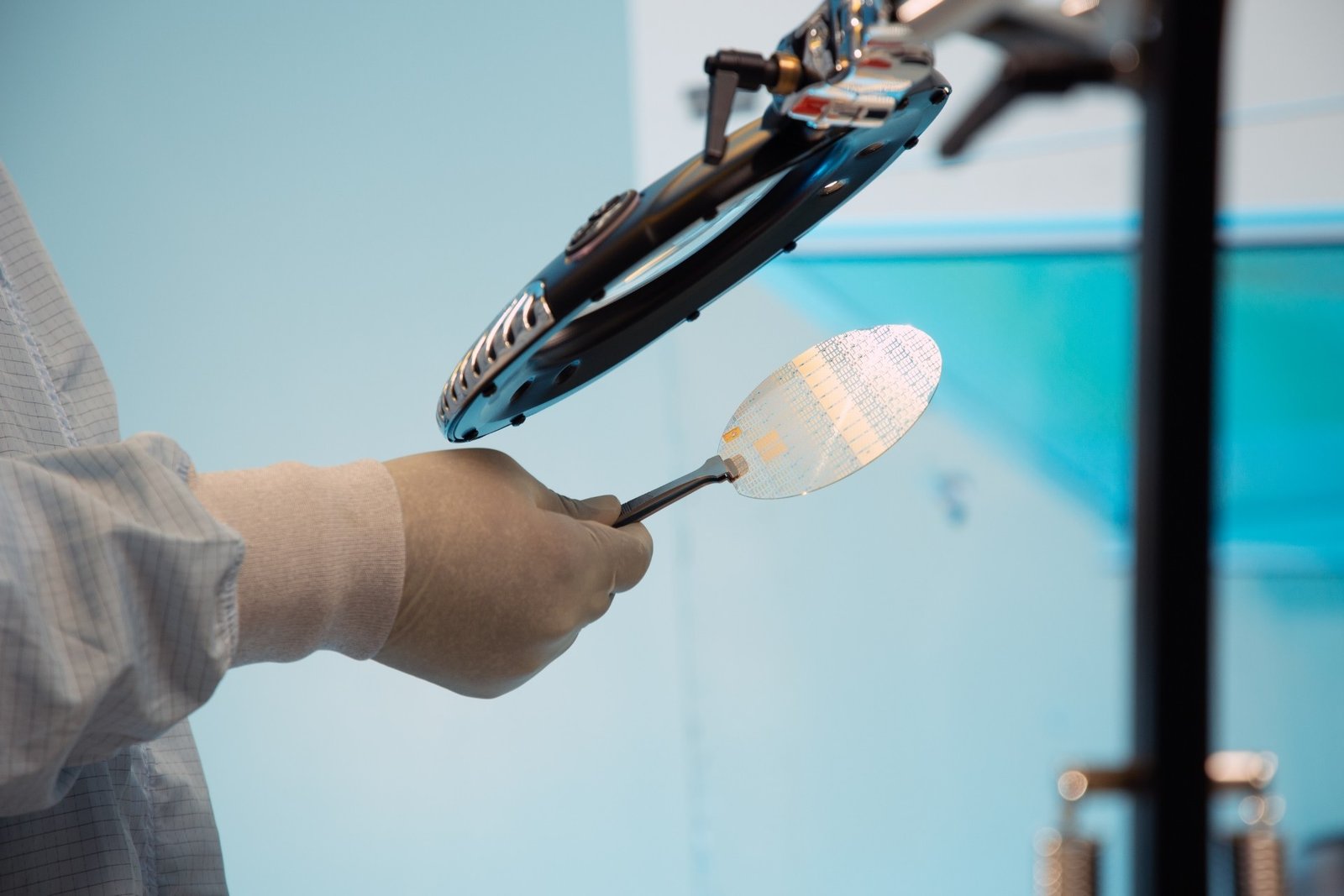
At its Microelectronics Center, Northrop Grumman is integrating microscopic diamond structures directly into semiconductor devices. In collaboration with Stanford University, engineers developed a method to grow a layer of diamond inside microscopic channels on the back of each device. These channels provide a path for moving heat away from critical hotspots.
Phase 1 Results and New Target
During Phase 1 of the THREADS program, Northrop Grumman demonstrated a 3.3-fold increase in chip power density.
Under Phase 2, the company aims to increase that result by more than three times again. If achieved, the power density would reach roughly 10 times the original baseline established when the program began.
DARPA has reported that Phase 1 performers across the broader THREADS program achieved approximately a fivefold increase in RF power density compared with current state-of-the-art devices. DARPA said this level of improvement could roughly double radar range in operational terms.
Potential Military Applications
Higher power density could allow RF transmitters to deliver greater power while using smaller components. The technology could therefore support military radar, communications and advanced satellite links.
Improved thermal management can also help reduce component size and weight while supporting greater reliability and longer operating life.
Ben Heying, director of microelectronics at Northrop Grumman’s Space Park Foundry, said temperature has long limited the performance of microelectronics, including GaN devices. He described embedding diamond directly into chips as an enhanced cooling approach that allows higher power operation while reducing the risk of thermal damage.
Northrop Grumman's Diamond Research
Northrop Grumman has invested in diamond-based microelectronics research since 2019. The company plans to use an open-access business model to make the cooling technology available to other participants in the U.S. semiconductor industry.
Northrop Grumman designs, manufactures, assembles, tests and packages millions of microelectronic devices each year for defense and commercial applications. The company says its domestic production supports the U.S. semiconductor supply chain.
Its broader diamond research has also included testing diamond-based components capable of handling more than 100 watts in related applications.
The Phase 2 THREADS effort will focus on further increasing RF power density and improving heat removal as higher-power semiconductor operation creates greater thermal demands.
——— End of Article ———