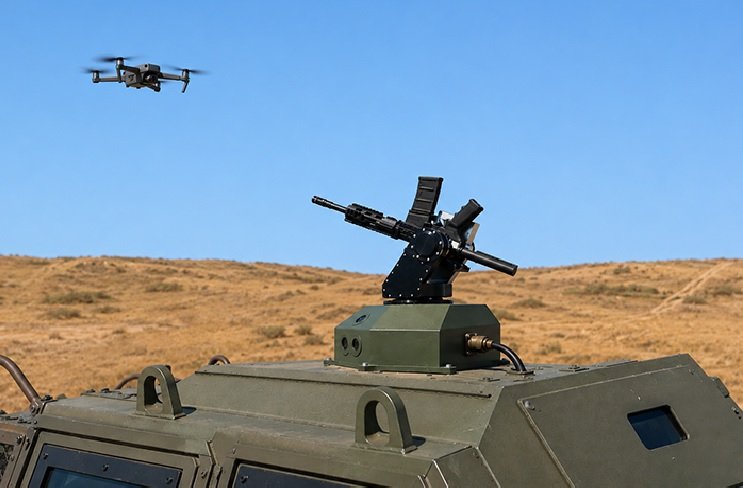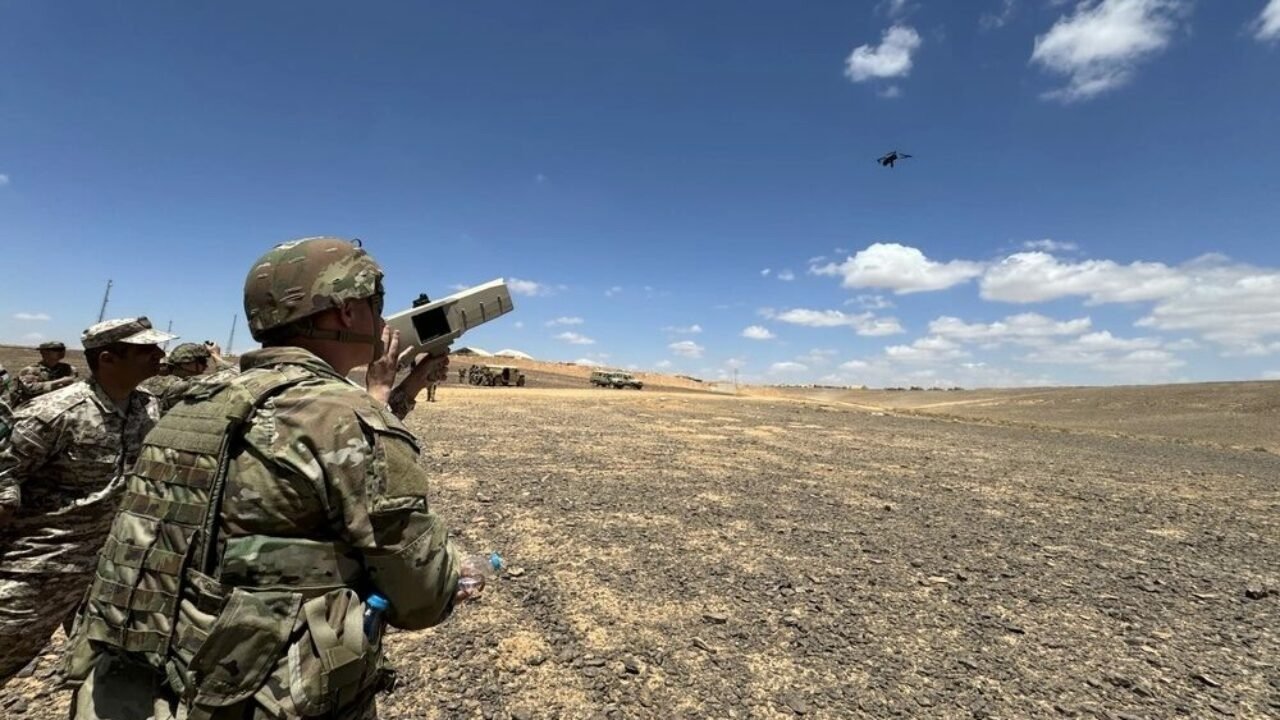
OKINAWA, Japan — The U.S. Air Force’s Pacific Air Forces (PACAF) is seeking to acquire 60 DroneBuster 5 handheld counter-drone systems equipped with Position, Navigation and Timing (PNT) capability to strengthen protection against small unmanned aircraft systems across its Indo-Pacific area of responsibility.
The requirement was issued by the Air Force’s 18th Contracting Squadron at Kadena Air Base under solicitation FA527026QA051. The systems are intended to increase PACAF’s counter-small unmanned aircraft systems (C-sUAS) capabilities.
The latest amendment to the solicitation specifies the U.S. 433 MHz variant, with the required part number listed as FIGDB5_433_PNT_KIT. It also corrects an earlier reference to the DroneBuster IV, clarifying that the Air Force requirement is specifically for DroneBuster 5 systems.
Funding has not yet been allocated
The Air Force has stated that funds are not currently available for the purchase. The government therefore has no legal obligation to make payment until appropriated funds become available and the contracting officer provides written confirmation of their availability.
The solicitation initially had an earlier response deadline, but an amendment issued September 8 extended the deadline to September 11, 2026, at 11 a.m. Japan Standard Time. The solicitation calls for delivery within 90 days of contract award if the procurement proceeds.
DroneBuster 5 counter-drone capability
The DroneBuster is a handheld radio-frequency counter-drone system originally developed by Flex Force Enterprises. It is designed to disrupt the radio link between a small drone and its operator and can also interfere with navigation signals.
The PNT capability requested by PACAF provides an additional electronic-attack function. According to manufacturer information, the capability can address GPS-guided drones operating on pre-programmed routes, including situations in which there is no active operator control link to disrupt.
The manufacturer has stated that this capability can operate at ranges of approximately 800 to 1,400 meters (2,600 to 4,600 feet).
Manufacturer information for standard DroneBuster systems lists a weight of less than 5 pounds (2.3 kilograms), with approximately three hours of continuous jamming or up to 10 hours of passive drone detection on a battery charge. The company has also said basic operation can be learned by new users in less than five minutes.
DroneBuster's military background
The system has already been used by U.S. military services and international customers. The Pentagon’s Joint Counter-UAS Office has designated DroneBuster as a handheld electronic-attack system approved for defeating small drones.
The manufacturer has previously reported deliveries of more than 1,700 systems to the U.S. Army, Air Force, Navy and Marine Corps, as well as international military and police organizations. The system has also been associated with Australia's LAND 156 counter-drone program.
Later company statements have cited higher fielding totals of more than 2,500 to over 3,000 systems across more than 50 countries, although those figures represent later company-reported totals.
Corporate ownership
Flex Force Enterprises became part of DZYNE Technologies through private-equity transactions completed in 2024. In July 2026, Ondas Inc. acquired DZYNE Technologies in a transaction valued at approximately $875.8 million. DZYNE was subsequently incorporated into Ondas' Sentinel defense business.
The acquisition expanded Ondas' portfolio to include counter-UAS technologies alongside autonomous aircraft and other defense systems.
The PACAF procurement remains dependent on funding. The solicitation does not provide a total contract value, and the Air Force has not yet indicated that the purchase has been funded or awarded.
——— End of Article ———