BRUSSELS — France is pressing the European Commission to impose time limits on exemptions allowing Ukraine to purchase military equipment from outside the European Union and European Economic Area (EEA) using funds from the €90 billion Ukraine Support Loan.
The loan, approved in April 2026, supports Ukraine during 2026 and 2027, with €60 billion allocated for military assistance and €30 billion for economic support.
Under the procurement rules, Ukraine generally cannot source more than 35% of the total cost of a defence product from outside the EU and EEA. However, Kyiv can request temporary derogations when European manufacturers cannot meet urgent operational requirements, provide sufficient production volumes, deliver within the required timeframe, or offer competitive costs.
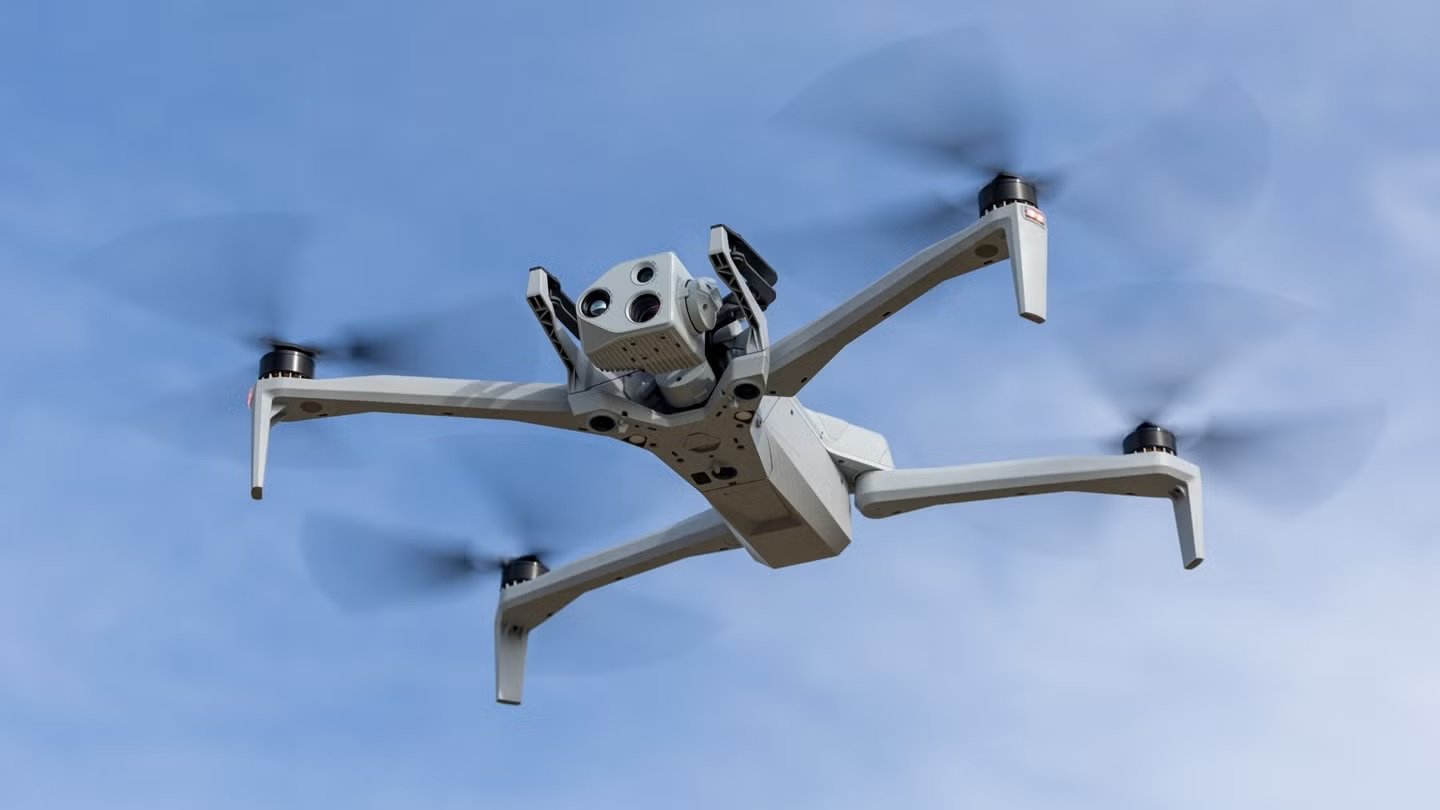
Ukraine has so far secured two exemptions. One covers components used in Chinese-made drones, while another covers US-made Patriot interceptor missiles, which are needed for Ukraine’s air-defence requirements. The European Commission approved the exemptions after recognising that European industry currently lacks sufficient capacity to rapidly provide these capabilities.
France Seeks Temporary Exemptions
Paris wants the exemptions to remain temporary and subject to mandatory reviews. The objective is to ensure that EU-backed defence spending increasingly returns to European manufacturers as European production capacity improves.
France has one of Europe’s largest defence industries and produces the Franco-Italian SAMP/T air-defence system, which is a European alternative to the US Patriot system.
Under the French approach, exemptions would need to be renewed whenever Ukraine requests a new payment tranche. If a European supplier becomes capable of matching a foreign supplier in production volume, cost and delivery time, the Commission could refuse to renew the exemption and require procurement from the European supplier.
Member States Divided
France’s position has faced opposition from countries that want Ukraine to retain greater flexibility in urgent military procurement.
In July 2026, defence ministers from Germany, Sweden, the Netherlands, Denmark, Estonia, Poland, Latvia, Finland and Lithuania wrote to EU foreign policy chief Kaja Kallas and Defence Commissioner Andrius Kubilius. They stressed the importance of quickly approving procurement schedules and using derogations pragmatically when Ukraine needs equipment produced by third countries.
The disagreement reflects a wider tension between meeting Ukraine’s immediate battlefield requirements and using EU funding to strengthen Europe’s defence industry.
How the Loan Procurement Works
Funds are released through a multi-stage process. Ukraine first provides Brussels with a broad breakdown of planned spending by categories such as drones, artillery and air defence. Exact allocations can change as requirements develop.
Ukraine then submits detailed contracts identifying the equipment, supplier and delivery timelines. For purchases requiring a non-EU derogation, the documentation is reviewed by a dedicated committee of national experts, allowing member states to raise objections.
For Chinese suppliers, the Commission also checks whether companies are subject to EU sanctions targeting Russia’s military-industrial complex. The government of the supplier’s country is also asked to commit to fulfilling the contract if political priorities change.
Disbursements have already begun. €3.9 billion was released in late June for drone procurement, followed by €6.1 billion approved earlier this week for broader defence procurement.
The Commission’s decisions on future derogations could establish an important precedent for other EU defence programmes, including the Security Action for Europe (SAFE) and the European Defence Industry Programme (EDIP). The main issue will be how long Ukraine can continue relying on foreign suppliers while European production expands.
Source : Euronews
——— End of Article ———