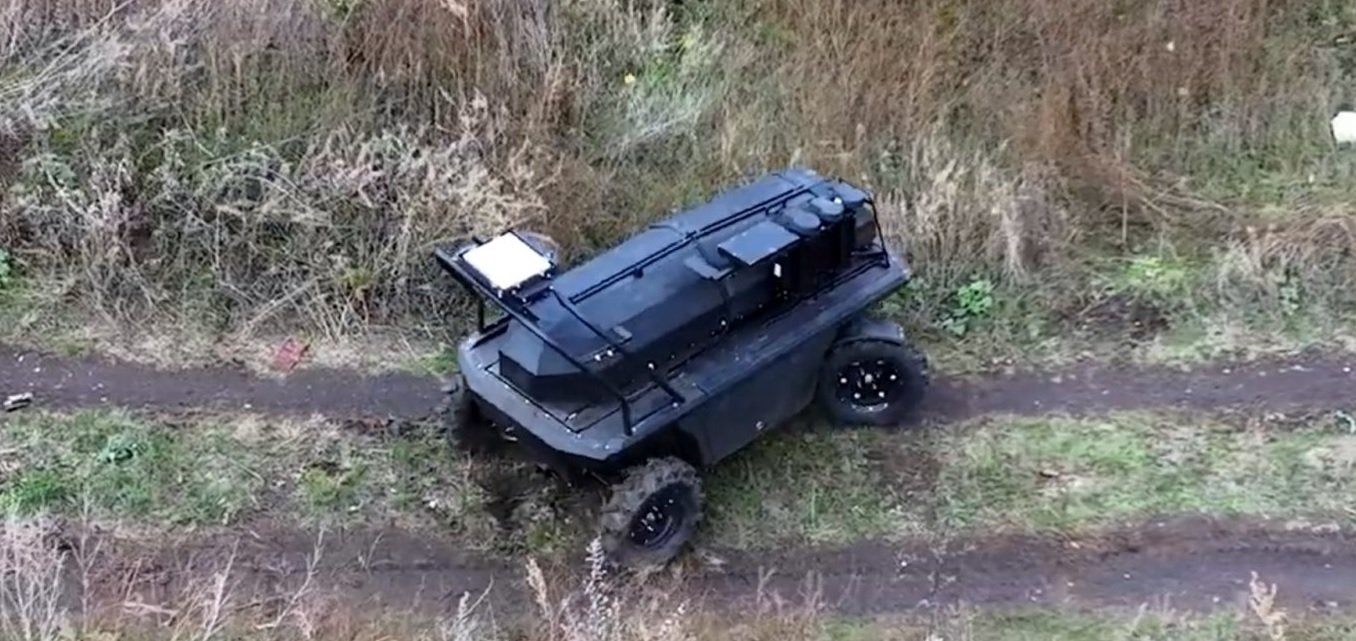
VIRGINIA BEACH, Va. — The U.S. Navy has formally established the Robotic and Autonomous Systems Warfighting Development Center (RASWDC) at Joint Expeditionary Base Little Creek-Fort Story, Virginia, creating a dedicated organization for integrating robotic and autonomous systems into fleet operations.
The Secretary of the Navy and Chief of Naval Operations formally established RASWDC on September 24. The center operates as an Echelon 3 warfighting development center under U.S. Fleet Forces Command and will focus on robotic and autonomous systems across the air, surface and undersea domains.
RASWDC will serve as the Navy's fleet-facing operational integration point for testing, training, doctrine development and tactics involving robotic and autonomous systems. Chief of Naval Operations Adm. Daryl Caudle said the center will help provide sailors with the advanced training and specialized doctrine needed to integrate these systems into operations, training and deployments.
Working with the RAS acquisition office
RASWDC will work alongside the Direct Reporting Portfolio Manager for Robotic and Autonomous Systems (DRPM RAS), established in August 2026. DRPM RAS, currently led in an acting capacity by Christopher Miller, has authority for acquisition, requirements implementation, budgeting, technical standards and fielding of robotic and autonomous systems.
While DRPM RAS focuses on acquiring and fielding the systems, RASWDC will focus on how they are used by the fleet. Testing, experimentation and training will provide feedback to developers and program managers to help refine future capabilities.
RASWDC will also work with the Rapid Capabilities Office and Fleet Introduction Operating System to coordinate training, logistics, maintenance, software, doctrine, networks and other support for new systems.
Three core missions
RASWDC has three main missions: training sailors, developing warfighting concepts, and testing emerging technology under realistic conditions.
The center will develop tactics, techniques, procedures and standards based on operational experience. It will also develop command relationships and authorities for autonomous systems, building on the Enhanced Mission Command Framework and Directed Autonomy Levels.
New systems will be tested at sea, under operational stress, against simulated threats and in degraded or denied communications environments. Systems that perform successfully can move forward, while those that do not can be improved, redirected or stopped.
Rear Adm. Melvin Smith leads the center
Rear Adm. Melvin R. Smith has been designated the inaugural commander of RASWDC and the supported commander responsible for establishing the organization. Smith, who previously served as commander of Submarine Group Two, is leading a phased near-, mid- and long-term implementation plan covering the command's structure, mission relationships and resource requirements as it moves toward full operational capability.
Smith said the center brings the Navy's autonomous efforts across the air, surface and undersea domains together at Little Creek, with a focus on educating warfighters, equipping the fleet with systems that perform in operational environments and developing tactics for their use.
RASWDC will not replace existing Warfighting Development Centers, Type Commanders, Systems Commands or operational commands. Instead, it will coordinate with them to incorporate emerging requirements and share lessons learned across the fleet.
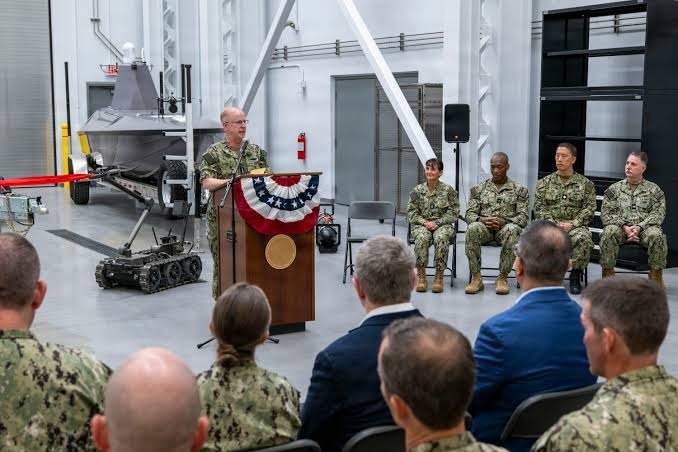
A ribbon-cutting ceremony for the center was held September 24 at Joint Expeditionary Base Little Creek-Fort Story, attended by Adm. Caudle and Rear Adm. Smith.
——— End of Article ———